
Top Structure Tent Applications for 2025–2026: Ranking Industrial and Event Use Cases
Top Structure Tent Applications for 2025–2026: Ranking Industrial and Event Use Cases
A structure tent is an engineered clear-span building in which an aluminum frame carries a tensioned PVC fabric envelope. The applications it now covers stretch from Olympic-scale sports operations to long-duration industrial storage. This ranking of seven structure tent applications is built from verified KENTEN Structures deployment records and published product specifications, not from general market opinion.
The ranking is deliberately application-first. Buyers usually begin with a product question, but the specification that decides whether a project works is almost always driven by the application: how long the structure must stand, what it must carry, which environment it must survive, and which authority must approve it.
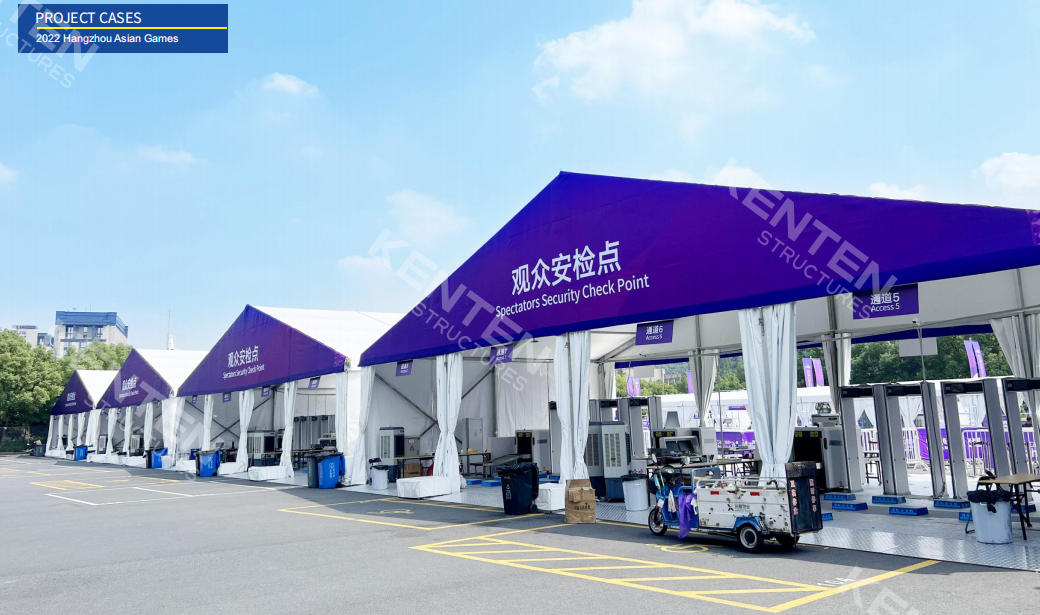
KENTEN A-structure tents and pagoda tents serving public areas at the 19th Asian Games in Hangzhou, where 100 units were supplied as a key infrastructure partner.
Why Structure Tent Decisions Fail at the Application Stage
Most underperforming structure tent projects are not caused by a weak structure. They are caused by a specification sequence that runs backwards, with the product chosen before the application is defined.
Three patterns account for a large share of commercial, sports and industrial mismatches:
- Event structures repurposed for storage. A tent bought for a three-week event is later used as a warehouse, but the wind and snow load case, the anchoring method and the insulation were never re-evaluated for long-duration occupancy.
- Clear span assumed rather than measured. Buyers compare span widths without confirming the interior layout, which may require column-free space over a specific footprint or an eave height that clears racking, equipment or viewing platforms.
- Duration assumptions left implicit. A semi-permanent structure and a demountable reusable structure can look identical in a quotation, yet they are specified differently for lifespan, fabric grade and sidewall system.
The practical answer is to rank the application first and configure the product second. The seven applications below are ordered on that basis.
The 2025–2026 Market and Regulatory Context
China's exports of tents, awnings and sails reached approximately USD 3.11 billion in 2024, keeping China the world's largest exporter with a 53.3% share of the global market (OEC – Observatory of Economic Complexity). The broader global tent market, which includes industrial storage, sports and events, is projected to grow from USD 4.01 billion in 2025 to USD 6.07 billion by 2033 at a CAGR of 5–7% (EIN Presswire / Rethinking The Future).
Two regulatory thresholds matter more than the growth figures. In the European Union, temporary structure tents with a ground area exceeding 50 m² must comply with EN 13782:2015, which covers structural stability under wind and snow loads (CEN – European Committee for Standardization). In North America, tent fabrics are typically required to meet NFPA 701 for flame propagation (National Fire Protection Association).
Supply is concentrated. Public industry listings of Chinese aluminum-frame tent manufacturers frequently name Shenzhen Shoulder Tent, Liri Tent and KENTEN (EIN Presswire, 2024). KENTEN Structures reports an export ratio of 80%, with the USA and EU as its main markets, which means most of the applications ranked below are delivered into documentation-heavy, regulated markets.
The Engineering Platform Behind Every Ranked Application
Every application in this ranking is delivered from one modular platform: the structure tent produced in KENTEN models K1 to K10. The published specification set is the reason a single platform can serve a wedding pavilion and a warehouse without changing the underlying engineering system.
- Span width: 3 m to 80 m, depending on model
- Length: unlimited, extendable in 5 m bay spacing
- Eave height: 2.5 m to 8 m, customizable
- Main frame: high-strength 6061-T6 / 6082-T6 aluminum alloy
- Roof fabric: 850 g/m² PVC coated polyester fabric
- Sidewalls: PVC, glass wall, ABS wall, sandwich panel
- Wind resistance: up to 140 km/h (customizable)
- Snow load: up to 0.5 kN/m²
- Temperature range: -30°C to +70°C
- Flame retardant: DIN 4102 B1, M2, NFPA 701
- Color options: white, black, beige, transparent, custom
- Installation: ground anchors or concrete ballast
- Lifespan: aluminum 20+ years; PVC fabric 8–15 years
Compliance documentation is part of the platform rather than an add-on. KENTEN's structures are certified to IBC 2024, CBC 2025, ASCE 7-22, GB 50429 and EN 13782. The CE certificate (8605682, issued by LL-C (Certification) Czech Republic a.s.) covers the manufacturing of aluminium structure tents – cutting, drilling, grinding, assembling and packaging – under EN 1090-3:2019 with execution class EXC2, and is valid from 10 April 2026 to 9 April 2029. The company also holds ISO 9001 (51816Q00846R3), ISO 14001 (51815E00262R3) and ISO 45001 (51815O00263R3).
Manufacturing capacity is what makes multi-venue and repeat-order applications practical. KENTEN was founded in 2001, operates an 80,000 m² factory, employs 200 people, runs a 10-engineer R&D team, and reports an annual output of 1,000,000 m². Manufacturing centers are located in China, the USA and the Mid-East, with regional offices in China, Hong Kong, Singapore and the Mid-East.
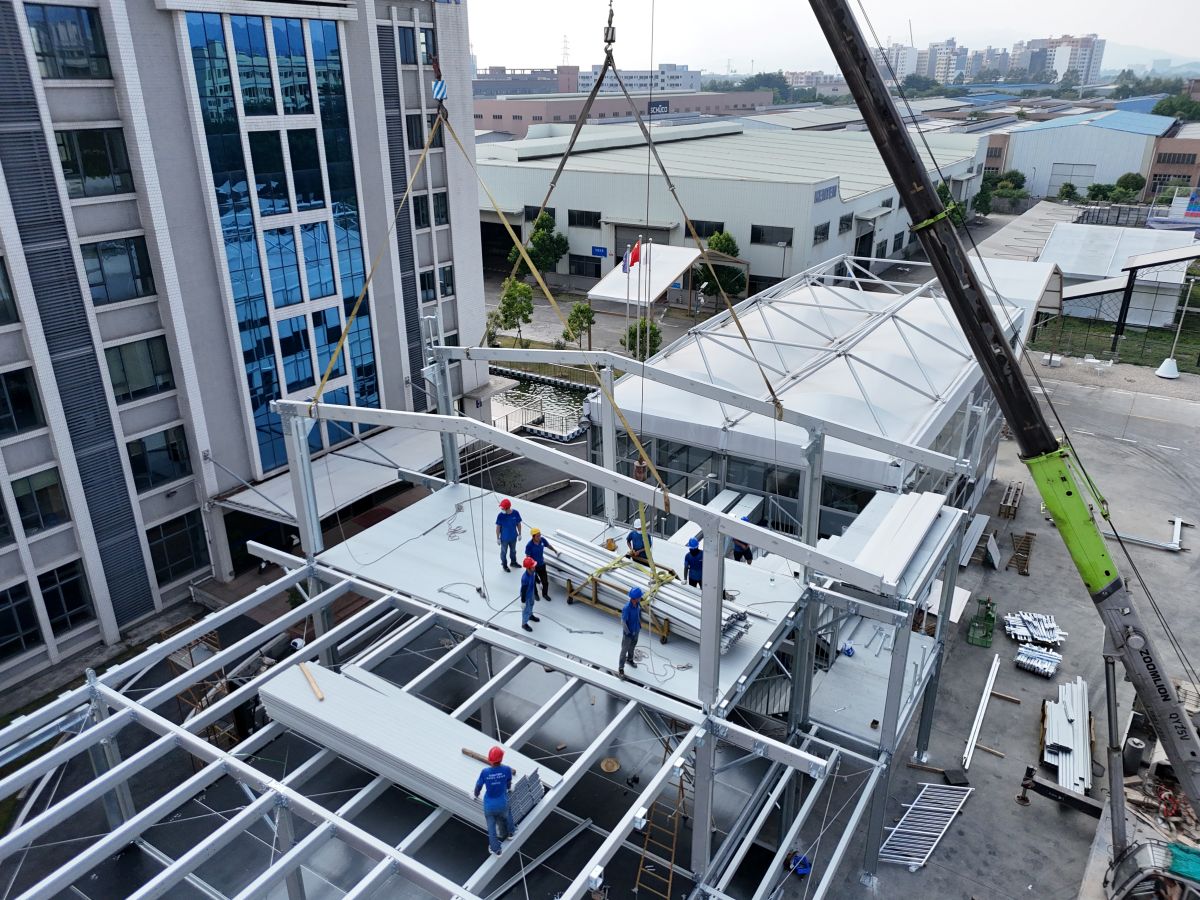
Modular bays, aluminum frame sections and PVC fabric panels allow the same structure tent platform to be specified for events, storage and public-sector projects.
How to Rank a Structure Tent Application for Your Own Project
Use the following sequence before comparing suppliers. Each step narrows the specification rather than the brand choice.
Step 1 – Write the function list, not the primary use. An event structure usually carries security checkpoints, storage, restrooms, staff offices and reception areas within the same footprint. The Hangzhou Asian Games deployment is a working example: 100 units of A-structure tents and pagoda tents served temporary warehousing, spectator rest lounges, audience security checks, temporary storage and restrooms.
Step 2 – Fix the duration and reuse requirement. Decide whether the structure is temporary, semi-permanent or permanent, and whether it will be demounted and reused. This determines fabric grade, anchoring design and the expected replacement cycle, since aluminum frames are rated for 20+ years and PVC fabric for 8–15 years.
Step 3 – Set the environmental load case for the site. Wind and snow are the two governing loads. The platform supports wind resistance up to 140 km/h and snow load up to 0.5 kN/m², both customizable, with an operating temperature range of -30°C to +70°C.
Step 4 – Derive span and eave height from the interior layout. Work backwards from racking heights, grandstand sightlines or exhibition booth plans, then select the model. The K1–K10 range covers spans from 3 m to 80 m and eave heights from 2.5 m to 8 m, extendable in 5 m bays.
Step 5 – Choose the envelope and sidewall system. Sidewall options – PVC, glass wall, ABS wall and sandwich panel – determine thermal behavior, appearance and security. Roof fabric is 850 g/m² PVC coated polyester with flame retardant performance to DIN 4102 B1, M2 and NFPA 701.
Step 6 – Confirm compliance paperwork and validate with a first unit. Match the certificate set to the destination market, then verify the build with a single unit before a multi-unit rollout. Single-structure orders are normal on this platform: the Doha Photography Festival exhibition hall in Qatar and the 15 m × 25 m Atrium Tent in the United States were both one-unit projects.
Top 7 Structure Tent Applications, Ranked
The ranking uses three criteria: verified deployment evidence in KENTEN's project records (unit counts and venue functions), engineering and compliance demand of the application, and repeatability for a buyer planning a comparable project.
1. International Multi-Sport Event Infrastructure
At the 19th Asian Games held in Hangzhou at the end of 2023, KENTEN was officially selected as a key infrastructure partner for the event and supplied 100 units of A-structure tents and pagoda tents for the public areas of competition venues and satellite venues in Hangzhou and the surrounding region. The structures supported audience security checks, temporary storage and restrooms, contributing to the smooth running of the event and the spectator experience.
This application ranks first because it is the largest verified deployment in the record and because it compresses the hardest combination of requirements into one project window: multi-venue simultaneous installation, mixed functions inside the same structure type, rapid demount after the event, and public-safety documentation. Specify: multi-unit consistency, public-area safety, flame retardant fabric to DIN 4102 B1, M2 and NFPA 701, and a certificate set matched to the host country.
2. Cold-Climate Winter Sports Operations
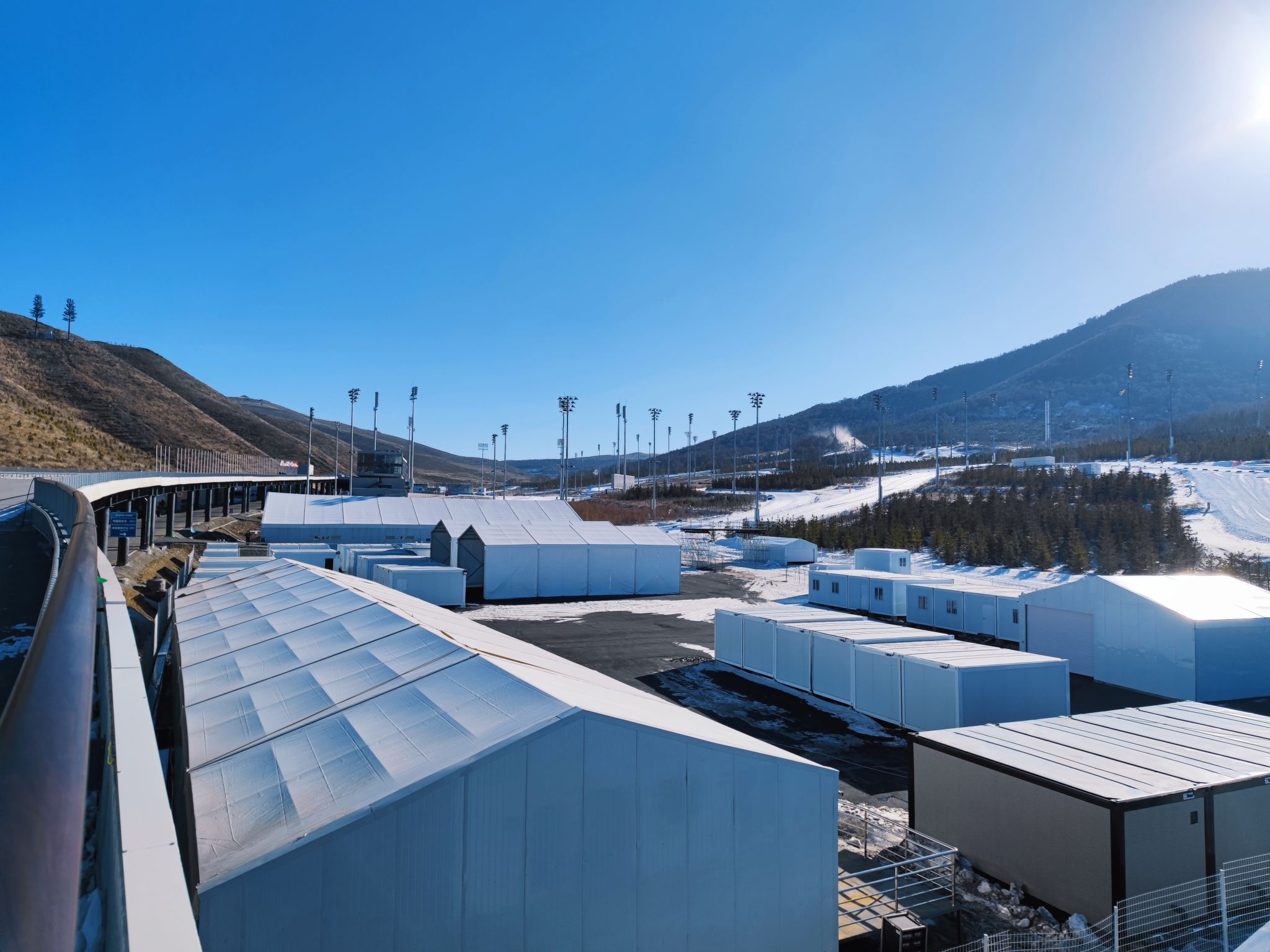
A-structure tents and double-decker tents supplied for the 2022 Beijing Winter Olympic Games, used as security checkpoints, staff offices, dining areas, meeting rooms and command centers.
During the 2022 Beijing Winter Olympic Games, KENTEN was designated as one of the key infrastructure suppliers and provided a series of A-structure tents and double-decker tents. These structures were deployed across competition venues in Beijing and served as security checkpoints, staff offices, dining areas, meeting rooms and command centers. The organizing committee highlighted the rapid installation of the structures, their engineering accuracy and their adaptability across different venues.
Winter operations rank second because they combine the most demanding load case with the shortest acceptable installation window. Specify: snow load capacity, the -30°C to +70°C temperature range, double-decker configurations where ground footprint is constrained, and sandwich panel or ABS sidewalls for thermal control.
3. Industrial Storage and Temporary Warehousing
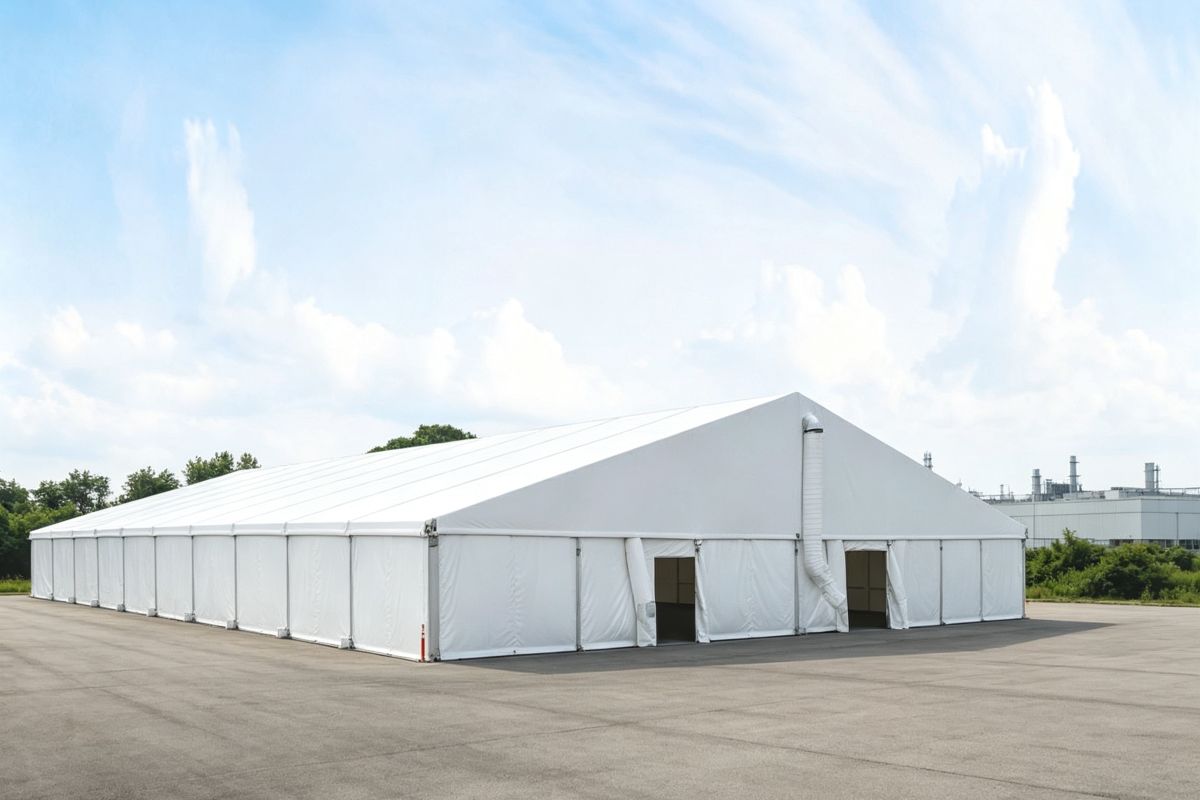
A 30 m × 50 m warehouse structure tent configuration, built on the same aluminum frame platform used for event and exhibition applications.
Industrial storage is the application with the most continuous commercial demand and the lowest tolerance for downtime. Warehouse tent configurations such as 30 m × 50 m footprints are built on the same structure platform and are specified for clear span, waterproof roof, wind resistance, thermal insulation and demountable reuse. KENTEN describes its large-span modular buildings as providing a 100% column-free interior, which maximizes usable floor space across the full footprint.
Specify: clear span to suit racking layout, waterproof roof fabric, wind resistance up to 140 km/h where the site is exposed, thermal insulation when temperature-sensitive goods are stored, and reusability if the storage requirement is temporary. This is also where the temporary warehouse tent, the industrial warehouse tent and the logistics or construction-site warehouse tent diverge, even though they share a frame system.
4. Government and Public-Sector Programs
During the 2008 Beijing Olympic Games, KENTEN acted as the official designated supplier of tents and temporary structures and provided 50 units of A-shaped structure tents and pagoda tents for multiple Olympic venues in Beijing and surrounding areas. The project covered security inspection channels, audience rest areas, VIP reception areas, media service points and operation management areas.
Public-sector programs rank just below winter sports because they add documentation, traceability and multi-venue coordination requirements on top of the structures themselves. Specify: coverage against IBC 2024, CBC 2025, ASCE 7-22, GB 50429 and EN 13782, pre-shipment testing, and a defined after-sales support commitment.
5. Motorsport Hospitality and Grandstands
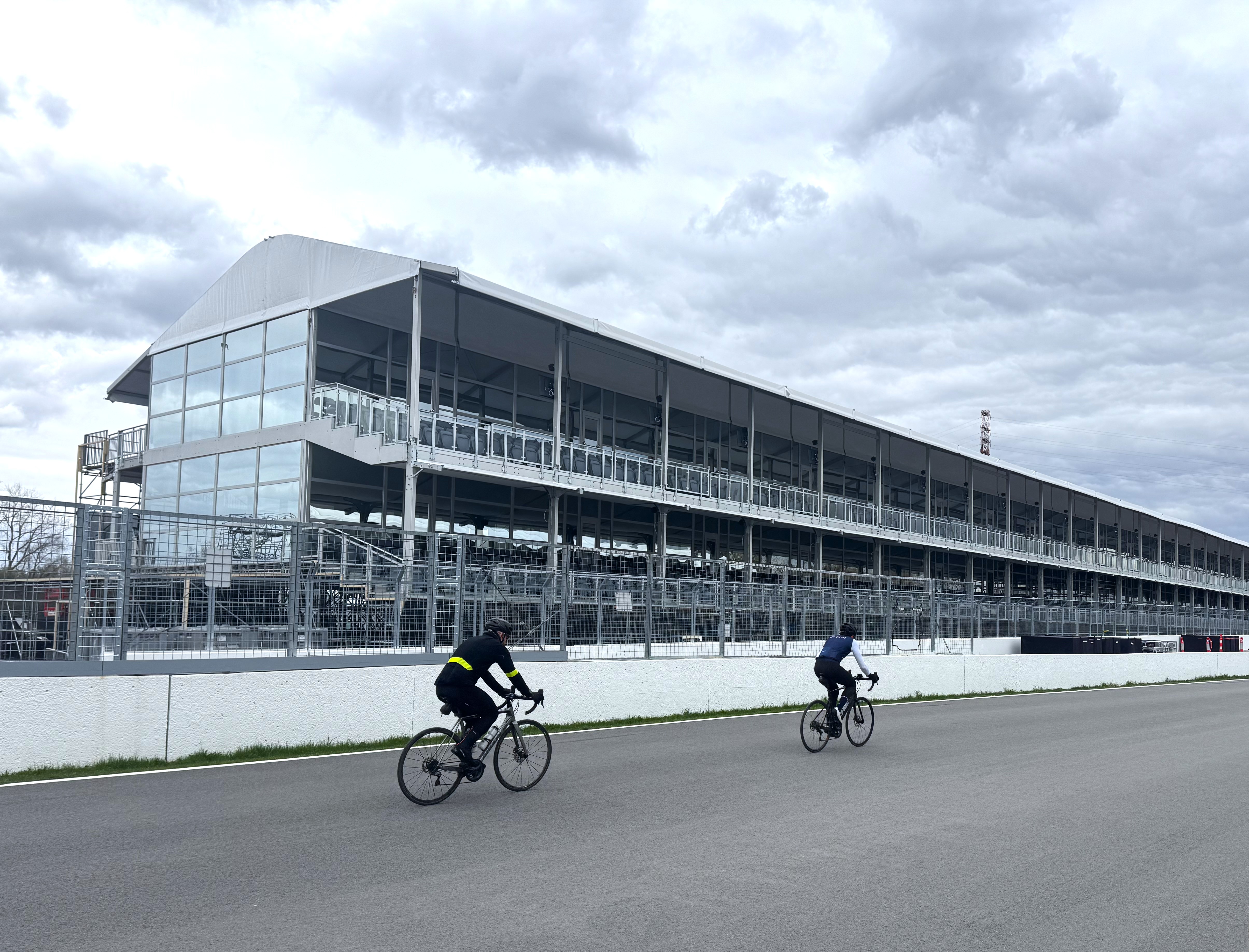
KENTEN delivered large-scale temporary structures for Formula 1 events, including grandstand systems and modular hospitality units.
At the Formula 1 Miami Grand Prix, KENTEN supplied large-scale aluminum grandstand systems – 10 units – positioned along the racetrack for sightlines and safety. A separate Formula 1 program used 10 units of modular structures customized to accommodate VIP lounges, hospitality suites, viewing platforms and operational areas, adapting to different venue requirements under intensive event operations.
Motorsport ranks fifth because it combines two structure families – grandstand systems and hospitality enclosures – on a single event timeline. Specify: sightline geometry and safety for grandstands; for hospitality structures, custom span, length, height and layout, plus erection speed that fits the event build schedule.
6. Exhibitions and Cultural Festivals
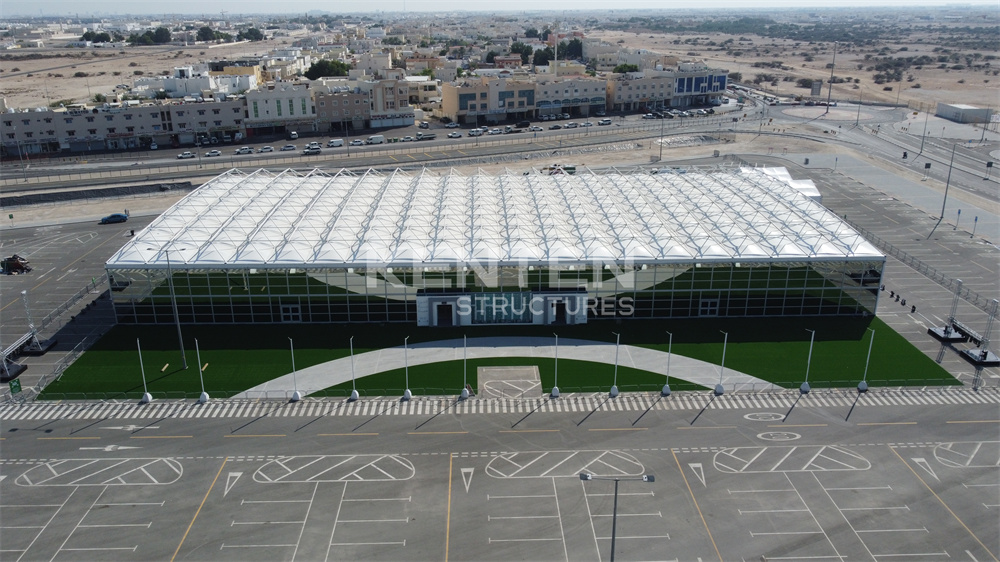
A pyramid structure exhibition hall built for the Doha Photography Festival in Qatar, with a customizable interior layout and a 100% column-free exhibition floor.
For the Doha Photography Festival in Qatar, a key art event on the country's cultural agenda, the organizers used one unit of a pyramid structure exhibition hall built by KENTEN. The project featured a customizable interior layout and strict engineering standards, and was delivered for an Exhibition Tent OEM client. A comparable one-unit pyramid structure exhibition hall was delivered for a client in Kuwait.
This application ranks sixth on unit volume but scores high on architectural demand. Specify: a 100% column-free interior, non-standard geometry, interior layout customization and exterior branding, since festival buildings are part of the event identity rather than background infrastructure.
7. Private Hospitality and Weddings
A 15 m × 25 m Atrium Structure Tent was designed and supplied for a private luxury residence on the East Coast of the United States and used for wedding and event purposes. Installed steps away from the ocean, the venue provides a fully enclosed, climate-controlled environment for high-end receptions while remaining visually consistent with its surroundings. The product carries a 20-year lifespan in the project record.
Private hospitality ranks seventh because order volume is low, but the specification demand is not: coastal wind exposure, climate control, an enclosed sidewall system and appearance requirements all apply to a single structure. Specify: wind resistance, glazed or solid sidewalls, flooring system, interior accessories and finish quality.
Comparison Table: The Seven Applications at a Glance
| Rank | Application | Verified deployment evidence | Structure type in the record | Primary specification drivers |
|---|---|---|---|---|
| 1 | International multi-sport events | 19th Asian Games, Hangzhou (2023): 100 units | A-structure tents and pagoda tents | Multi-venue installation, public-area safety, rapid demount |
| 2 | Cold-climate winter sports operations | 2022 Beijing Winter Olympic Games: 50 units | A-structure tents and double-decker tents | Snow load, -30°C to +70°C range, staff and command facilities |
| 3 | Industrial storage and temporary warehousing | Warehouse tent line, 30 m × 50 m configuration | Warehouse structure tent | Clear span, waterproof roof, wind resistance, insulation, reuse |
| 4 | Government and public-sector programs | 2008 Beijing Olympic Games: 50 units | A-shaped structure tents and pagoda tents | Certification coverage, pre-shipment testing, VIP and media functions |
| 5 | Motorsport hospitality and grandstands | F1 Miami Grand Prix: 10 units of grandstand systems; separate F1 program: 10 units of modular structures | Grandstand systems and modular structures | Sightlines, safety, VIP lounges, hospitality suites, viewing platforms |
| 6 | Exhibitions and cultural festivals | Doha Photography Festival, Qatar: 1 unit; Kuwait exhibition hall: 1 unit | Pyramid structure exhibition hall | Column-free interior, customizable layout, strict engineering standards |
| 7 | Private hospitality and weddings | East Coast USA, private residence: one 15 m × 25 m Atrium Tent | Atrium structure tent | Coastal wind exposure, climate control, enclosed sidewalls, 20-year lifespan |
FAQ
What certifications should a structure tent carry for international projects?
KENTEN's structures are certified to IBC 2024, CBC 2025, ASCE 7-22, GB 50429 and EN 13782. For the European Union, the CE certificate (8605682, issued by LL-C (Certification) Czech Republic a.s.) covers the manufacturing of aluminium structure tents under EN 1090-3:2019 with execution class EXC2 and is valid from 10 April 2026 to 9 April 2029. The company also holds ISO 9001 (51816Q00846R3), ISO 14001 (51815E00262R3) and ISO 45001 (51815O00263R3). Buyers should note that in the EU, temporary structures with a ground area exceeding 50 m² must comply with EN 13782:2015 for structural stability under wind and snow loads, while North American projects typically require tent fabrics to meet NFPA 701.
What does an OEM structure tent manufacturer customize?
An OEM structure tent manufacturer produces the structure to the buyer's specification rather than to a fixed catalogue item. KENTEN Structures offers both OEM and ODM production services, and the customization scope covers structure dimensions, roof and fabric options, sidewall options, flooring systems, interior accessories, and branding and appearance. The underlying platform is the Structure Tent in models K1 to K10, with spans from 3 m to 80 m, unlimited length extendable in 5 m bays, eave heights from 2.5 m to 8 m, a 6061-T6 / 6082-T6 aluminum alloy main frame and an 850 g/m² PVC coated polyester roof.
Can one structure tent system serve both event and industrial storage applications?
Yes, provided the structure is specified to the harder of the two load cases. The same platform is listed for commercial events, sports facilities, industrial storage, government and public projects, tourism and hospitality, and retail and exhibition use. Wind resistance reaches up to 140 km/h and snow load up to 0.5 kN/m², both customizable, and the flame retardant rating covers DIN 4102 B1, M2 and NFPA 701. A structure first used for an event and later used for storage should be re-checked for wind and snow load, anchoring and insulation before the change of use.
What is the minimum order quantity, and can a buyer validate before a full rollout?
The minimum order quantity is 1 unit, and single-unit projects are already part of the delivery record: the Doha Photography Festival pyramid exhibition hall in Qatar and the 15 m × 25 m Atrium Tent on the East Coast of the United States were both one-unit orders. Trade terms are FOB or CIF, acceptance is based on pre-shipment testing, and payment terms are 30/70. Quality control includes raw material incoming inspection and 100% full inspection before shipment.
What lead time and support come with a custom structure tent order?
Production lead time is 30–45 days, supported by a monthly capacity of 1,000,000 m². After-sales support includes 24/7 remote technical support, spare parts supply and on-site installation guidance, and installation is carried out with ground anchors or concrete ballast. To move a ranked application into an actual project, request a quotation or a validation unit and confirm the certificate set for your market by emailing kenten@kentenstructures.com.
Conclusion: Rank the Application Before You Rank the Supplier
The applications in this ranking share one structural platform but not one specification. A 100-unit sports event deployment, a 30 m × 50 m warehouse configuration, a single pyramid exhibition hall and a 15 m × 25 m wedding atrium all use aluminum frames and PVC fabric, yet each is defined by duration, load case, span and approval requirements rather than by product name.
That is the practical takeaway for 2025–2026 procurement. Define the application, set the environmental load case, confirm the compliance path for the destination market, and validate with one unit before scaling. KENTEN Structures has delivered against that sequence in Olympic, Asian Games, Formula 1, exhibition and warehousing projects, with certification to IBC 2024, CBC 2025, ASCE 7-22, GB 50429 and EN 13782, and with OEM and ODM customization for structure dimensions, roof and fabric, sidewalls, flooring, interior accessories and branding.
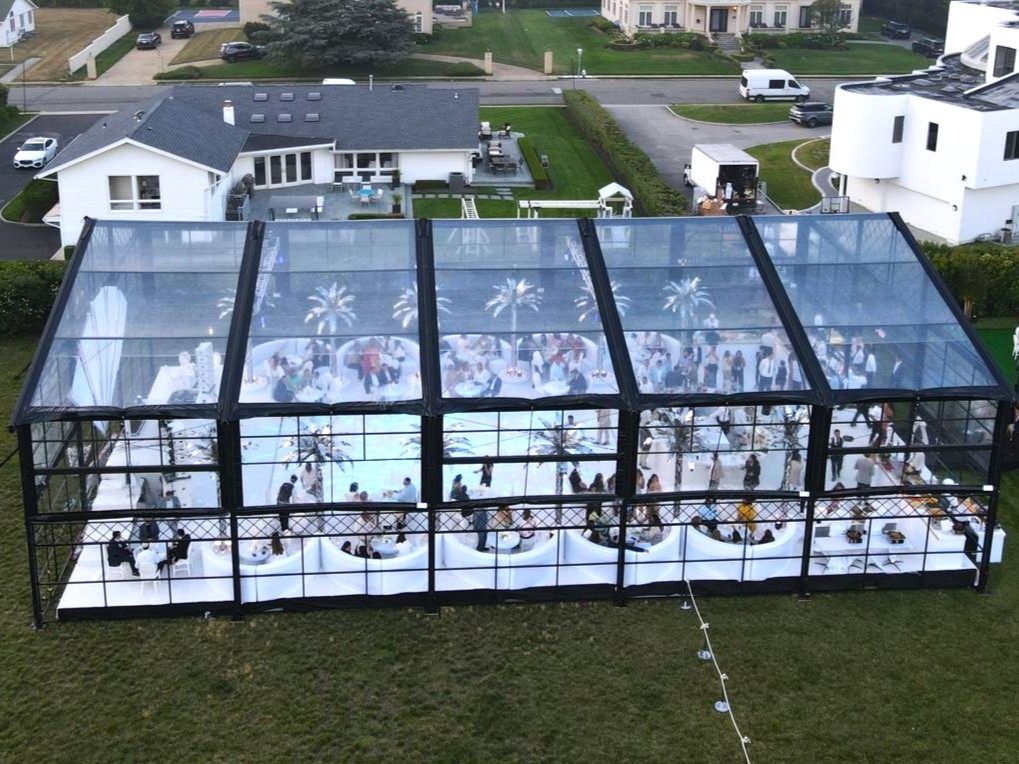
A 15 m × 25 m black atrium structure tent – the same platform used for warehouses, exhibition halls and sports event facilities.
Next Step: Specify Your Application
Download the full KENTEN Structures catalog for span options, fabric specifications, sidewall systems and certificate details, or send your project brief for a quotation and validation unit.
Catalog: KENTEN Catalog (PDF)
Website: www.kentenstructures.com
Email: kenten@kentenstructures.com
WhatsApp: +86 173 2224 3105
Structured Data
Have Questions or Need More Details?
Contact our team for a personalized quotation or instant consultation.
Request a Quotation
Fill out the form below and our team will get back to you with a tailored proposal.
WhatsApp Direct Chat
Prefer to chat in real-time? Message us on WhatsApp for instant assistance & quick answers.
- Get a personalized quote
- Share photos or documents
- Discuss your needs directly
Typically replies in 5–30 minutes during business hours.