
Structure Tent Compliance Guide: Flame Retardant Standards DIN 4102, M2, and NFPA 701 Explained
Fire approval for a structure tent is decided by the classification of its fabric, not only by the strength of its aluminium frame. Three classifications govern most decisions across Europe and North America: DIN 4102 B1 (Germany), M2 (France) and NFPA 701 (United States). KENTEN Structures, a manufacturer of premium aluminium permanent and semi-permanent structures founded in 2001, specifies its Structure Tent range with an 850 g/m² PVC-coated polyester roof fabric rated to DIN 4102 B1, M2 and NFPA 701 — while the aluminium frame is covered separately by a CE certificate under EN 1090-3:2019, certificate number 8605682.
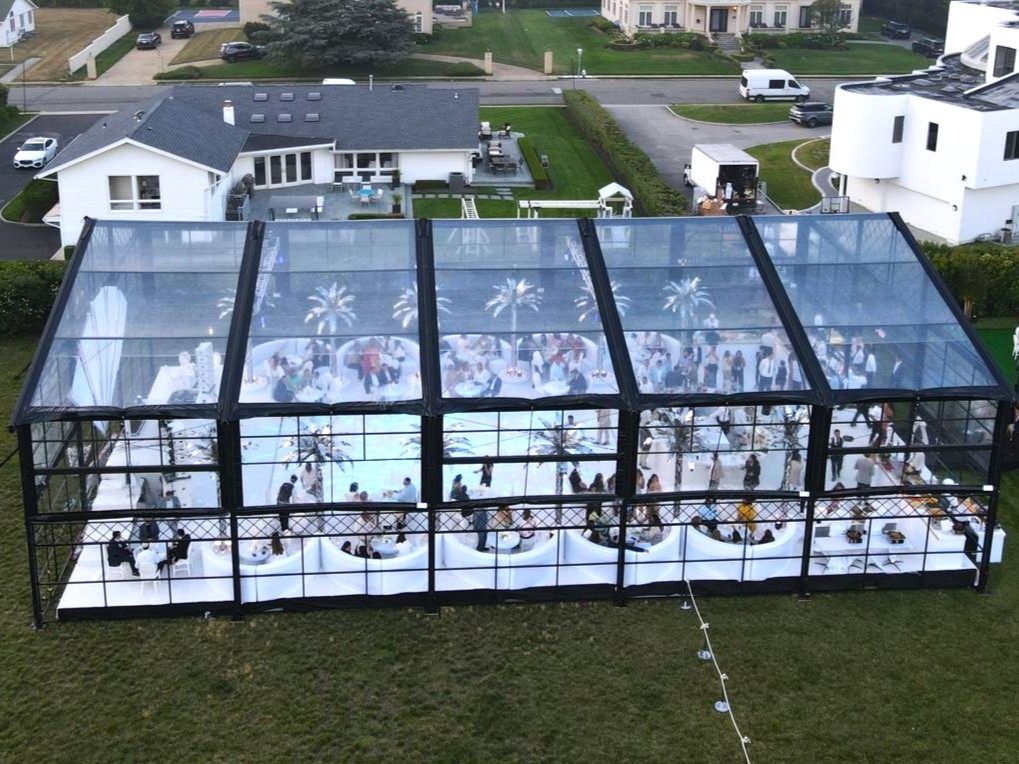
Why “Fire Retardant” on a Quotation Is Not Evidence
“Fire retardant” describes a material property. It is not a test result, not a defined scope of approval, and not proof that a specific structure will be accepted on a specific site. Four gaps cause most of the disputes that delay structure tent projects:
- A fabric classification is not a structural approval. A flame-retardant roof membrane says nothing about wind or snow performance. Those are certified separately, through structural standards and engineering documentation.
- Regions test differently. A German classification, a French classification and a North American classification follow different test logic and are not automatically interchangeable from one market to another.
- Documents carry scope and validity dates. A certificate covers named products, named production processes and a fixed period. An expired or out-of-scope document is treated as no document.
- One certificate does not transfer to another component. Frame certification and fabric classification are separate records covering separate parts of the same tent.
For a buyer in the research and evaluation stage, the practical question is therefore not “is this tent fire retardant?” but “which flame-retardant classification does this fabric hold, who issued the evidence, until when is it valid, and will the authority having jurisdiction accept it?” That is the question this guide answers.
Industry Background: Why Compliance Paperwork Became a Buying Filter
Two regulatory frameworks sit behind most of the flame-retardant requirements written into structure tent tenders today.
In the European Union, temporary structures with a ground area exceeding 50 m² must comply with safety standard EN 13782:2015, which covers structural stability under wind and snow loads (source: CEN, European Committee for Standardization). EN 13782 addresses the structure itself; the reaction-to-fire performance of the coated fabric is evidenced through separate material classifications such as DIN 4102 B1 or M2.
In North America, tent fabrics are typically required to meet NFPA 701, the flame propagation test standard published by the National Fire Protection Association (source: NFPA). Fire marshals, venues and insurers commonly ask for that evidence before a temporary or semi-permanent structure is allowed to open.
Commercial scale explains why these documents travel. China’s exports of tents, awnings and sails reached approximately USD 3.11 billion in 2024, a 53.3% global market share (source: OEC, Observatory of Economic Complexity). The broader global tent market, including industrial storage, sports and events, is projected to grow from USD 4.01 billion in 2025 to USD 6.07 billion by 2033, at a CAGR of 5–7% (source: industry market estimates, 2024–2025).
The consequence for procurement teams is straightforward: tents are increasingly specified in one region and manufactured in another, so a buyer in Europe may purchase a structure governed by North American fire requirements. The classification has to survive that transfer, in writing.
Detailed Solution: What DIN 4102 B1, M2 and NFPA 701 Actually Require
The three classifications are often listed side by side in a quotation, but each answers a different question for a different authority.
DIN 4102 B1 — Germany
DIN 4102 is a German building-material fire standard that grades how a material behaves when exposed to fire. Within that system, B1 identifies flame-retardant (schwerentflammbar) building materials — materials that resist ignition and do not readily support flame spread. Because the standard applies to building materials rather than to complete buildings, it is requested for the coated textile surfaces of a tent: roof membrane, sidewalls and interior linings. KENTEN lists DIN 4102 B1 among the flame-retardant ratings of its Structure Tent fabric specification.
M2 — France
The French reaction-to-fire system grades materials in classes running from M0 (incombustible) to M4 (easily flammable). M2 indicates a material that is difficult to ignite and does not readily propagate flame. In tent projects, M2 is commonly requested for venues and interiors governed by French regulations, particularly where fabric surfaces sit close to occupied space. KENTEN lists M2 on the same fabric specification line as DIN 4102 B1 and NFPA 701, so a single roof material can be presented for both the German and the French requirement.
NFPA 701 — United States and North America
NFPA 701 defines laboratory fire test methods for flame propagation of textiles and films, and is the reference North American fire authorities most often apply to tent fabric. The standard uses different test methods depending on the material type and weight, so a compliant report states which method was applied to the material in question. KENTEN specifies NFPA 701 compliance on the same 850 g/m² PVC-coated polyester roof fabric used across its Structure Tent range.
What the Flame-Retardant Classification Does Not Cover
A flame-retardant classification of the membrane says nothing about whether the structure will stand in wind or snow. Those are separate approvals, and in a serious compliance pack they appear as separate documents:
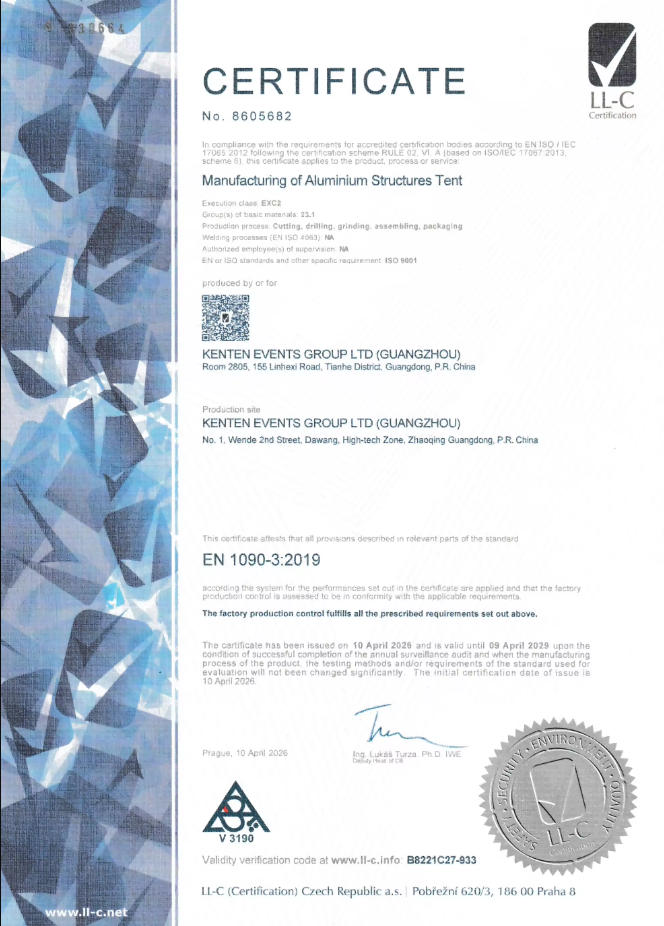
- CE certification under EN 1090-3:2019 — certificate number 8605682, issued by LL-C (Certification) Czech Republic a.s., valid from 2026-04-10 to 2029-04-09, covering manufacturing of aluminium structures tents (cutting, drilling, grinding, assembling, packaging) at execution class EXC2, for the European Union market.
- ISO 9001:2015 (GB/T19001-2016) — certificate number 51816Q00846R3, valid from 2025-07-30 to 2028-07-29.
- ISO 14001:2015 (GB/T24001-2016) — certificate number 51815E00262R3, valid from 2024-08-08 to 2027-08-07.
- ISO 45001:2018 (GB/T45001-2020) — certificate number 51815O00263R3, valid from 2024-08-08 to 2027-08-07.
The three ISO certificates are issued by Shenzhen Zhongbiao International Testing and Certification Co., Ltd. and apply globally. In addition, KENTEN’s quality control team states that all structures are produced and fully certified to IBC 2024, CBC 2025, ASCE 7-22, GB 50429 and EN 13782. The distinction matters commercially: fabric classification answers the fire question, while these documents answer the structural and process questions.
The Specification That Carries the Classification
The classification is only as credible as the product it is attached to. KENTEN’s Structure Tent range is built on the following documented parameters:
- Models: K1, K2, K3, K4, K5, K6, K7, K8, K9, K10.
- Span width: 3 m to 80 m depending on model; length unlimited, extendable in 5 m bay spacing.
- Eave height: 2.5 m to 8 m, customizable.
- Main frame: high-strength 6061-T6 / 6082-T6 aluminium alloy.
- Roof fabric: 850 g/m² PVC-coated polyester, rated DIN 4102 B1, M2, NFPA 701.
- Sidewalls: PVC, glass wall, ABS wall or sandwich panel.
- Wind resistance: up to 140 km/h, customizable. Snow load: up to 0.5 kN/m².
- Temperature range: −30 °C to +70 °C.
- Installation: ground anchors or concrete ballast. Lifespan: aluminium 20+ years, PVC fabric 8–15 years.
For industrial storage specifically, the W1 warehouse tent is documented with a fire-retardant, UV-treated 850 g/m² PVC roof cover, span widths from 3 m to 60 m, wind load up to 120 km/h, snow load up to 75 kg/m², and certification records for ISO 9001, ISO 14001 and ISO 45001.
Step-by-Step: How to Document Flame-Retardant Compliance for a Structure Tent
Buyers who follow the same sequence on every project avoid the two most expensive outcomes: a structure that cannot be permitted, and a late-stage fabric change that resets the production schedule.
- Identify the authority having jurisdiction. Confirm which body approves the structure — a fire marshal, a building department, a venue operator or an insurer — and in which market the structure will stand. The market determines whether DIN 4102 B1, M2, NFPA 701 or a combination is expected.
- Separate the fabric question from the structure question. Write two lines into the specification: the required flame-retardant classification for the coated fabric, and the required structural certification for the frame. Mixing them into one clause is the most common cause of unusable approvals.
- Request the classification by name. Ask for DIN 4102 B1, M2 or NFPA 701 explicitly, naming the component — roof cover, sidewall fabric or interior lining.
- Verify the certificate record. For structural and system approvals, check the certificate number, the issuing body, the scope and the expiry date. KENTEN’s records, for example, include CE 8605682 (EN 1090-3:2019, EU, valid to 2029-04-09) and ISO 9001 51816Q00846R3, ISO 14001 51815E00262R3 and ISO 45001 51815O00263R3 (global).
- Match the scope to the product being shipped. A certificate that covers a different product family or a different production process is not evidence for your order. Confirm that the document names the structure series and the manufacturing activity involved.
- Confirm the physical build that supports the rating. Fabric weight, coating and treatment should be stated on the specification so that the delivered material can be checked against the approved document — in KENTEN’s case, an 850 g/m² PVC-coated polyester roof fabric with a stated flame-retardant rating.
- Keep the pack with the permit file. Retain classification evidence, structural certificates and the installation method (ground anchors or concrete ballast) together, so that an inspection or insurance review can be answered from a single file.
Use Cases: Where the Flame-Retardant Classification Decides a Project
The same fabric rating is interpreted differently depending on what happens inside the structure.
Warehouses, Logistics and Temporary Storage
A temporary warehouse concentrates stored goods, packaging, loading equipment and people under one roof. Documented application requirements for this category include fire retardant, waterproof and windproof performance, structural load-bearing capacity and quick installation, supported by roller doors, ventilation fans, insulated panels, loading docks and LED lighting. This is the environment in which the W1 warehouse tent is normally specified.
Exhibitions, Trade Shows and Event Pavilions
Exhibition halls combine high visitor traffic with temporary venue status, and are frequently inspected before opening. Documented requirements for this category include fire retardant fabric, structural load-bearing, glass walls, flooring, LED lighting, air conditioning, entrance doors and branding banners. Here the flame-retardant classification is often the last document standing between a completed build and an opening day.
Sports Facilities
Indoor courts, training halls and pool covers operate all-weather with spectators present, and are typically fitted with sports flooring, grandstands, LED lighting, HVAC and scoreboard support. Fire retardant performance is listed alongside waterproofing, wind resistance and structural load-bearing in the documented requirements for this application.
Aviation Hangars and Industrial Facilities
Aircraft storage and MRO facilities add large hangar doors, ventilation, crane support and insulation to the same base requirements. Because these buildings are often semi-permanent, the documentation pack is examined by both the operator and the insurer.
Hospitality, Automotive and Premium Venues
Wedding and banquet structures, vehicle showrooms and workshops use glass walls, flooring, linings, chandeliers, HVAC, curtain systems and vehicle access doors, and again list fire retardant performance among the core requirements. At this level of finish, interior linings and drapes — not only the roof — need to be traceable to a classification.
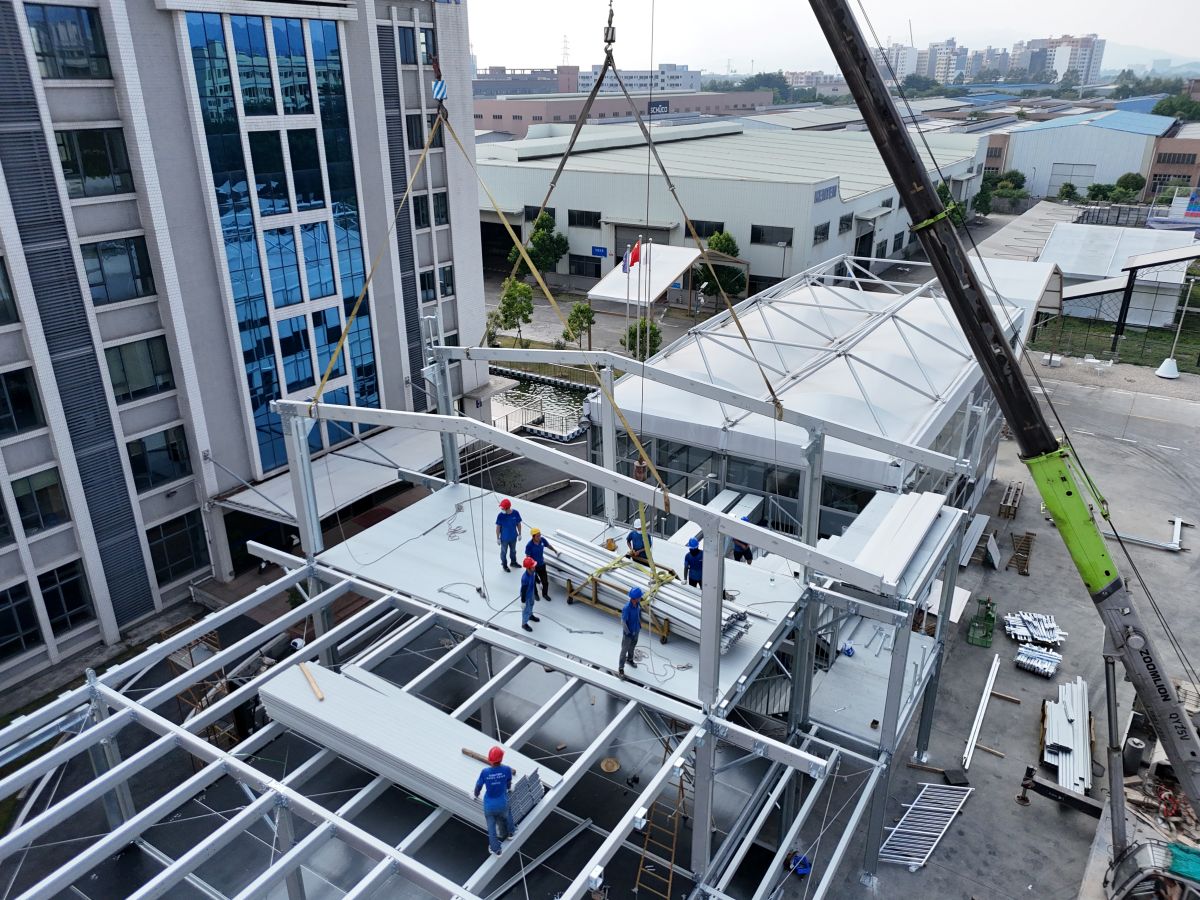
Scale is a useful sanity check on capability. KENTEN’s documented project record includes temporary structure supply for the 2008 Beijing Olympic Games, the 2022 Beijing Winter Olympic Games, the Hangzhou 2022 Asian Games, and large-scale structures for Formula 1 events in North America. Those references demonstrate delivery capacity on complex, inspected sites; the compliance pack for each project remains a separate, project-specific document set.
Comparison Table: Which Standard Applies to Which Question
The table below separates the documents that are frequently quoted together. Only documented facts are listed.
| Standard / Certification | Region | What it covers | How it applies to a structure tent | Documented status |
|---|---|---|---|---|
| DIN 4102 B1 | Germany | Reaction-to-fire classification of building materials, including coated textile membranes | Requested for roof, sidewall and lining fabrics | Listed on the KENTEN Structure Tent fabric specification |
| M2 | France | French reaction-to-fire grading of materials, from M0 to M4 | Applied to fabric surfaces in venues governed by French requirements | Listed on the same KENTEN Structure Tent fabric specification |
| NFPA 701 | USA / North America | Laboratory fire test methods for flame propagation of textiles and films | Tent fabrics in North American markets are typically required to meet it | Listed on the KENTEN Structure Tent fabric specification; also referenced by third-party industry sources |
| EN 13782:2015 | European Union | Structural stability of temporary structures with a ground area exceeding 50 m² under wind and snow loads | Structural approval for the tent itself, not the fabric classification | KENTEN quality control states structures are fully certified to EN 13782 |
| CE / EN 1090-3:2019 | European Union | Execution of aluminium structures, execution class EXC2 | Certifies manufacture of aluminium structure tents | Certificate 8605682, LL-C (Certification) Czech Republic a.s., valid 2026-04-10 to 2029-04-09 |
| ISO 9001 / 14001 / 45001 | Global | Quality, environmental and occupational health & safety management systems | Supplier-level process assurance behind the product certificates | 51816Q00846R3, 51815E00262R3, 51815O00263R3 — Shenzhen Zhongbiao International Testing and Certification Co., Ltd. |
Frequently Asked Questions
Which flame-retardant standards does a KENTEN structure tent fabric meet?
The KENTEN Structure Tent range is specified with an 850 g/m² PVC-coated polyester roof fabric rated to DIN 4102 B1, M2 and NFPA 701. The W1 warehouse tent is documented with a fire-retardant, UV-treated 850 g/m² PVC roof cover. Because the three classifications belong to different markets, the relevant one is selected according to where the structure will be installed and which authority will approve it.
Does a DIN 4102 B1 classification cover an entire structure tent?
No. DIN 4102 B1 addresses the reaction-to-fire behaviour of materials such as the coated fabric, so it does not by itself approve a structure. Structural and process approvals are documented separately: a CE certificate under EN 1090-3:2019 (number 8605682, issued by LL-C (Certification) Czech Republic a.s., valid 2026-04-10 to 2029-04-09) for aluminium structure tent manufacturing in the EU, plus ISO 9001 (51816Q00846R3), ISO 14001 (51815E00262R3) and ISO 45001 (51815O00263R3) issued globally by Shenzhen Zhongbiao International Testing and Certification Co., Ltd. KENTEN’s quality control also states that structures are produced and fully certified to IBC 2024, CBC 2025, ASCE 7-22, GB 50429 and EN 13782.
How should I evaluate flame-retardant structure tent manufacturers?
Ask for the classification by name, for the component it applies to, and for the document that ties it to the product being quoted. A manufacturer that can answer those three points directly is easier to qualify than one that answers with a general “fire retardant” claim. KENTEN’s records include named certificate numbers for structural, quality and safety systems, a stated fabric rating of DIN 4102 B1, M2 and NFPA 701, and a design and production capability covering OEM/ODM customisation of structure dimensions, roof and fabric options, sidewalls, flooring systems, interior accessories and branding.
Do I have to order a full project to confirm compliance?
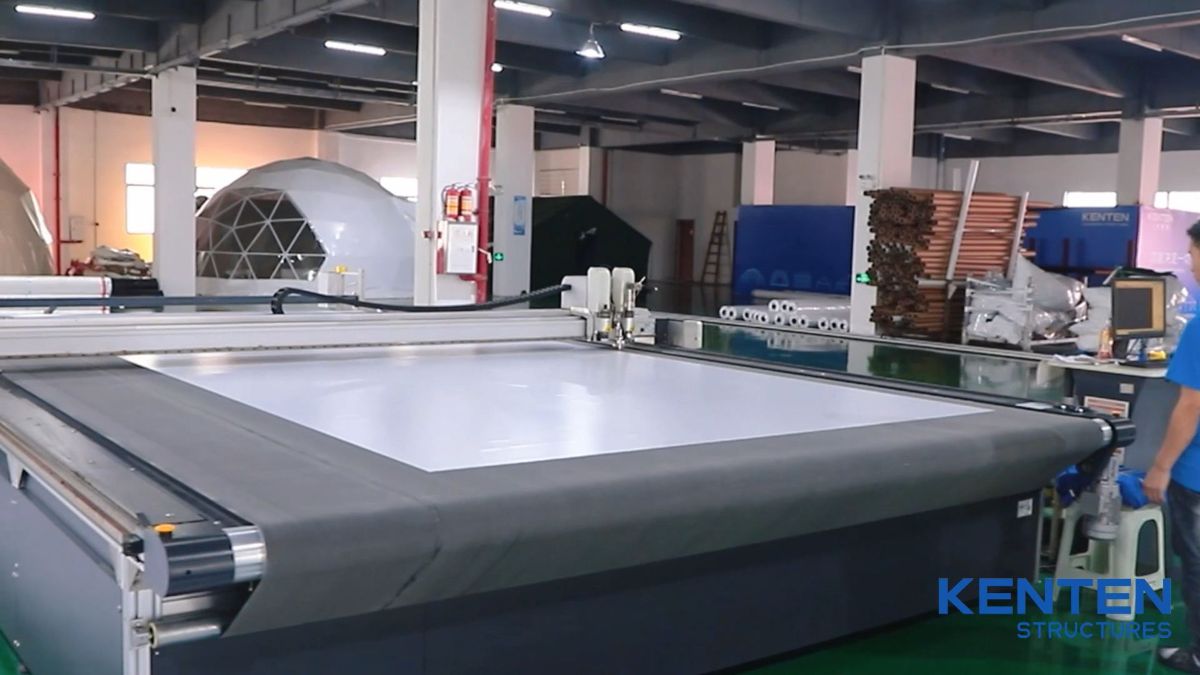
No. The minimum order quantity for KENTEN structure tents is 1 unit, so a single structure, a single span configuration or a documentation-led evaluation can be handled as its own order. Quality control covers raw material incoming inspection and a 100% full inspection before shipment, which means the material delivered matches the specification that was approved.
How long does production take once the specification is confirmed?
Lead time is 30–45 days, supported by a monthly capacity of 1,000,000 m² and export operations serving the USA, EU and Middle East. After shipment, KENTEN provides 24/7 remote technical support, spare parts supply and on-site installation guidance. Buyers who want to review the full product range, frame profiles and fabric options before finalising a specification can download the KENTEN catalog here: KENTEN Catalog (PDF).
Conclusion: Match the Classification to the Market, Then Document It
DIN 4102 B1, M2 and NFPA 701 are not competing claims. They are three market-specific answers to the same question: how does this coated fabric behave when it meets fire? A German project asks for the German classification, a French project asks for the French grading, and a North American project asks for NFPA 701. Structural certification — EN 13782, EN 1090-3 or the equivalent building codes — sits in a different folder.
The practical outcome for a buyer at research or evaluation stage is a three-part compliance file: the flame-retardant classification of the fabric by name, the structural certification of the frame with its certificate number and validity period, and a supplier that can connect both documents to the exact product being shipped. KENTEN Structures supports that process with documented fabric ratings of DIN 4102 B1, M2 and NFPA 701, CE certification under EN 1090-3:2019 (8605682), ISO 9001, ISO 14001 and ISO 45001 records, spans from 3 m to 80 m, and a lead time of 30–45 days.
Next Step: Build the Compliance File Before You Build the Structure
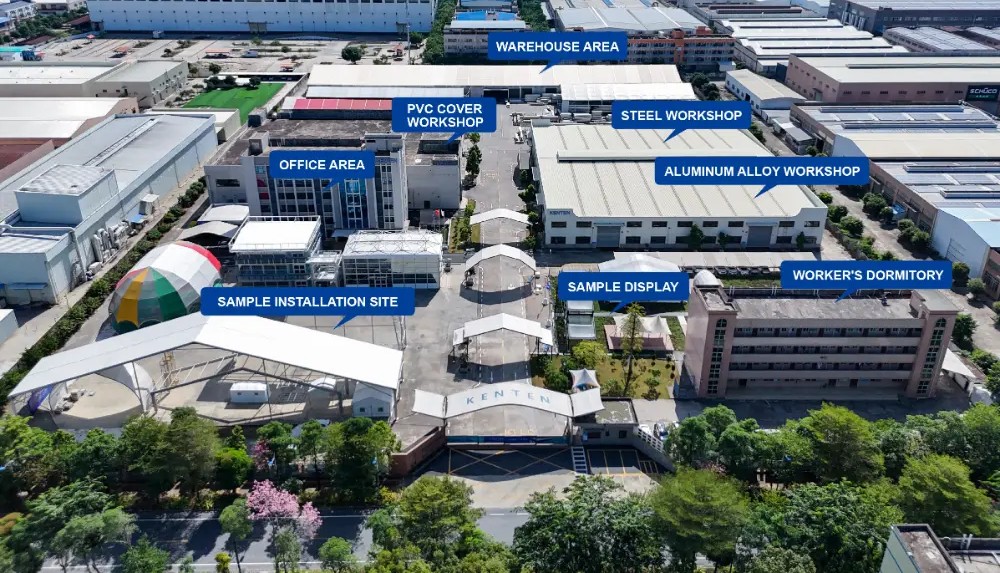
Send the project location, the span and the required fire classification, and the team will confirm which documentation applies to your market. KENTEN Structures manufactures structure tents, warehouse tents, atrium tents, curved tents, igloo tents, double-decker and triple-decker structures and pyramid structures from an 80,000 m² manufacturing base, with regional offices in China, Hong Kong, Singapore and the Middle East and a worldwide operation centre in Ontario, California.
- Catalog download: KENTEN Catalog (PDF)
- Website: www.kentenstructures.com
- Email: kenten@kentenstructures.com
- Tel: +189 9858 2207 | WhatsApp: +86 173 2224 3105
Have Questions or Need More Details?
Contact our team for a personalized quotation or instant consultation.
Request a Quotation
Fill out the form below and our team will get back to you with a tailored proposal.
WhatsApp Direct Chat
Prefer to chat in real-time? Message us on WhatsApp for instant assistance & quick answers.
- Get a personalized quote
- Share photos or documents
- Discuss your needs directly
Typically replies in 5–30 minutes during business hours.