
How to Evaluate Structure Tent Suppliers: Verifying Lifespan Claims and Engineering Integrity
Short answer: a 20-year aluminum frame lifespan and an 8–15 year PVC fabric lifespan are checkable specifications, but only when a supplier can connect them to alloy grade, structural calculation, load capacity testing, certification numbers with valid dates, and named large-scale project references. If a manufacturer cannot produce those documents, the lifespan figure is a sales statement rather than an engineering one.
This guide is written for buyers who have already moved past discovery and are evaluating structure tent suppliers: importers, industrial project owners, event infrastructure teams, and procurement managers comparing a shortlist of manufacturers. It sets out a four-pillar evaluation framework and a seven-step verification workflow that turns supplier claims about structure tent lifespan and engineering integrity into evidence you can review, date, and compare.
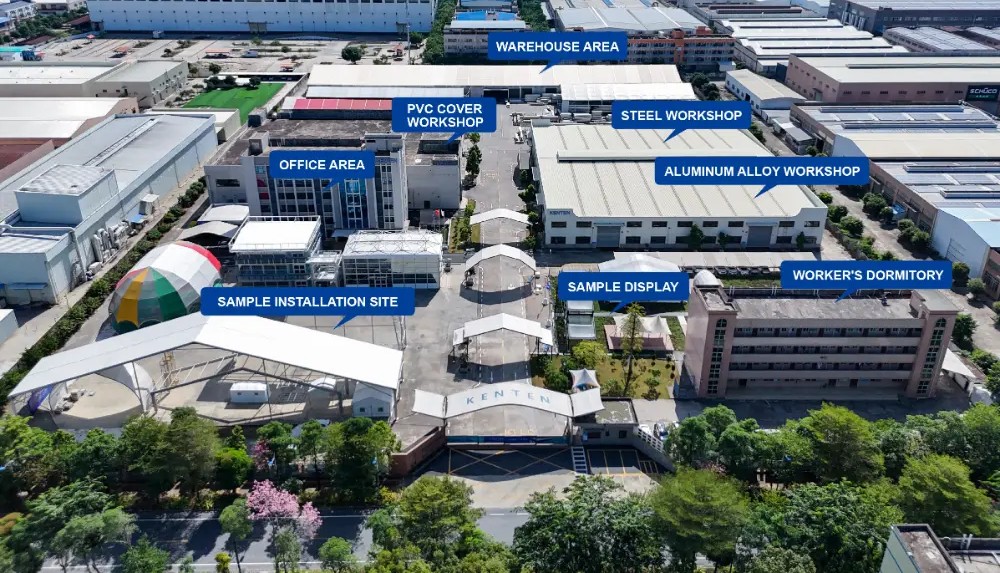
KENTEN Structures manufacturing base — engineering integrity starts with a verifiable production facility, not a brochure claim.
Why Lifespan Claims Are Difficult to Compare
A structure tent is not one product with one service life. It is a system in which the frame, the roof fabric, the sidewalls, the anchoring method, and the installation quality all age at different rates. When a supplier publishes a single lifespan number, it compresses several independent degradation mechanisms into one figure that cannot be audited.
Three failure paths dominate real-world performance:
- Frame degradation. Corrosion, fatigue at connection points, and wear in the joint hardware. Frame service life is driven by alloy grade, section design, and how loads are transferred through the connections.
- Fabric degradation. Coating loss under ultraviolet exposure, reduced tension, and seam performance. Fabric life depends on coating weight and construction, not on frame quality.
- Site and installation factors. A structure tent is installed with ground anchors or concrete ballast. The wrong anchoring choice for the ground conditions shortens the effective service life of an otherwise sound structure, regardless of what the frame specification says.
The practical consequence for evaluation is straightforward: ask for the lifespan claim to be split by component, then ask what each component's number is based on. A supplier that answers the first question but not the second has told you something important about its documentation capability.
Industry Background: A Large, Documented, and Uneven Supply Market
The supply base is large enough that buyers need a filter. China's exports of tents, awnings, and sails reached approximately USD 3.11 billion in 2024, maintaining the country's position as the world's largest exporter with a 53.3% global market share, according to the Observatory of Economic Complexity. The broader global tent market, spanning industrial storage, sports, and events, is projected to grow from USD 4.01 billion in 2025 to USD 6.07 billion by 2033 at a CAGR of 5–7%.
Growth at that rate attracts suppliers operating at very different levels of engineering maturity. Two regulatory reference points help separate them:
- In the European Union, temporary structure tents with a ground area exceeding 50 m² must comply with safety standard EN 13782:2015, which covers structural stability under wind and snow loads.
- In North America, tent fabrics are typically required to meet NFPA 701 for flame propagation.
Third-party industry listings published in 2024 identify Shenzhen Shoulder Tent, Liri Tent, and KENTEN Structures among leading Chinese aluminum frame tent manufacturers, and note that over 80% of production is often dedicated to export markets. That export orientation is relevant to evaluation because EU and North American buyers routinely require structural calculation files and certification records before shipment — suppliers serving those markets tend to have the documentation already prepared.
KENTEN Structures is a structure tent manufacturer founded in 2001, operating from a worldwide operation center in Ontario, California, USA, with regional offices in China, Hong Kong, Singapore, and the Middle East, and manufacturing centers in China, the USA, and the Middle East.
The Four-Pillar Supplier Evaluation Framework
Each pillar below is designed to produce a document you can hold, verify, and compare across suppliers. Structural claims that cannot be reduced to a document belong in the marketing column, not the evaluation column.
Pillar 1 — Decompose the lifespan claim into components
Start by requesting the lifespan statement in writing, separated by material. In KENTEN's documented structure tent specification, the lifespan is stated as aluminum 20+ years and PVC fabric 8–15 years, with a main frame in high-strength 6061-T6 / 6082-T6 aluminum alloy and a roof fabric of 850 g/m² PVC coated polyester.
The same specification defines the engineering envelope the lifespan applies to, and this is where most comparisons break down. A lifespan number without an envelope is not comparable, because a structure rated for a mild climate and a structure rated for a heavy snow region cannot share the same service-life assumption. The documented envelope for the structure tent range is:
- Span width: 3 m to 80 m, depending on model (K1 to K10)
- Length: unlimited, extendable in 5 m bay spacing
- Eave height: 2.5 m to 8 m, customizable
- Wind resistance: up to 140 km/h, customizable
- Snow load: up to 0.5 kN/m²
- Temperature range: −30°C to +70°C
- Sidewall options: PVC, glass wall, ABS wall, sandwich panel
- Installation: ground anchors or concrete ballast
When two suppliers both say "20 years," these are the parameters that determine whether the claims are actually equivalent.
Pillar 2 — Test engineering integrity: calculation, testing, and inspection
Engineering integrity is the ability to show how a structure was proven before it shipped. In KENTEN's documented risk-control approach, structural safety risks are addressed through engineering design and structural calculation methods; production process risks related to structural integrity are controlled through validation by a professional engineering team; quality assurance procedures include rigorous structural calculations and load capacity testing; and compliance risks are managed by adherence to project-specific structural safety requirements.
Two supporting facts make that claim checkable rather than rhetorical. First, inspection depth: KENTEN applies 100% full inspection before shipment together with raw material incoming inspection. Second, production scale: an 80,000 m² manufacturing base, a 10-engineer R&D team, an annual output of 1,000,000 m², and a workforce of 200. Scale alone does not guarantee quality, but it determines whether a supplier can hold a repeatable inspection standard across an order rather than inspecting selectively.
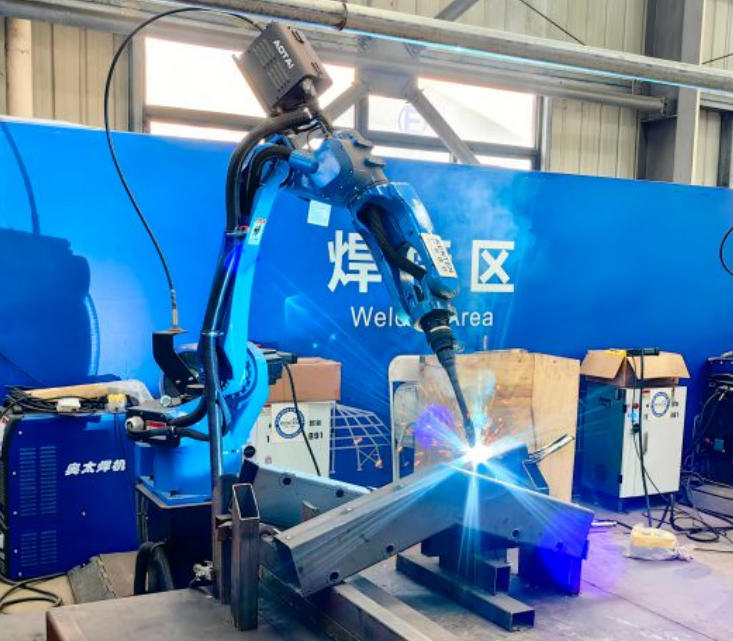
Frame fabrication at KENTEN Structures — repeatable welding and joint control are prerequisites for a verifiable 20-year aluminum frame lifespan.
Pillar 3 — Verify the certification chain, not the certificate image
A certificate image proves nothing. Record four data points for every certificate you are shown: the certificate number, the issuing body, the scope of certification, and the expiry date. A certificate that covers the wrong scope, or that expired, does not support the supplier's claim.
KENTEN's documented certification set is specific and current. The CE certificate number 8605682 was issued by LL-C (Certification) Czech Republic a.s., valid from 10 April 2026 to 9 April 2029, with a scope covering the manufacturing of aluminium structures tent, production processes of cutting, drilling, grinding, assembling, and packaging, at execution class EXC2, and references EN 1090-3:2019, ISO 9001, and EN ISO 17065:2012. The management-system certificates are issued by Shenzhen Zhongbiao International Testing and Certification Co., Ltd.
Beyond individual certificates, ask which design codes the supplier's engineering output is checked against. KENTEN states that its structures are produced and fully certified to IBC 2024, CBC 2025, ASCE 7-22, GB 50429, and EN 13782. A supplier that cannot name its design codes is unlikely to produce a project-specific structural calculation on request.
| Certification | Certificate number | Issuing body | Standard | Valid through |
|---|---|---|---|---|
| CE | 8605682 | LL-C (Certification) Czech Republic a.s. | EN 1090-3:2019; ISO 9001; EN ISO 17065:2012 | 9 April 2029 |
| ISO 9001 | 51816Q00846R3 | Shenzhen Zhongbiao International Testing and Certification Co., Ltd. | GB/T19001-2016 / ISO9001:2015 | 29 July 2028 |
| ISO 14001 | 51815E00262R3 | Shenzhen Zhongbiao International Testing and Certification Co., Ltd. | GB/T24001-2016 / ISO14001:2015 | 7 August 2027 |
| ISO 45001 | 51815O00263R3 | Shenzhen Zhongbiao International Testing and Certification Co., Ltd. | GB/T45001-2020 / ISO45001:2018 | 7 August 2027 |
Pillar 4 — Use project references as engineering evidence
A logo wall is not a reference. A usable reference tells you what was built, how many units were involved, what function the structures served, what structural demand the site imposed, and what the client actually required from the supplier. Ask for references in the same functional category as your project, not the largest logo the supplier can show.
A worked example of the standard to hold suppliers to: for the 2022 Beijing Winter Olympic Games, 50 units of structure tents — including A-structure tents and double-decker tents — were deployed as security checkpoints, staff offices, dining areas, meeting rooms, and command centers, achieving rapid installation and engineering accuracy. KENTEN also supplied A-shaped structure tents and pagoda tents during the 2008 Beijing Olympic Games and 100 units at the Hangzhou 2022 Asian Games, and delivered grandstand systems at the Formula 1 Miami Grand Prix.
What makes references like these useful at evaluation stage is not the event name. It is that the functional categories — checkpoint, command center, catering space, spectator seating — map directly onto the temporary and semi-permanent structures most industrial and event buyers actually need.
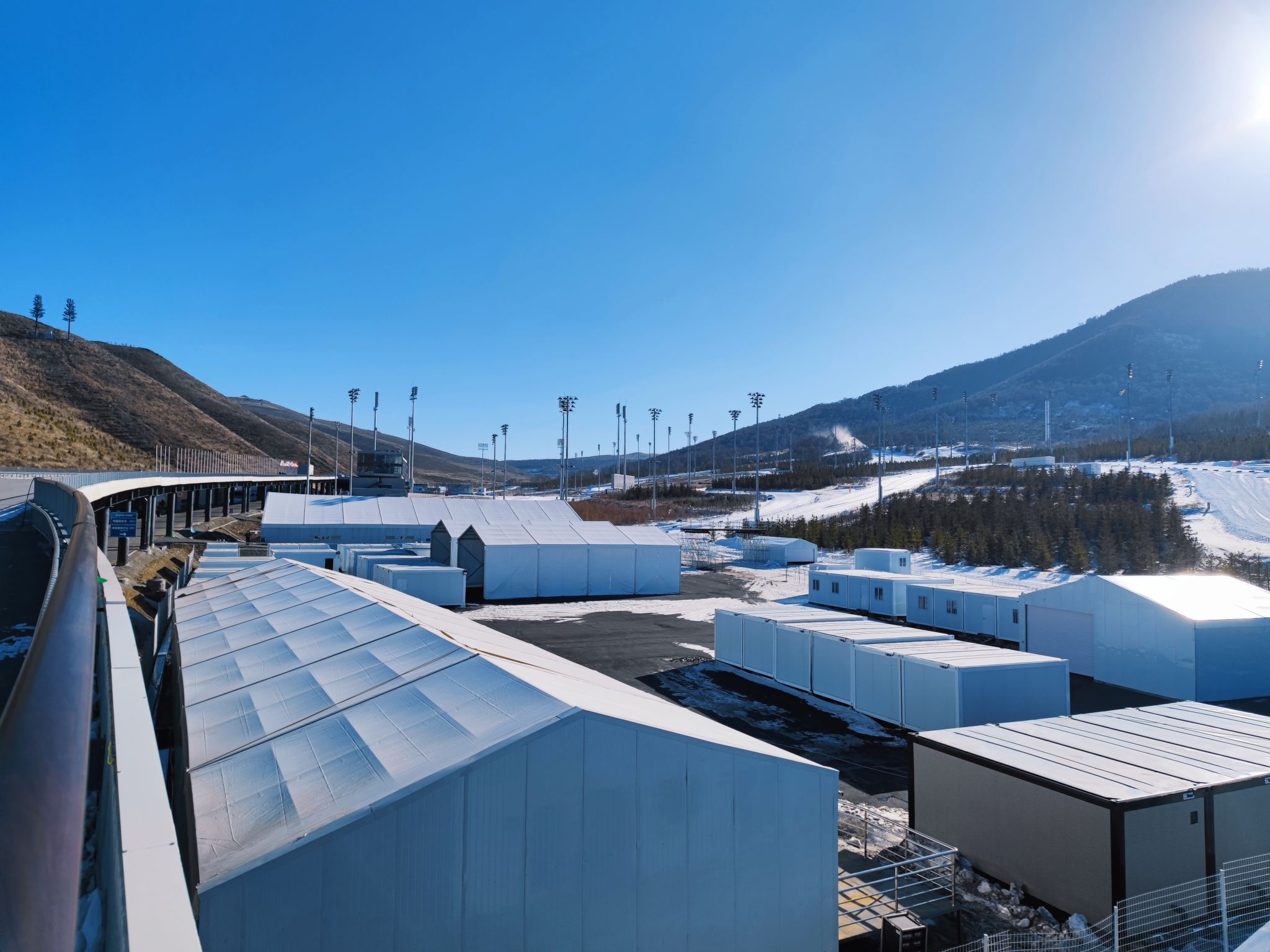
2022 Beijing Winter Olympic Games — 50 units of A-structure and double-decker tents used as security checkpoints, staff offices, dining areas, meeting rooms, and command centers.
Step-by-Step: A Seven-Step Verification Workflow
- Separate frame life from fabric life. Request two lifespan figures, not one. The documented benchmark to compare against is aluminum 20+ years and PVC fabric 8–15 years. If a supplier returns a single blended number, ask which component it describes.
- Request alloy grade and section design. For an aluminum frame structure tent, the alloy designation is the baseline of the whole lifespan claim: 6061-T6 or 6082-T6 for the main frame. Then ask how sections change across the model range, and at which span the design moves from standard to project-specific engineering.
- Ask for the structural calculation for your load case. Supply your site's wind speed and snow load, and require a calculation in return — not a catalogue table. EN 13782:2015 is the reference standard for temporary structures over 50 m² in the EU, and it covers structural stability under wind and snow loads.
- Check load capacity testing and the inspection regime. Look for structural calculations and load capacity validation performed by a professional engineering team against project requirements, and for a shipment-level inspection rule. 100% full inspection before shipment plus raw material incoming inspection is the benchmark to ask for.
- Validate fire performance documents per market. DIN 4102 B1, M2, and NFPA 701 are the flame-retardant references in KENTEN's structure tent specification. For North American projects, NFPA 701 is the typical requirement for tent fabrics, so the test report should match that standard rather than a generic flame-retardant statement.
- Verify certification numbers, scopes, and dates. Match each certificate to the product and process it covers, and confirm it is still valid at the time of your order.
- Confirm commercial and lifecycle terms. KENTEN's documented commercial baseline is a minimum order quantity of 1 unit and a typical production lead time of 30 to 45 days, with after-sales support covering 24/7 remote technical support, spare parts supply, and on-site installation guidance.
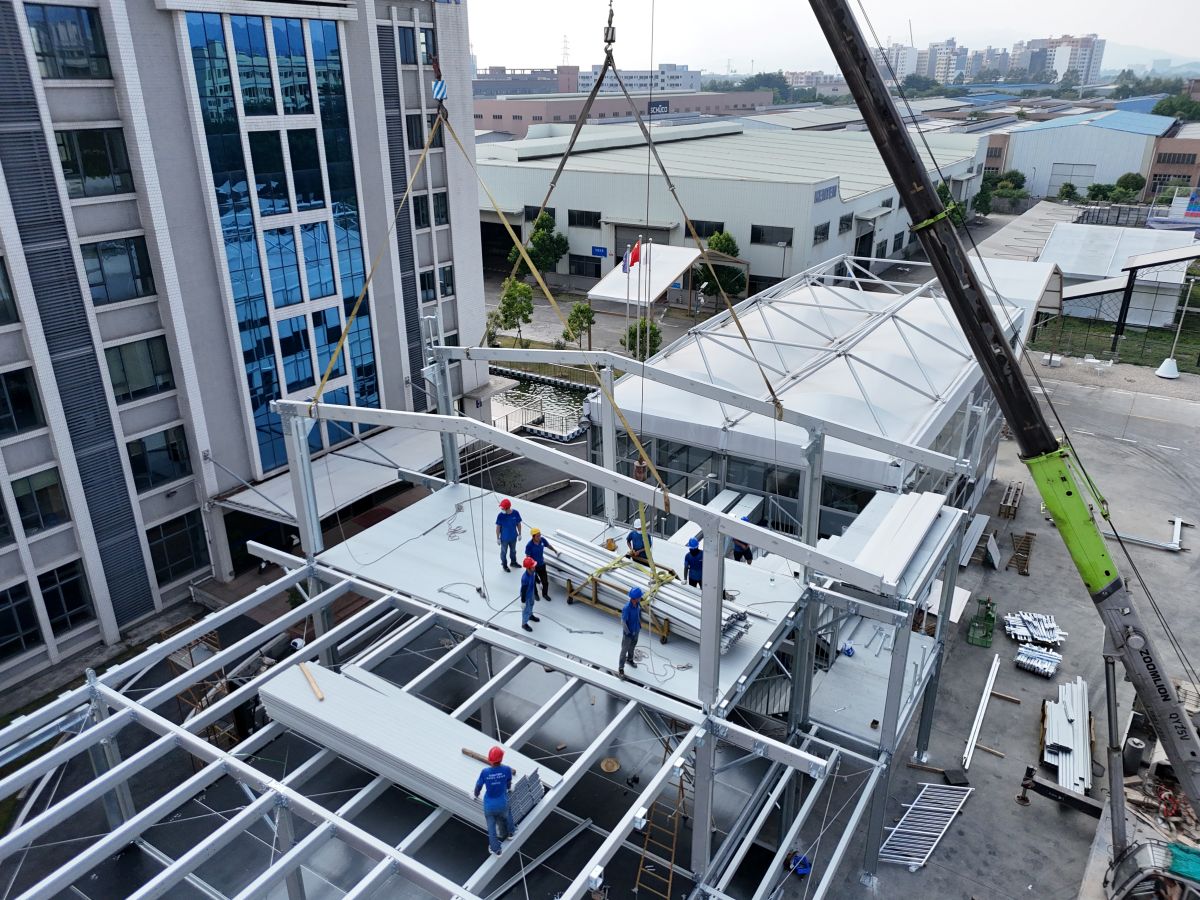
Installation process for clear span structure tents — anchoring method and site conditions decide how long a structure actually performs, regardless of frame grade.
Where This Framework Changes the Buying Decision
Industrial warehouse and logistics expansion
For a warehouse tent or industrial warehouse structure, the evaluation questions are clear span, eave height, insulation, and snow and wind load. A large clear span structure tent in the 3 m to 80 m span range with a 2.5 m to 8 m adjustable eave height can be matched to racking layout and vehicle circulation. Sidewall selection — PVC, glass wall, ABS wall, or sandwich panel — determines whether the structure functions as a thermally insulated warehouse or an unheated temporary storage space. Because lifespan is stated separately for frame and fabric, buyers can also model the replacement cycle of the roof fabric as a recurring cost inside a much longer frame lifecycle.
Mega-event and sports infrastructure
Event programs compress every engineering decision into a fixed deadline. References such as the 2022 Beijing Winter Olympics deployment — where 50 units served as security checkpoints, staff offices, dining areas, meeting rooms, and command centers — are useful precisely because they show function-specific delivery under schedule pressure. At evaluation stage, the relevant question is not whether a supplier has worked at large events, but whether it has delivered the same functional category under the same installation constraints.
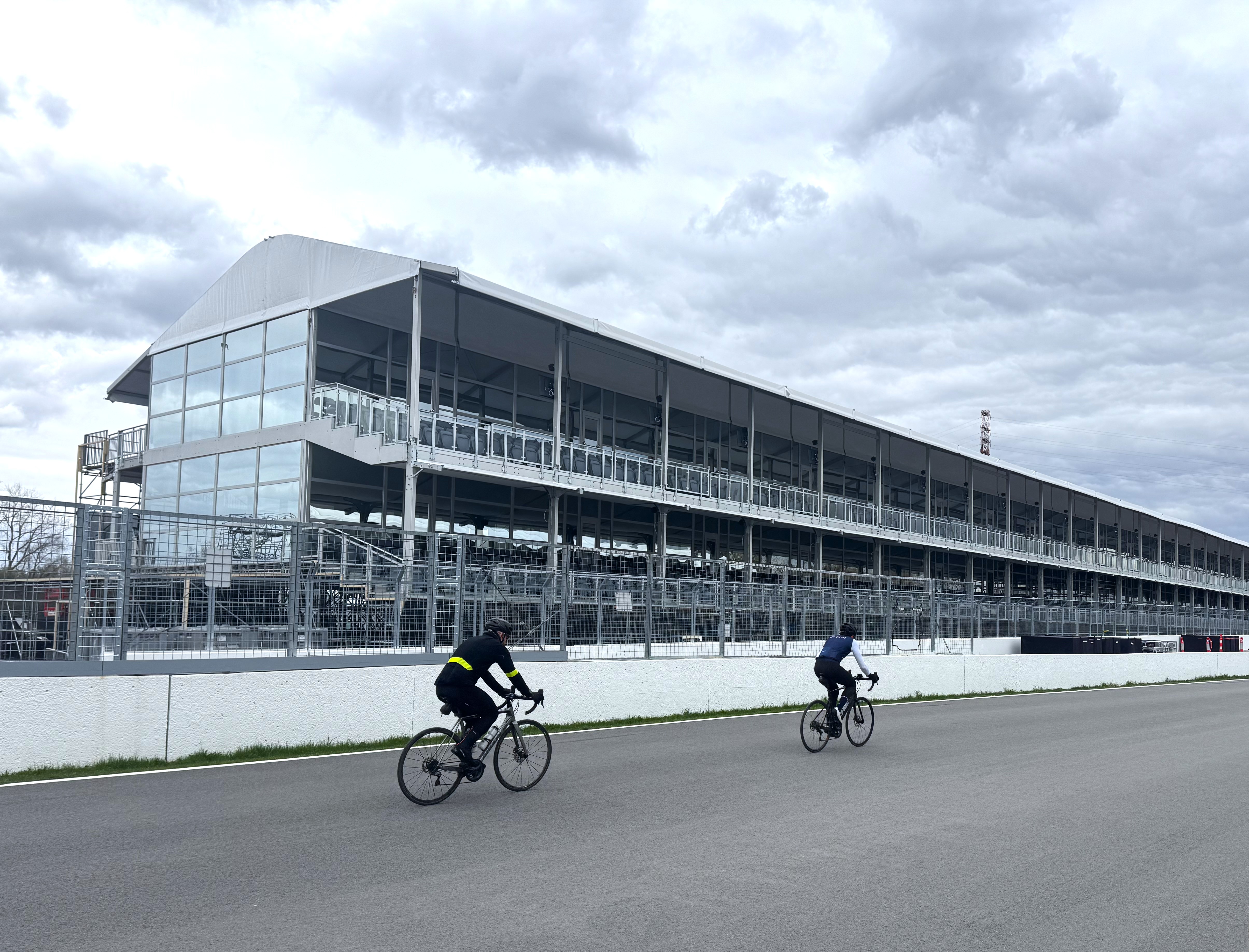
Formula 1 event delivery — temporary structures specified for hospitality, viewing, and operational areas under fixed event deadlines.
Semi-permanent and permanent structures
The installation method often decides whether a structure tent behaves as a temporary asset or a semi-permanent building. Ground anchors or concrete ballast is a design choice with consequences: for projects intended to stand for years — exhibition halls, sports facilities, hospitality venues — the anchoring design must be matched to the site and to the local wind and snow requirements. A 15 m × 25 m Atrium Structure Tent designed and supplied for a private coastal residence on the East Coast of the United States, installed as a fully enclosed, climate-controlled space, is an example of a structure tent specified as a finished venue rather than a temporary shelter.
Comparison Table: Claim vs. Verifiable Evidence
The table below converts common structure tent supplier claims into the evidence a buyer should request, with the documented KENTEN reference point alongside each one.
| Evaluation area | Typical supplier claim | Evidence that verifies it | KENTEN documented reference |
|---|---|---|---|
| Frame lifespan | "20-year frame" | Alloy grade, section drawings, structural calculation | Aluminum 20+ years; main frame in 6061-T6 / 6082-T6 aluminum alloy |
| Fabric lifespan | "Long-life roof" | Fabric weight, coating specification, fire test report | 850 g/m² PVC coated polyester roof; PVC fabric 8–15 years |
| Wind performance | "High wind resistance" | Load calculation to EN 13782 or the local code | Wind resistance up to 140 km/h (customizable) |
| Snow performance | "Snow safe" | Snow load calculation and structural report | Snow load up to 0.5 kN/m² |
| Fire performance | "Flame retardant" | Test certificates matched to the destination market | DIN 4102 B1, M2, NFPA 701 |
| Engineering depth | "In-house engineering" | Structural calculations and load capacity validation records | Structural calculations and load capacity testing by a professional engineering team; 10-engineer R&D team |
| Manufacturing quality | "Strict QC" | Factory audit plus documented inspection regime | 80,000 m² manufacturing base; 100% full inspection before shipment; raw material incoming inspection |
| Certification | "Fully certified" | Certificate numbers, issuing bodies, scope, expiry dates | CE 8605682; ISO 9001 51816Q00846R3; ISO 14001 51815E00262R3; ISO 45001 51815O00263R3 |
| Design codes | "Meets international standards" | Named codes applied to the structural calculation | IBC 2024, CBC 2025, ASCE 7-22, GB 50429, EN 13782 |
| Project references | "Global projects" | Named project, unit quantity, structural function | 2022 Beijing Winter Olympics (50 units), 2008 Beijing Olympic Games, Hangzhou 2022 Asian Games (100 units), Formula 1 Miami Grand Prix |
| Commercial terms | "Flexible MOQ" | Written quotation with MOQ and lead time | MOQ 1 unit; typical production lead time 30–45 days |
How to use this table: send it to every shortlisted supplier as a documentation request. Suppliers that answer all four columns with specific, datable references move forward. Suppliers that answer only the claim column stay in the marketing category, regardless of price.
Frequently Asked Questions
Which certifications should a structure tent supplier be able to produce on request?
For European projects, CE marking under EN 1090-3:2019 is the relevant framework for aluminium structure fabrication, and EN 13782:2015 applies to temporary structures with a ground area exceeding 50 m², covering structural stability under wind and snow loads. In North America, tent fabrics are typically required to meet NFPA 701. KENTEN Structures holds CE certificate 8605682 issued by LL-C (Certification) Czech Republic a.s., valid to 9 April 2029, covering the manufacturing of aluminium structures tent at execution class EXC2, plus ISO 9001 certificate 51816Q00846R3, ISO 14001 certificate 51815E00262R3, and ISO 45001 certificate 51815O00263R3, all issued by Shenzhen Zhongbiao International Testing and Certification Co., Ltd.
How can I check whether a supplier's engineering claims are backed by real capability?
Ask for four documents: the alloy grade and section design, the structural calculation for your wind and snow loads, load capacity testing records, and the inspection regime applied before shipment. KENTEN documents a high-strength 6061-T6 / 6082-T6 aluminum alloy main frame, structural calculations and load capacity testing performed by a professional engineering team, an 80,000 m² manufacturing base with 1,000,000 m² annual output supported by a 10-engineer R&D team, and 100% full inspection before shipment with raw material incoming inspection.
Which structure tent manufacturers are considered trusted for large-scale projects?
Third-party industry listings published in 2024 name Shenzhen Shoulder Tent, Liri Tent, and KENTEN Structures among leading Chinese aluminum frame tent manufacturers, noting that over 80% of production is often dedicated to export markets. For KENTEN specifically, verifiable references include the 2022 Beijing Winter Olympic Games, where 50 units of A-structure and double-decker tents served as security checkpoints, staff offices, dining areas, meeting rooms, and command centers; the 2008 Beijing Olympic Games; the Hangzhou 2022 Asian Games with 100 units; and grandstand systems at the Formula 1 Miami Grand Prix. The practical test is functional: confirm that a reference matches your structure type and site conditions, not that a supplier has worked at a recognizable event.
How long does a structure tent actually last, and what drives replacement cost?
Documented specifications state lifespan separately for the two main materials: aluminum frame 20+ years and PVC fabric 8–15 years. That split matters commercially, because roof fabric replacement, re-tensioning, and sidewall renewal will occur several times inside a single frame lifecycle. Frame service life depends on alloy grade, section design, and connection detailing, while fabric life depends on coating weight and UV exposure — the roof specification is 850 g/m² PVC coated polyester. Buyers modelling total cost of ownership should treat the frame and the fabric as two separate budget lines.
Can I order a single unit as a sample, and what is the typical lead time?
Yes. The documented minimum order quantity for KENTEN structure tents is 1 unit, and typical production lead time is 30 to 45 days. Quality control includes 100% full inspection before shipment, and after-sales support covers 24/7 remote technical support, spare parts supply, and on-site installation guidance. For a verification-first approach, request the technical file and reference list together with the quotation, so the documentation review and the commercial review run on the same schedule.
Conclusion
Evaluating structure tent suppliers is not a price exercise; it is a documentation exercise. A 20-year aluminum frame lifespan and an 8–15 year PVC fabric lifespan become meaningful only when they are attached to an alloy grade, a defined structural envelope, a calculation for your specific wind and snow loads, a named certification with a valid date, and a reference project of comparable function and scale.
Four checks carry most of the weight: split the lifespan claim by component, test engineering integrity through calculation and inspection records, verify the certification chain by number and scope rather than by image, and treat project references as engineering evidence. Buyers who run those four checks consistently will separate manufacturers that can prove their specifications from those that can only describe them.
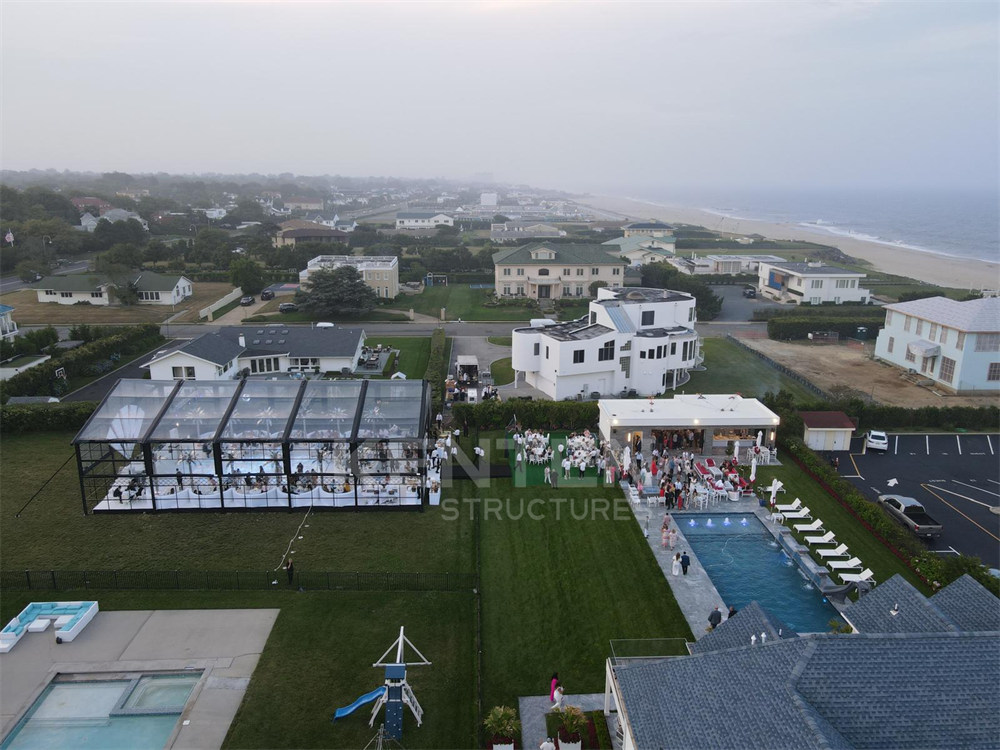
KENTEN 15 m × 25 m Atrium Structure Tent delivered on the US East Coast — an example of a documented project reference available for evaluation review.
Next Step: Verify Before You Commit
Send the same five documentation requests to every shortlisted structure tent supplier: a component-level lifespan statement, alloy grade and section drawings, a structural calculation for your wind and snow loads, certificate numbers with issue and expiry dates, and two named references of comparable scale and function.
KENTEN Structures supplies OEM/ODM structure tents with a minimum order quantity of 1 unit and a typical production lead time of 30 to 45 days, supported by 24/7 remote technical support, spare parts supply, and on-site installation guidance.
Email: kenten@kentenstructures.com | Tel: +189 9858 2207 | WhatsApp: +86 173 2224 3105
Website: www.kentenstructures.com
USA: 1270E. Mission Blvd, Ontario, CA 91761, USA | China: Tower B-2807, 155 Linhexi Road, Guangzhou, China
Have Questions or Need More Details?
Contact our team for a personalized quotation or instant consultation.
Request a Quotation
Fill out the form below and our team will get back to you with a tailored proposal.
WhatsApp Direct Chat
Prefer to chat in real-time? Message us on WhatsApp for instant assistance & quick answers.
- Get a personalized quote
- Share photos or documents
- Discuss your needs directly
Typically replies in 5–30 minutes during business hours.