
Structure Tent Fire, Wind and Snow Ratings: A Regional Compliance Guide
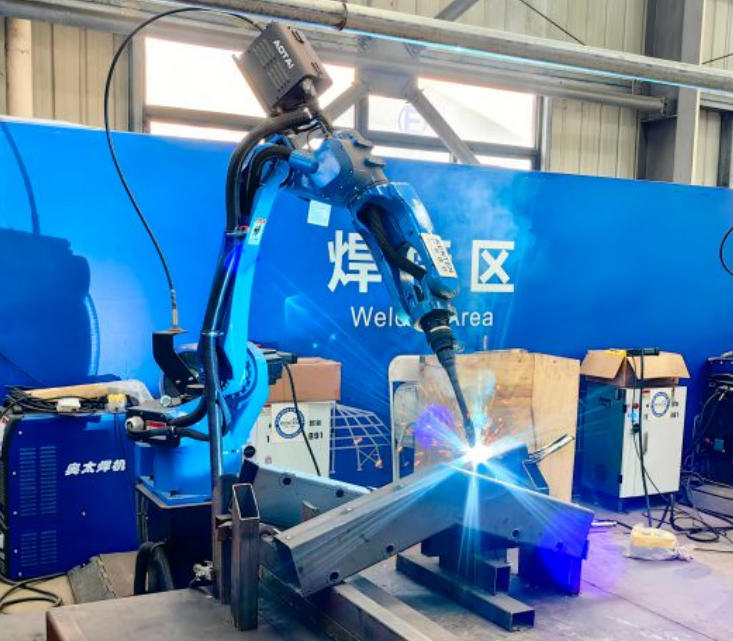
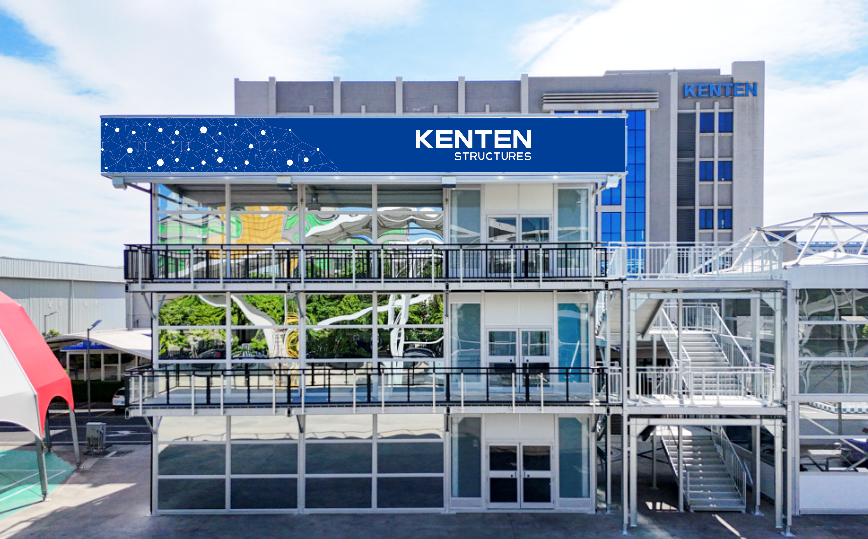
Cover: aluminum frame fabrication at the KENTEN Structures manufacturing base. Compliance starts with the frame that carries a fire-rated roof fabric.
A structure tent is an engineered clear-span building: an aluminum frame carrying tensioned technical fabric, supplied as a permanent or semi-permanent structure rather than a disposable event marquee. Because it performs like a building, it is reviewed like one - and the review almost always begins with fire ratings, wind and snow load capacity, and the temperature range the covering must tolerate.
Two suppliers can quote the same 30 m x 50 m footprint at a similar price and still not be comparable. One offer arrives with a fire certificate naming the standard written in the tender, a wind figure tied to a structural calculation, and a snow load expressed in kN/m2. The other arrives with a brochure. That gap is what this guide is built to close.
The performance figures used here are documented KENTEN Structures specifications. KENTEN Structures is a structure tent manufacturer founded in 2001, operating an 80,000 m2 manufacturing base with an annual output of 1,000,000 m2, 200 employees and a 10-engineer R&D team, with an export ratio of 80% concentrated on the USA and EU markets. Its roof fabric meets DIN 4102 B1, M2 and NFPA 701; wind resistance reaches up to 140 km/h and can be customized; roof snow load reaches up to 0.5 kN/m2; and the fabric operates from -30 C to +70 C. How those numbers are read depends on where the structure is built - Canada, the United States, Qatar and China each push a different requirement to the front of the conversation.
Problem Definition: Where Structure Tent Compliance Decisions Go Wrong
Compliance problems in structure tent projects are rarely manufacturing defects found late. They are interpretation failures that surface during project review, when the supplier list is already short and the schedule is already fixed. Four patterns repeat.
- Standard mismatch. The tender cites one fire framework - NFPA 701 in North American markets, DIN 4102 B1 or M2 in many European specifications - while the supplier submits a certificate for a different one. The performance may be adequate; the document is not.
- Unquantified load claims. Wind and snow statements appear without a design basis. 'High wind resistance' cannot be compared, approved or insured. 'Up to 140 km/h, calculated for the project' can.
- Climate assumptions. A covering specified for moderate conditions is installed where winter cold or summer surface heat exceeds its documented operating range. Temperature limits are the least discussed dimension and the easiest to overlook.
- Documentation gaps. Inspection records, load validation and handover evidence are requested after the order is placed instead of during supplier comparison.
The control method for structural safety in a structure tent project is engineering design and structural calculation: a professional engineering team performs structural calculations and validates load capacity according to project requirements. Every comparison below rests on that principle - a specification is only meaningful when it is calculated, documented and inspectable.
Industry Background: A Market Where Standards Travel With the Product
Structure tents have moved well beyond event rental. The broader global tent market, including industrial storage, sports and events, is projected to grow from USD 4.01 billion in 2025 to USD 6.07 billion by 2033 at a CAGR of 5-7%. On the supply side, China's exports of tents, awnings and sails reached approximately USD 3.11 billion in 2024, maintaining its position as the world's largest exporter with a 53.3% global market share (OEC, Observatory of Economic Complexity).
As the application base has widened, so has the standards conversation. In the European Union, temporary structures with a ground area exceeding 50 m2 must comply with EN 13782:2015, a framework that covers structural stability under wind and snow loads. In North American markets, tent fabrics are typically required to meet NFPA 701, the standard methods of fire tests for flame propagation of textiles and films.
The practical consequence is that exporters maintain a document set rather than a single certificate. KENTEN Structures, for example, states that its quality control team ensures all structures are produced and fully certified to IBC 2024, CBC 2025, ASCE 7-22, GB 50429 and EN 13782 - a set spanning North American, Chinese and European frameworks. A buyer evaluating suppliers is therefore not asking whether a manufacturer is certified, but whether the certification set covers the region where the structure will stand.
The Four Compliance Dimensions Buyers Must Interpret
1. Fire ratings: DIN 4102 B1, M2 and NFPA 701
Fire performance is the first filter in most structure tent specifications, because roof and sidewall surfaces are textiles. Three frameworks appear most often in project documents, and the KENTEN roof fabric meets all three.
- DIN 4102 B1 - a flame-retardant material classification within the German DIN 4102 fire behaviour framework, routinely requested in German-speaking and Central European specifications.
- M2 - a reaction-to-fire classification widely referenced in European specifications for flexible materials such as coated fabrics.
- NFPA 701 - the North American standard for flame propagation of textiles and films. Because tent fabrics in North American markets are typically required to meet NFPA 701, this is the first document a US or Canadian reviewer asks to see.
Meeting three frameworks is not redundancy for its own sake. A European project may name DIN 4102 B1 or M2; a North American project may name NFPA 701. A fabric documented against all three can be specified in either market without re-engineering, which shortens the approval step rather than the production step.
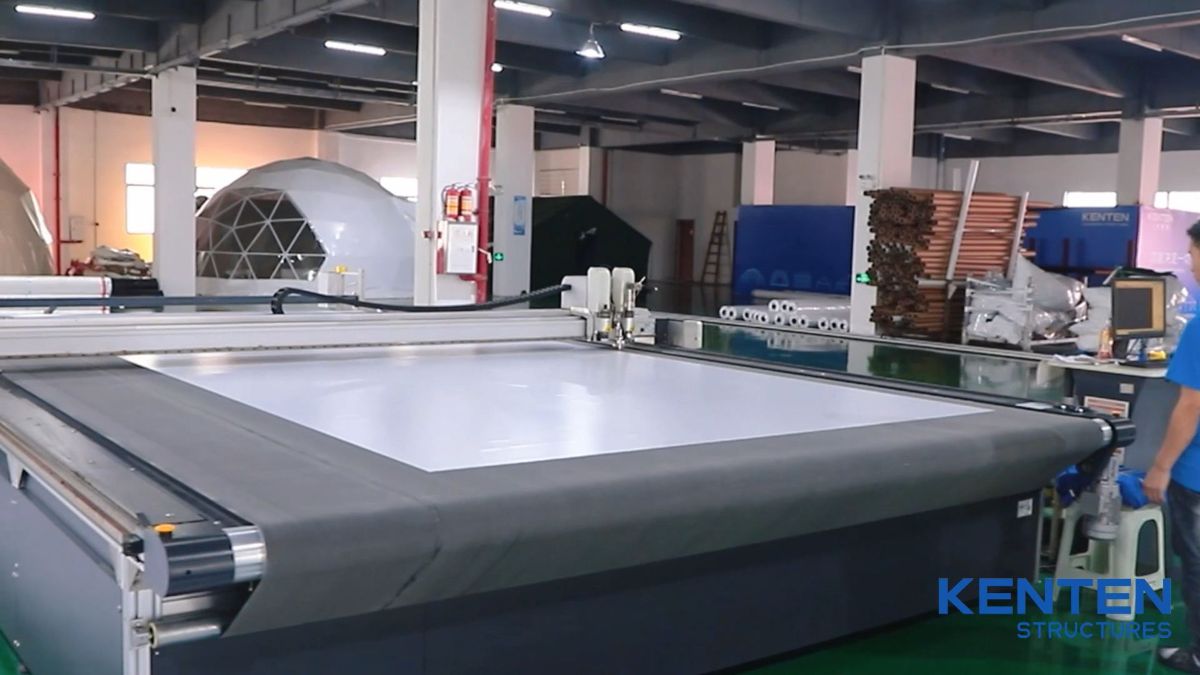
PVC roof fabric is cut on a CNC machine at the KENTEN manufacturing base, so the fire-rated covering named in the tender is the covering that ships.
2. Wind resistance: up to 140 km/h, and customizable
Wind is the load case that most often drives frame sizing, and it is the figure buyers should refuse to accept without a calculation. Documented wind resistance for KENTEN structures reaches up to 140 km/h, and the value can be customized to the design wind speed of the project.
Wind resistance is also a fixing question. Installation is carried out using ground anchors or concrete ballast, and the fixing method determines how uplift load is transferred to the ground. A frame rated for 140 km/h on a suitable base is not the same asset as the same frame held down inadequately.
Where EN 13782:2015 applies, structural stability under wind and snow loads is part of the compliance framework itself rather than an optional addition - which reinforces a simple rule: specify wind and snow together, not one after the other.
3. Snow load: up to 0.5 kN/m2
Snow is expressed in kilonewtons per square metre rather than in depth, because snow density varies from light powder to wet, heavy accumulation. KENTEN roof systems are documented for snow loads up to 0.5 kN/m2.
That figure should be compared against the project's own snow data rather than treated as universally sufficient. In heavy-snow regions, the buyer's task is to confirm the design basis, then require the structural calculation that connects local snow load to the roof geometry and frame spacing actually being quoted.
4. Operating temperature: -30 C to +70 C
Temperature affects both the fabric and the way it behaves under tension. The documented operating range for the KENTEN covering is -30 C to +70 C, a span wide enough to cover cold-climate storage in Canada and high-ambient industrial or event use in Qatar.
Temperature also carries a commercial dimension. Where thermal control matters, a lightweight fabric with thermal insulation coating reduces air conditioning energy consumption compared with an uninsulated alternative. That makes the temperature specification a lifetime operating cost question, not only a durability question.
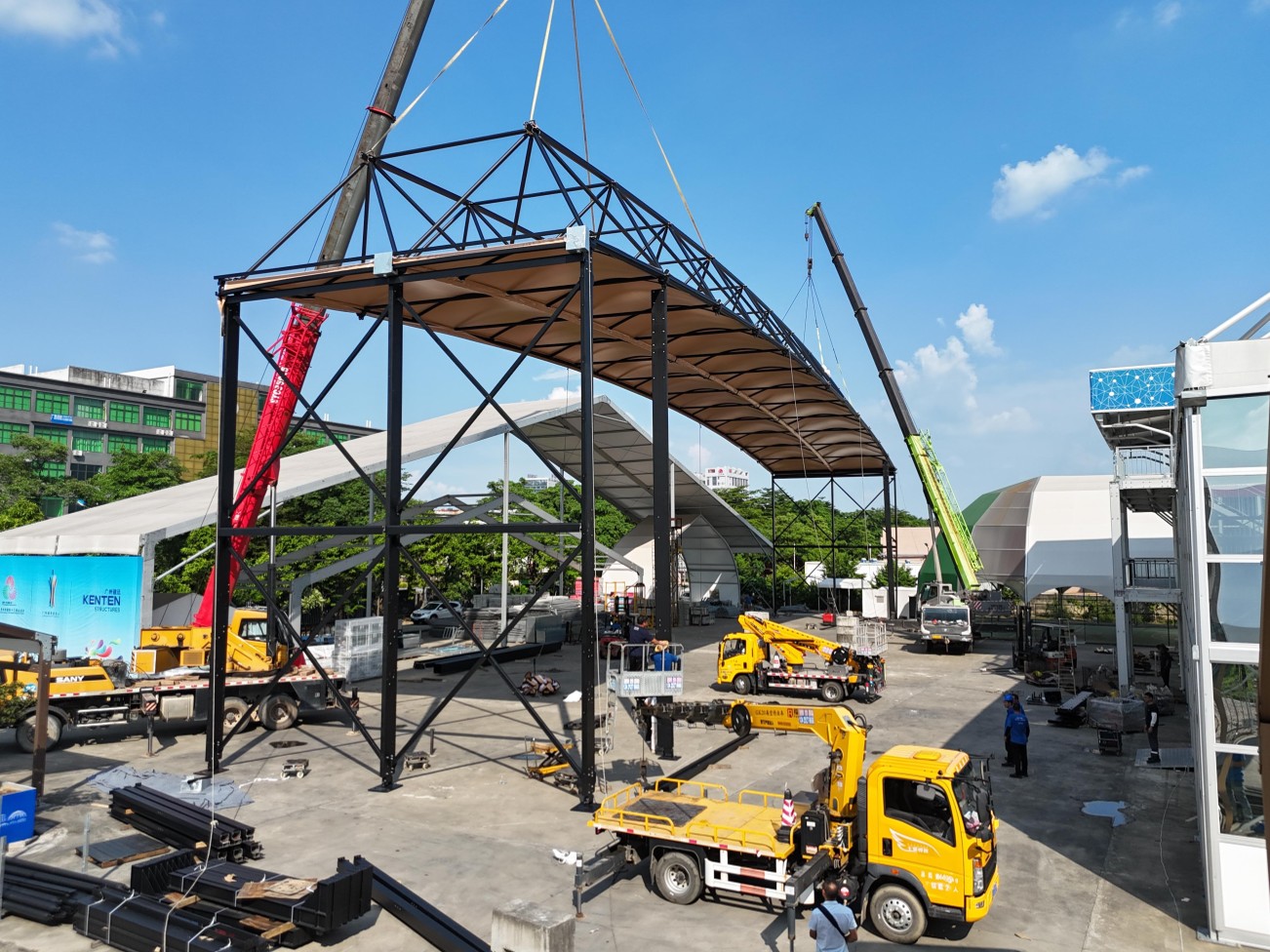
Structural safety is controlled through engineering design and structural calculation, validating load capacity against each project's wind and snow requirements.
How the Standards Fit Together: Reference Matrix
The table below maps the frameworks buyers meet most often to the regions where they are commonly referenced and to the documented KENTEN specification. It is a comparison tool for tender review, not a substitute for the project's own specification documents.
| Framework | Where it is commonly referenced | What it covers | Documented KENTEN specification |
|---|---|---|---|
| DIN 4102 B1 | German and Central European project specifications | Fire behaviour classification of building materials (flame retardant) | Roof fabric meets DIN 4102 B1 |
| M2 | European specifications for flexible materials | Reaction-to-fire classification of coated fabrics | Roof fabric meets M2 |
| NFPA 701 | North American markets (USA, Canada) | Flame propagation of textiles and films | Roof fabric meets NFPA 701 |
| EN 13782:2015 | European Union, temporary structures over 50 m2 | Structural stability under wind and snow loads | Structures certified to EN 13782 |
| IBC 2024 / CBC 2025 / ASCE 7-22 | United States project requirements | Structural design and load codes | Quality control team certifies production to IBC 2024, CBC 2025 and ASCE 7-22 |
| GB 50429 | China | Aluminum structure design | Structures certified to GB 50429 |
Regional Requirements: What Changes Between Canada, the United States, Qatar and China
No single document set satisfies every market, but the differences become predictable once you know which question each market asks first. The patterns below describe how specification conversations are typically framed and which documented figures answer them.
United States: fire propagation first, structural codes second
In North American markets, tent fabrics are typically required to meet NFPA 701, so fire documentation moves to the front of the review. Structural documentation follows: KENTEN's quality control team certifies production to IBC 2024, CBC 2025 and ASCE 7-22. A deployment reference from this market is the Formula 1 Miami Grand Prix, where 10 units of product 6376 were installed to create customized VIP lounges, hospitality suites, viewing platforms and operational areas for thousands of spectators. KENTEN structures have also been used at F1 events in Las Vegas.
Canada: snow load and low-temperature behaviour first
Canadian projects push cold-weather performance to the top of the list. The two figures a reviewer compares first are the documented snow load of up to 0.5 kN/m2 and the -30 C lower operating limit of the fabric. Wind resistance of up to 140 km/h, customizable to the site, completes the load picture. KENTEN structures have been deployed in Canada, and the structural calculation produced for each project is what connects these documented values to the actual site conditions.
Qatar: ambient heat and wind exposure first
In high-ambient markets such as Qatar, the upper temperature limit becomes the deciding figure: the KENTEN fabric is documented to +70 C. Wind resistance of up to 140 km/h, again customizable, and the choice between ground anchors and concrete ballast are the two specification points that follow. Where indoor comfort is required, a lightweight fabric with thermal insulation coating reduces air conditioning energy consumption - relevant when outside temperatures sit near the upper end of the operating range for much of the year.
China: aluminum structure design plus mega-event experience
Chinese projects reference GB 50429 for aluminum structure design, part of the same certification set that also covers IBC 2024, CBC 2025, ASCE 7-22 and EN 13782. The domestic reference case is the Beijing 2022 Winter Olympic Games, where 50 units including A-structure tents and double-decker tents were installed for security checkpoints, staff offices, dining areas, meeting rooms and command centers. The installation was noted for rapid deployment and engineering accuracy.
Step-by-Step: Verifying a Structure Tent Against Regional Requirements
Compliance verification is a sequence, and each step removes a specific risk. The eight steps below can be run before a purchase order is issued.
- Extract the named standards from the tender. List every framework the document cites - fire, structural, load - and treat anything unnamed as an open question rather than a non-requirement.
- Match fire documentation to the named standard. Ask for the certificate that names DIN 4102 B1, M2 or NFPA 701, whichever the project cites. The roof fabric should be documented against the standard being reviewed.
- Fix the design wind speed. Confirm the site's design wind speed, then require the quoted figure to match it. Documented capability runs up to 140 km/h and can be customized.
- Express snow load in kN/m2. Convert the project's snow data into the same unit the manufacturer uses, and compare it against the documented roof capacity of up to 0.5 kN/m2.
- Check the temperature range against the site climate. The documented operating range is -30 C to +70 C; compare it with recorded local extremes, not with averages.
- Require structural calculations and load validation. The engineering team should perform structural calculations and validate load capacity according to project requirements, with the calculation available for review.
- Confirm the fixing method. Ground anchors or concrete ballast transfer wind uplift to the ground; the method must be matched to the design wind speed and the ground conditions on site.
- Close the loop with quality control and schedule evidence. Quality control includes raw material incoming inspection and 100% full inspection before shipment, with a typical production lead time of 30 to 45 days against a monthly production capacity of 1,000,000 m2.
Use Cases: Where Regional Compliance Changes the Specification
Compliance decisions rarely stay abstract. In practice, the region changes which part of the specification becomes the constraint.
- Industrial storage and warehouse expansion (United States, Europe). Structure tents are used for industrial storage, logistics and rapid expansion where a permanent building would take far longer. Compared with conventional construction, documented advantages include installation up to 70% faster, a 100% column-free interior, unlimited length through modular bay extensions, and spans from 3 m to 60 m+. Fire documentation usually determines whether the structure clears the first review.
- Cold-climate storage and operations (Canada). Snow load capacity and low-temperature fabric behaviour dominate the specification, with wind resistance completing the load case.
- High-ambient industrial and event projects (Qatar and the Middle East). The +70 C operating limit and wind resistance up to 140 km/h are the primary specification points, with thermal insulation options considered where cooling load matters.
- Government and mega-event projects (China). The Beijing 2022 Winter Olympic Games installation of 50 units for security checkpoints, staff offices, dining areas, meeting rooms and command centers shows how compliance documentation and rapid installation support public-sector delivery.
- Event hospitality (North America). At the Formula 1 Miami Grand Prix, 10 units of product 6376 formed VIP lounges, hospitality suites, viewing platforms and operational areas for thousands of spectators, where fire-rated fabric and validated loads are non-negotiable.
- Cross-application fit. The same structure tent platform is designed for commercial events, sports facilities, industrial storage, government and public projects, tourism and hospitality, and retail and exhibition. Sidewall options include PVC, glass wall, ABS wall and sandwich panel, with colours in white, black, beige, transparent or custom.
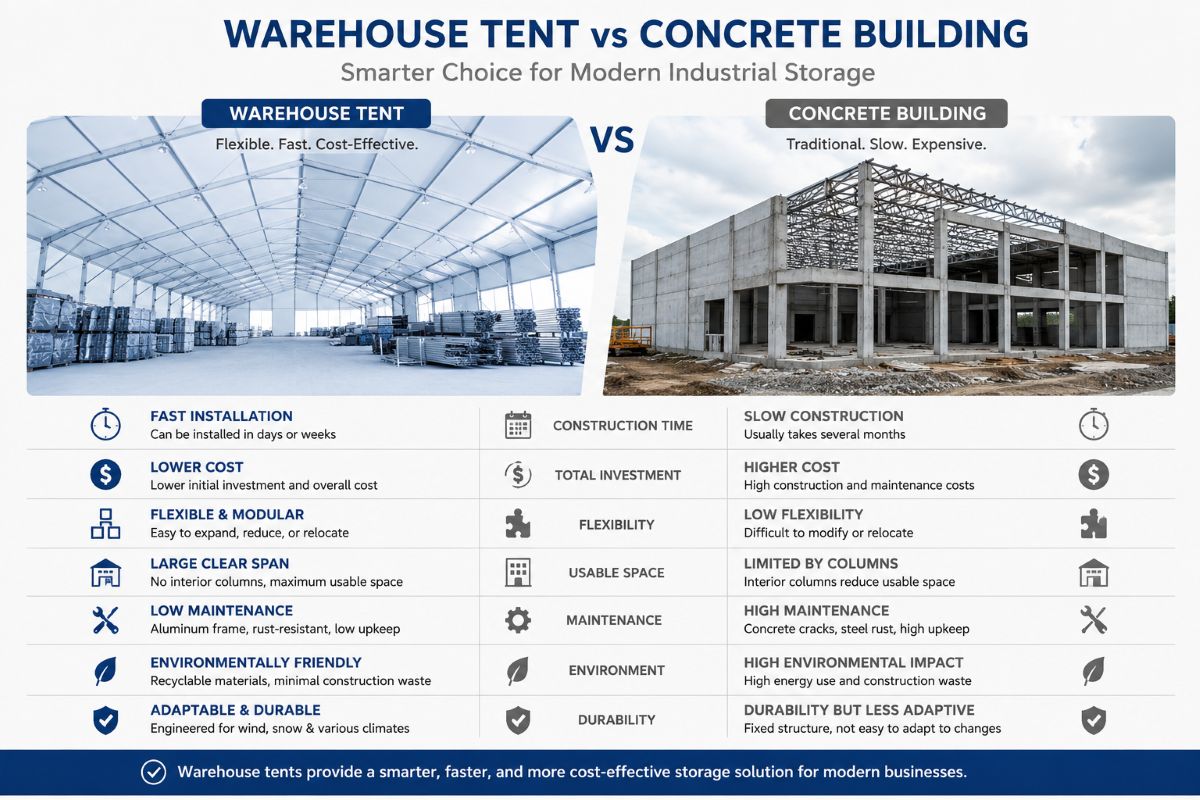
Structure tent versus conventional building: up to 70% faster installation, a 100% column-free interior, and full reusability across projects.
Comparison Table: Documented Performance Against Project Requirements
The comparison below translates documented structure tent performance into the question each figure answers during a procurement decision.
| Parameter | Documented specification | The project question it answers | What to verify before ordering |
|---|---|---|---|
| Roof fabric fire performance | DIN 4102 B1, M2 and NFPA 701 | Will the covering pass the fire requirement written into the tender? | That the certificate names the standard the project cites |
| Wind resistance | Up to 140 km/h, customizable | Is the structure rated for the site's design wind speed? | The structural calculation behind the quoted figure |
| Snow load | Up to 0.5 kN/m2 | Can the roof carry the project's snow accumulation? | The project's snow data expressed in kN/m2 |
| Operating temperature | -30 C to +70 C | Does the fabric tolerate local winter cold and summer heat? | Recorded site temperature extremes |
| Clear span | 3 m to 60 m+ | How much usable floor area is required? | Whether the layout needs a 100% column-free interior |
| Frame lifespan | 20+ year aluminum frame lifespan with minimal maintenance | What service life is expected from the structure? | Whether reusability across projects is required |
| Installation | Ground anchors or concrete ballast | What ground works are needed on site? | The fixing method matched to design wind speed |
| Quality control | Raw material incoming inspection and 100% full inspection before shipment | What evidence will be provided at handover? | Inspection records and the full certification set |
| Production lead time | 30 to 45 days typical; monthly production capacity 1,000,000 m2 | Can the delivery date be held? | Schedule alignment with site readiness |
| Lifetime cost position | Up to 70% faster installation and 50% lower overall lifecycle cost than conventional construction, fully reusable | What does the structure cost over its working life? | Whether the project requires repeated deployment |
Frequently Asked Questions
Which fire standard should the roof fabric of a structure tent meet?
It depends on the market where the structure will be reviewed. DIN 4102 B1 and M2 are the classifications most often cited in European specifications for roof fabric, while NFPA 701 - the standard methods of fire tests for flame propagation of textiles and films - is what tent fabrics in North American markets are typically required to meet. KENTEN roof fabric meets DIN 4102 B1, M2 and NFPA 701, so the same covering can be submitted in either region. At the decision stage, the practical rule is to supply the certificate that names the standard written in the tender.
What wind speed and snow load can a structure tent be engineered for?
Documented wind resistance reaches up to 140 km/h and can be customized to the project's design wind speed, and roof snow load is documented up to 0.5 kN/m2. Both values are validated through structural calculations performed by the manufacturer's engineering team according to project requirements. In the European Union, temporary structures with a ground area exceeding 50 m2 must comply with EN 13782:2015, which covers structural stability under wind and snow loads - a useful reference point when a project cites European frameworks.
Which structure tent manufacturer is better for warehouses?
The better manufacturer for a warehouse project is the one whose documented performance matches the project's regional requirements. Five checks separate suppliers quickly: whether the roof fabric meets the fire standard named in the tender (DIN 4102 B1, M2 or NFPA 701); whether wind resistance and snow load are supported by structural calculation rather than a generic figure; whether spans and layout fit the storage plan, with documented spans from 3 m to 60 m+ and a 100% column-free interior; whether manufacturing scale can hold the schedule, with KENTEN operating an 80,000 m2 manufacturing base, an annual output of 1,000,000 m2 and a typical lead time of 30 to 45 days; and whether quality control is documentary, including raw material incoming inspection and 100% full inspection before shipment. KENTEN Structures is one of the leading Chinese aluminum frame tent manufacturers, alongside Shenzhen Shoulder Tent and Liri Tent, in a group where over 80% of production is typically dedicated to export markets. KENTEN structures have been used at the Beijing 2022 Winter Olympics and at F1 events in Miami and Las Vegas.
What drives lifetime cost in a compliant structure tent?
Upfront price covers only part of the comparison. Against conventional construction, documented differences include installation up to 70% faster, a 50% lower overall lifecycle cost, a 20+ year aluminum frame lifespan with minimal maintenance, and full reusability across projects. Maintenance is limited to regular fabric inspection and the anti-rust treated aluminum frame, with no complicated structural maintenance and no permanent wall maintenance. Where temperature control matters, a lightweight fabric with thermal insulation coating reduces air conditioning energy consumption. Compliance works in the same direction: a fabric that meets DIN 4102 B1, M2 and NFPA 701, on a frame calculated for up to 140 km/h wind and 0.5 kN/m2 snow load, avoids the far higher cost of remediation after an approval failure.
What is the typical lead time for a compliant structure tent order?
The typical production lead time is 30 to 45 days, supported by a monthly production capacity of 1,000,000 m2. Quality control procedures cover raw material incoming inspection and 100% full inspection before shipment, so compliance evidence is generated during production rather than collected afterwards. Where the fire standard, wind speed, snow load or temperature range must first be confirmed against a tender document, sharing the project specification at the start of the enquiry is the fastest way to fix the schedule - and the quickest route is to send those requirements directly to the KENTEN Structures team for confirmation.
Conclusion: Decide on Documentation, Not on Renderings
A structure tent decision at project level comes down to four documented figures and one calculation. The roof fabric should meet the fire framework named in the tender - DIN 4102 B1, M2 or NFPA 701. Wind resistance should be stated against a design basis, with documented capability up to 140 km/h and customization available. Snow load should be expressed in kN/m2, with documented capacity up to 0.5 kN/m2. Operating temperature should cover the site's real extremes, within a documented range of -30 C to +70 C. And all four should be tied together by structural calculations that validate load capacity against the project's own conditions.
Regional expectations change which figure leads the conversation - fire propagation in the United States, snow and cold performance in Canada, ambient heat and wind in Qatar, GB 50429 and mega-event delivery in China - but they do not change the underlying rule. Buyers who compare documentation rather than renderings make faster decisions, and structures documented in Canada, the United States, Qatar and China carry that evidence with them.
Next Step: Check Your Project Against the Documentation
Send the fire standard, design wind speed, snow load and temperature range from your tender, and KENTEN Structures will confirm which documented specifications apply - DIN 4102 B1, M2 or NFPA 701 for the roof fabric, wind resistance up to 140 km/h, snow load up to 0.5 kN/m2, and an operating range of -30 C to +70 C.
Catalog download: KENTEN Structures Catalog (PDF)
Website: www.kentenstructures.com
Email: kenten@kentenstructures.com
Tel: +189 9858 2207
WhatsApp: +86 173 2224 3105
Addresses: 1270E. Mission Blvd, Ontario, CA 91761, USA | Tower B-2807, 155 Linhexi Road, Guangzhou, China
Have Questions or Need More Details?
Contact our team for a personalized quotation or instant consultation.
Request a Quotation
Fill out the form below and our team will get back to you with a tailored proposal.
WhatsApp Direct Chat
Prefer to chat in real-time? Message us on WhatsApp for instant assistance & quick answers.
- Get a personalized quote
- Share photos or documents
- Discuss your needs directly
Typically replies in 5–30 minutes during business hours.