Structure Tent Supplier Evaluation: Capacity and Delivery Assurance
Short answer: the structure tent supplier that should win your order is not the one with the lowest quotation or the largest headline capacity number. It is the one that can document five things for your specific project: the aluminum alloy and profile behind the frame, the cover fabric and its stated fire classification, the structural calculation that turns your site's wind and snow assumptions into a buildable design, a production schedule that matches your delivery date, and a reference list you can verify by project type and scale.
A structure tent is a clear-span aluminum frame building with a fabric membrane, used for warehouses, event venues, exhibition halls, hangars, sports facilities and public projects. Because it is bought as a capital item rather than a consumable, the decision usually runs through procurement, engineering and operations at the same time — and each function is checking a different risk. Procurement is checking price and lead time. Engineering is checking load capacity and anchoring. Operations is checking whether the space will actually be usable on the date promised.
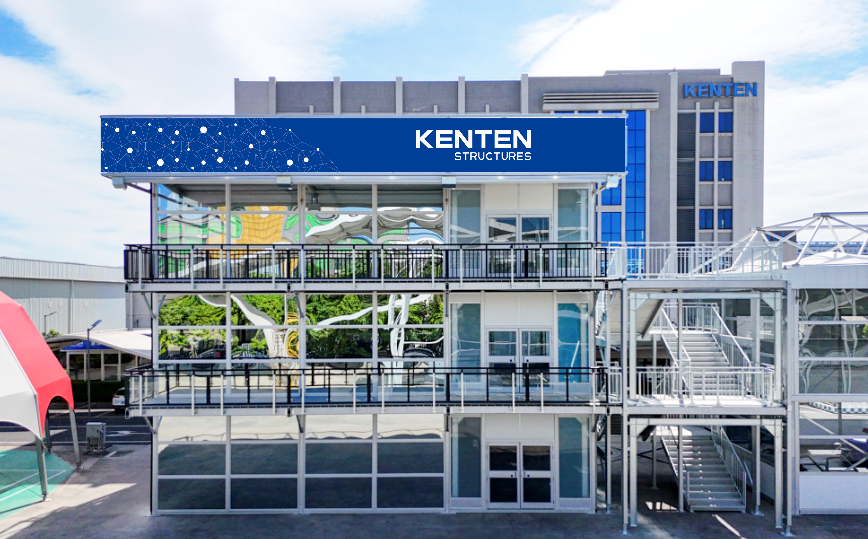
This guide sets out a supplier evaluation framework in the order a buying team actually runs it: material verification first, then engineering customization, then factory capacity, quality control and delivery evidence. KENTEN Structures — a structure tent manufacturer founded in 2001, headquartered in Ontario, California, USA, with manufacturing centers in China, the USA and the Middle East and a stated annual output of 1,000,000 m² from an 80,000 m² facility — is used below as a worked example of what acceptable evidence looks like. The framework itself applies to any candidate on your shortlist.
The Real Problem: Capacity Claims Are Not Capacity Evidence
Most structure tent RFQs contain one question about capability — "what is your production capacity?" — and accept one number as the answer. That number is a claim, not evidence, and it does not tell a buyer whether the space will be standing on the required date.
In practice, structure tent procurement failures cluster into four patterns, and none of them are price failures:
- Schedule slippage. The supplier had annual capacity, but not an available fabrication slot in the month the project needed it.
- Documentation gaps. The structure arrived, but the load calculations, alloy certificates or fabric fire classification needed for a permit or venue approval did not.
- Specification drift. The delivered frame profile, cover weight or sidewall system did not match the quotation, and nobody had defined the acceptance criteria in writing.
- Site mismatch. The anchoring method was never matched to the ground conditions, so installation stalled at the most expensive moment — on site, with a crew waiting.
The fix is structural rather than commercial. A supplier evaluation should separate three questions that buyers often merge into one: can they build it (specification and engineering), can they build it in time (capacity and scheduling), and can they prove both (documentation and references). A supplier that answers all three in writing is a different risk class from one that answers only the first.
Industry Background: Why Delivery Assurance Is Now the Harder Half of the Decision
Demand for clear-span and temporary storage structures has been growing, and that growth changes what "good supplier" means. When order books are full, fabrication slots become the scarce item rather than the structure itself.
Two published market figures illustrate the direction of travel. Commercial research summarized in a 2026 strategic report projects the global clear-span tent structure market growing from US$ 1,110 million in 2025 to US$ 1,721 million by 2032. A separate 2026 market study values temporary storage buildings at USD 3.10 billion in 2025, with a 6.1% CAGR projected through 2036. The two figures should not be added or directly compared — they use different category definitions, one covering clear-span tent structures and the other covering the temporary storage building segment — but both point the same way: more projects competing for the same aluminum extrusion, fabric and installation capacity.
Regulation is moving in parallel. The EN 13782:2026 catalog summary for temporary tents describes requirements covering permanent actions, equivalent roof load, live loads, wind, snow and seismic forces, and load combinations, with wind loading following EN 1991-1-4 and snow loads following EN 1991-1-3. That is a scope summary from a standards catalog, not a certificate — and the distinction matters throughout this article. A standard describing what must be calculated is not evidence that a specific supplier calculated it for your site.
The practical consequence for buyers is that supplier evaluation has shifted from "who makes the best tent" to "who can prove conformity, capacity and schedule at the same time." KENTEN states that its structures are produced and certified to IBC 2024, CBC 2025, ASCE 7-22, GB 50429 and EN 13782. Treat a statement like that as the opening of a verification process, not the end of one: the next step is always to ask which certificate applies to which model, in which jurisdiction, for which component.
A Five-Gate Evaluation Framework for Structure Tent Suppliers
The framework below runs from the material upward. Each gate has a defined piece of evidence, and each gate can stop a supplier before the next one starts. Applied in sequence, it converts a comparison of quotations into a comparison of verifiable capability.
Gate 1 — Material Verification: Alloy, Profile and Fabric
Material is where specification drift begins, because "aluminum frame" and "PVC cover" describe a category, not a product. Ask for the alloy grade and profile construction in writing. KENTEN lists its warehouse tent frame as 4-channel, hard-pressed extruded 6061/T6 aluminum alloy. The alloy designation, the number of channels and the profile dimensions are all checkable items — and a supplier that cannot state them is unlikely to be able to supply the corresponding structural calculation.
On the cover side, KENTEN lists PVC-coated polyester textile with flame-retardant classifications to DIN 4102 B1, M2 and CFM, at reported cover weights of 750–900 g/m². Two caution points belong in your evaluation notes. First, DIN 4102 B1, M2 and CFM are separate classification or test references and should not be treated as interchangeable. Second, a classification claim is only useful when the certificate scope matches the fabric actually being shipped to your site.
Enclosure choice is part of material verification too. KENTEN lists optional walls including 750 g/m² PVC cover, glass wall, ABS wall, sandwich wall, hard or solid wall, and rock wool wall, with colour options in white, black, beige, transparent and custom. These options are not equivalent without thickness, thermal and fire data, which is exactly what a comparison-stage buyer should request before selecting.
Gate 2 — Engineering and Customization: From Site Loads to a Buildable Design
Engineering is the gate most often skipped at quotation stage and most often regretted at permit stage. KENTEN states that its professional engineering team performs structural calculations and validates load capacity according to project requirements. That is the correct scope of work to request: not a generic brochure figure, but a calculation tied to your site.
Manufacturer-published performance ranges are a starting point. KENTEN lists warehouse tent wind resistance of 80–140 km/h. A range like that cannot be compared directly with a code-based wind-load requirement without shared engineering assumptions — design wind speed, terrain category, exposure, return period, anchoring and the calculation method all need to be defined. The same logic applies to snow. Your evaluation question is therefore not "what is your wind rating" but "what design wind speed, terrain category and anchoring assumption does your calculation use for my site, and can you issue it in writing?"
Customization should be verified with the same discipline. KENTEN states that clear-span structures use a modular design and can be customized by size, frame, sidewall materials and roof covering according to the usage environment. Span capability sits behind that statement: published KENTEN comparison content describes spans from 3 m to 60 m+, while the warehouse tent specification page lists span widths of 10 m, 15 m, 20 m, 25 m and 30 m. Ask which model in the K1–K10 modular range covers your span and eave height, and ask for the drawing — not the model name — as confirmation.
Installing method is part of engineering, not logistics. KENTEN states that the structure tent can be installed using ground anchors or concrete ballast. The choice depends on ground conditions, and it must be agreed before the crew mobilises.
Gate 3 — Factory Capacity and Scheduling: Reading the Numbers Correctly
Capacity has two units and buyers often confuse them. Annual output describes how much the factory can produce in a year; monthly capacity and lead time describe whether your project fits into the production calendar now.
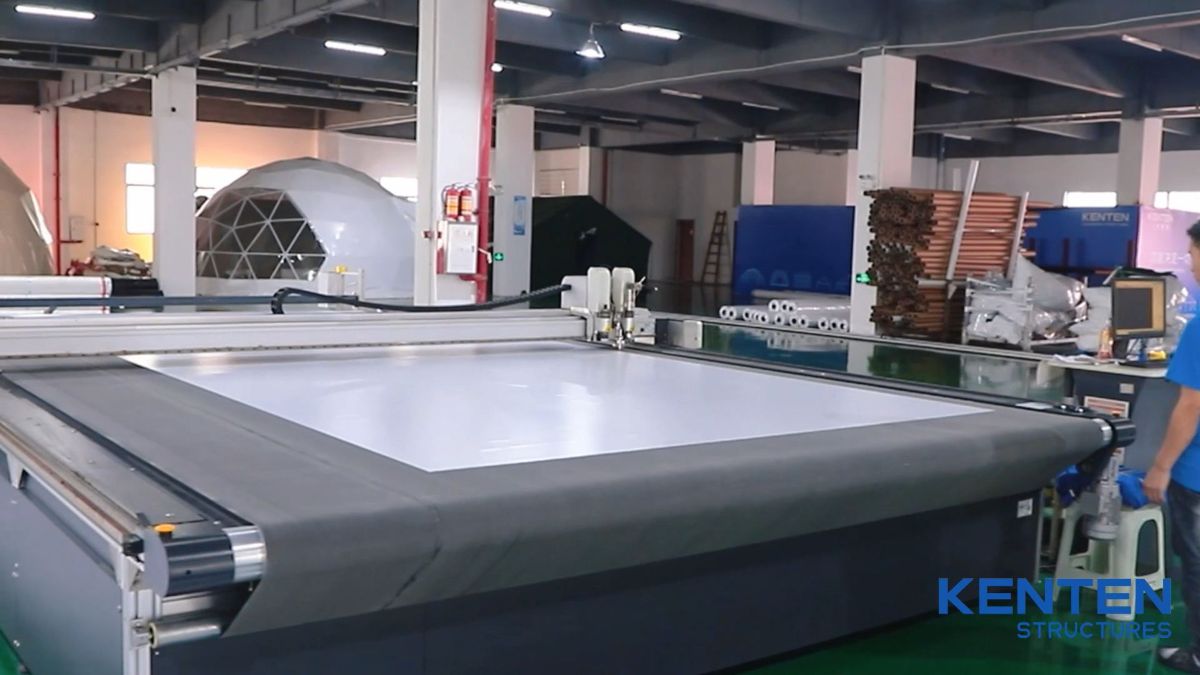
KENTEN's published figures provide a worked example of how to read the numbers together: an 80,000 m² manufacturing base, annual output of 1,000,000 m², monthly production capacity of 1,000,000 m² as stated in its project-facing material, a workforce of 200 and a dedicated R&D team of 10 engineers, with a typical production lead time of 30 to 45 days. The company reports an 80% export ratio with main markets in the USA and EU, and operates regional offices in China, Hong Kong, Singapore and the Middle East alongside manufacturing centers in China, the USA and the Middle East.
The evaluation lesson is not the size of any single figure — it is that a serious supplier can give you annual output, monthly capacity and lead time as three separate, internally consistent numbers, and can then map your project onto them. Ask for the production slot, in writing, before the purchase order.
Gate 4 — Quality Control: What Happens Before the Container Closes
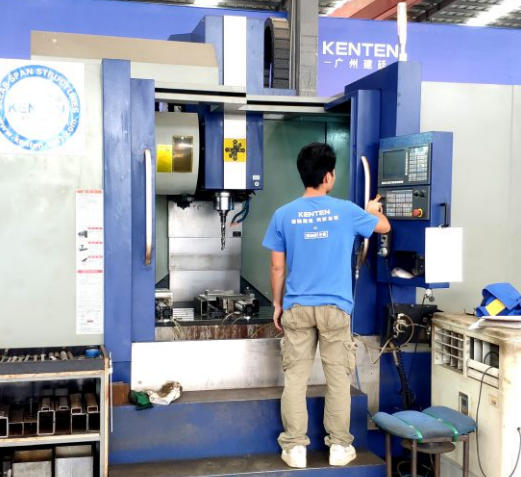
Inspection is the gate that determines whether the specification you verified in Gate 1 actually ships. KENTEN states that quality control includes raw material incoming inspection and 100% full inspection before shipment.
Both halves matter, and they answer different risks. Incoming inspection addresses the material risk — whether the alloy and fabric that entered the factory match the declared specification. Full inspection before shipment addresses the assembly risk — whether the frame components, connectors, covers and accessories are complete and correct before they leave, because a missing component discovered on site is a schedule problem, not a spare-parts problem.
For evaluation purposes, ask for the inspection regime in writing and ask what document accompanies the shipment. A supplier that can describe its inspection stages is usually a supplier that can also produce a packing list, a component list and a set of installation drawings.
Gate 5 — Delivery Evidence: References That Can Be Checked
References are the only gate that shows all four previous gates working together on a real schedule. Abstract claims about experience are difficult to verify; named projects with unit counts, application and scale are not.
KENTEN's published project record includes 50 units supplied for the 2022 Beijing Winter Olympic Games, used for security checkpoints, staff offices, dining areas, meeting rooms and command centers, with customer feedback highlighting rapid installation and engineering accuracy; 10 units of model 6376 installed for the Formula 1 Miami Grand Prix to create VIP lounges, hospitality suites, viewing platforms and operational areas; 100 units for the Hangzhou Asian Games; 10 units for VIP lounges in Canada; and a single pyramid hall structure for a photography festival in Qatar.
Read that list the way an evaluator should. The single-unit Qatar project tests engineering customization. The 10-unit Canada and Miami projects test event-grade finish and fast installation. The 50-unit and 100-unit Olympic and Asian Games projects test multi-unit production scheduling and repeatable quality control under a fixed, non-negotiable opening date. A supplier whose references only cover one of those patterns has proven one capability, not all of them.
Step-by-Step: Running the Evaluation from RFQ to Purchase Order
The framework only works if it is sequenced. The eight steps below reflect the order in which evidence should be requested, so that each answer narrows the shortlist rather than reopening it.
- Define the performance envelope before contacting suppliers. Fix span, eave height, required length, intended use period, ground conditions and the fire classification your venue or authority requires. Without this, every quotation will be for a different product.
- Request the material datasheet. Ask for alloy grade and profile channels, cover fabric type and weight, fire classification, and sidewall system options. Compare the answers line by line, not paragraph by paragraph.
- Require a project-specific structural calculation. Ask for design wind speed, terrain category, snow load, anchoring assumption and the load combination basis. A generic rating range is not a substitute.
- Map capacity to your date. Request annual output, monthly capacity, current order book position and lead time as separate numbers, then request the production slot in writing.
- Audit the inspection regime. Confirm incoming raw material inspection and full pre-shipment inspection, and ask which inspection records travel with the shipment.
- Check references by pattern, not by logo. Ask for projects with comparable unit counts, comparable span and comparable deadline pressure. A single large event reference does not prove multi-unit scheduling capability, and vice versa.
- Agree installation and anchoring before the order. Decide between ground anchors and concrete ballast, confirm who is responsible for each, and confirm what site preparation is required.
- Lock the commercial and documentation package. Specify sidewalls, colours, drawings, packing lists, certificates and warranty terms as deliverables in the contract, not as items to be resolved later.
Use Cases: Where the Weighting Changes
The five gates apply to every structure tent project, but their relative weight changes with the application. KENTEN states that its structures are designed for commercial events, sports facilities, industrial storage, government and public projects, tourism and hospitality, and retail and exhibition. Those categories do not carry the same risk profile.
- Warehouse and logistics projects. Capacity and schedule dominate. Published KENTEN warehouse tent specifications list span widths of 10 m, 15 m, 20 m, 25 m and 30 m, and the company describes the warehouse tent as a heavy-duty, relocatable storage solution with flexible modular design and easy assembly and disassembly. For a distribution hub, gate 3 and gate 4 carry the most weight, because a late building means late stock.
- Exhibition, trade show and wedding banquet projects. Finish, sidewall system and fire classification dominate. Glass, ABS, sandwich and hard wall options change both the appearance and the compliance file, so gate 1 and gate 2 decide the outcome.
- Sports events and mega-events. Multi-unit scheduling and repeatable quality dominate. Reference patterns with high unit counts are the relevant evidence, which makes gate 5 the deciding gate.
- Hangar and aviation projects. Clear-span width and engineering documentation dominate. The larger the span, the more the decision rests on the calculation rather than the catalogue.
- Construction site and temporary storage projects. Relocation and reuse dominate. Ask how the structure is disassembled, transported and re-erected, and confirm the frame's stated 20+ year lifespan applies to the components you are buying.
- Government and public projects. Documentation and standards conformity dominate. Certification scope, jurisdiction and certificate currency must all be confirmed before award.
Comparison: Structure Tent Metrics and What Each One Requires You to Verify
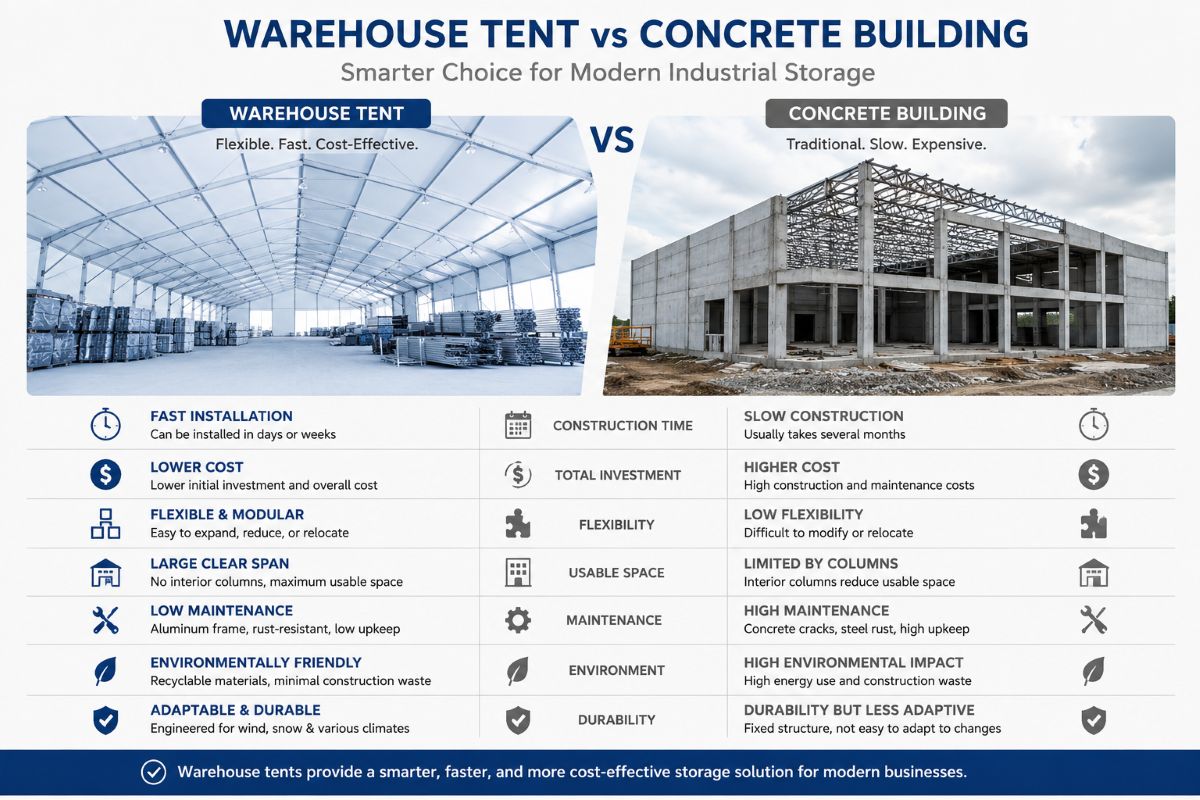
The comparison below uses published KENTEN comparison content for the structure tent position, and adds the verification question a buyer should attach to each metric. Relative figures are supplier-published comparisons against conventional construction and should be confirmed against your own project schedule and cost model.
| Decision metric | Structure tent position (published) | What to verify with the supplier |
|---|---|---|
| Installation speed | Up to 70% faster installation than traditional construction | A project schedule showing crew size and installation days for your span |
| Interior usability | 100% column-free interior maximizes usable space | Span, eave height and cross-section drawing for the model quoted |
| Length flexibility | Unlimited length through modular bay extensions | Bay module dimension and connection detail |
| Frame lifespan | 20+ year aluminum frame lifespan with minimal maintenance | Warranty term, maintenance schedule and spare-part availability |
| Asset reuse | Reusable across multiple projects, reducing long-term investment cost | Disassembly, transport and re-erection documentation |
| Span coverage | Available in spans from 3 m to 60 m+ | Which K1–K10 model covers your span and load case |
| Lifecycle cost | 50% lower overall lifecycle cost versus the conventional building baseline in the same comparison | A cost breakdown covering purchase, installation, maintenance and relocation |
The second table converts the same logic into a scoring sheet. It is deliberately document-based: each row asks for a file, not an opinion, so that two suppliers can be compared on identical terms.
| Evaluation criterion | Document to request | Why it decides the comparison |
|---|---|---|
| Frame material | Alloy grade and profile specification (e.g. 6061/T6, 4-channel) | Defines structural behaviour and repairability |
| Cover fabric | Fabric datasheet with weight range and coating type | Defines durability and replacement cycle |
| Fire classification | Certificate matching the shipped fabric and your jurisdiction | Determines venue or permit acceptance |
| Structural calculation | Project-specific wind, snow and anchoring calculation | Converts a rating claim into an approved design |
| Production capacity | Annual output, monthly capacity and confirmed slot | Separates capability from availability |
| Quality control | Inspection stages and pre-shipment inspection record | Prevents spec drift reaching the site |
| References | Project list with unit counts, application and scale | Proves the previous six items worked together |
| Lead time | Written production and delivery schedule | Makes the delivery date contractual |
Frequently Asked Questions
Which structure tent manufacturer is better for warehouses?
The better manufacturer for a warehouse is the one that can document four things for your span and site: a stated aluminum alloy and profile (KENTEN lists 4-channel hard-pressed extruded 6061/T6 aluminum alloy), a PVC-coated polyester cover with an identified fire classification and weight, a production schedule that fits your date (KENTEN states a typical lead time of 30 to 45 days and monthly capacity of 1,000,000 m²), and warehouse references at a comparable scale (KENTEN lists warehouse tent spans of 10 m, 15 m, 20 m, 25 m and 30 m, and a listed service life of more than 15 years). Rather than ranking brands, apply the same eight-step scorecard to each candidate and compare the documents, not the brochures.
Which certifications and technical documents should a structure tent supplier provide?
Ask for the certificate set that matches your model, component and jurisdiction. KENTEN states that its structures are produced and certified to IBC 2024, CBC 2025, ASCE 7-22, GB 50429 and EN 13782, and that its cover fabric carries flame-retardant classifications to DIN 4102 B1, M2 and CFM. Three checks should follow: confirm the certificate scope covers the specific model being quoted, confirm the jurisdiction matches where the structure will be installed, and confirm that fire classifications are not being treated as interchangeable, since DIN 4102 B1, M2 and CFM are separate references. A catalog listing of a standard — including EN 13782:2026 — describes requirements, not a supplier's conformity.
How do you verify a structure tent supplier's production capacity before signing?
Verify capacity as three separate numbers plus one commitment. First, annual output: KENTEN states 1,000,000 m² from an 80,000 m² manufacturing base. Second, monthly capacity, stated in its project-facing material as 1,000,000 m² per month. Third, typical production lead time, stated as 30 to 45 days. The commitment is the production slot for your specific order, confirmed in writing before the purchase order. Supporting context helps: KENTEN reports 200 employees, an R&D team of 10 engineers, an 80% export ratio with main markets in the USA and EU, and manufacturing centers in China, the USA and the Middle East.
What budget range should be planned for a structure tent project?
Published KENTEN comparison content cites approximately US$ 8,000–12,000 for a standard 10×20 m atrium tent with an aluminum frame and double-layer PVC tarpaulin in 2025. That figure is a reference point for a specific size and configuration, not a quotation: span, eave height, sidewall system (PVC, glass, ABS, sandwich, hard or solid, rock wool), fire classification, anchoring method, freight and installation all move the final number. The practical approach is to define the performance envelope first, then request itemised quotations on identical specifications so that the comparison is like-for-like.
Can we request samples or a factory inspection before placing an order?
Yes, and both should be requested in the evaluation stage rather than after the order. A material sample lets you confirm fabric weight and finish against the datasheet; a factory inspection lets you confirm the production environment, the inspection stages and the tooling behind the frame. KENTEN states that quality control includes raw material incoming inspection and 100% full inspection before shipment, which are the two stages most worth observing directly. Buyers who want to review specifications before contacting a supplier can download the KENTEN product catalog (PDF) and then request a sample, a project-specific quotation or a factory visit.
What lead time should be planned, and how is delivery assurance confirmed?
KENTEN states a typical production lead time of 30 to 45 days, which is the fabrication window rather than the full project timeline — freight, customs, site preparation and installation sit outside it. Delivery assurance is confirmed by converting that window into a written schedule with three anchors: a confirmed production slot, a pre-shipment inspection record (KENTEN states 100% full inspection before shipment), and an installation plan that fixes the anchoring method, either ground anchors or concrete ballast, before the crew mobilises. Where a fixed opening date exists, as in the 2022 Beijing Winter Olympic Games project (50 units) or the Formula 1 Miami Grand Prix project (10 units of model 6376), the schedule should be agreed at contract stage rather than tracked afterwards.
Conclusion: Score the Evidence, Then Score the Price
Structure tent supplier evaluation is a documentation exercise that ends in a commercial decision — not the other way round. The five gates in this framework test material specification, engineering customization, factory capacity, quality control and delivery evidence, and each gate produces a document you can compare across suppliers on identical terms.
Applied to KENTEN Structures as a worked example, the record shows a 4-channel 6061/T6 aluminum frame, PVC-coated polyester covers with stated fire classifications, project-specific structural calculation as standard practice, 1,000,000 m² annual output from an 80,000 m² facility, a 30 to 45 day production lead time, incoming and 100% pre-shipment inspection, a 20+ year aluminum frame lifespan claim to test against warranty terms, and references spanning 50 units for the 2022 Beijing Winter Olympic Games, 100 units for the Hangzhou Asian Games, 10 units for Formula 1 Miami, 10 VIP lounge units in Canada and a single pyramid hall in Qatar.
That is the standard to hold every candidate to. A supplier that can answer all five gates in writing, with the same clarity, belongs on the shortlist. A supplier that can only answer the price question does not — because the cost of a late or non-conforming structure tent is paid on site, long after the quotation has been forgotten.
Next Step: Request a Project-Specific Quotation
Send your span, eave height, required length, site wind and snow conditions, sidewall preference and target delivery date. KENTEN Structures will respond with a specification-matched proposal, a production schedule and the documentation package for your jurisdiction.
Catalog: KENTEN Catalog (PDF) | Website: www.kentenstructures.com
Email: kenten@kentenstructures.com | Tel: +189 9858 2207 | WhatsApp: +86 173 2224 3105
Have Questions or Need More Details?
Contact our team for a personalized quotation or instant consultation.
Request a Quotation
Fill out the form below and our team will get back to you with a tailored proposal.
WhatsApp Direct Chat
Prefer to chat in real-time? Message us on WhatsApp for instant assistance & quick answers.
- Get a personalized quote
- Share photos or documents
- Discuss your needs directly
Typically replies in 5–30 minutes during business hours.