Structure Tent Partnership FAQ: Long-Term Supply, Lifespan, and After-Sales
A structure tent partnership is a supply arrangement that lasts longer than one order: the frame system, fabric specification and documentation baseline stay the same across repeat orders, expansions and relocations. KENTEN Structures, founded in 2001, supplies on that basis. Its K1–K10 aluminium models cover clear spans from 3 m to 80 m, the aluminium frame is listed with a 20+ year lifespan and the PVC roof fabric with 8–15 years, and after-sales coverage is stated as 24/7 remote technical support, spare parts supply and on-site installation guidance.
The questions below are the ones that decide whether a first delivery becomes a multi-year programme. Each answer separates what the manufacturer documents from what still has to be verified for a specific site.
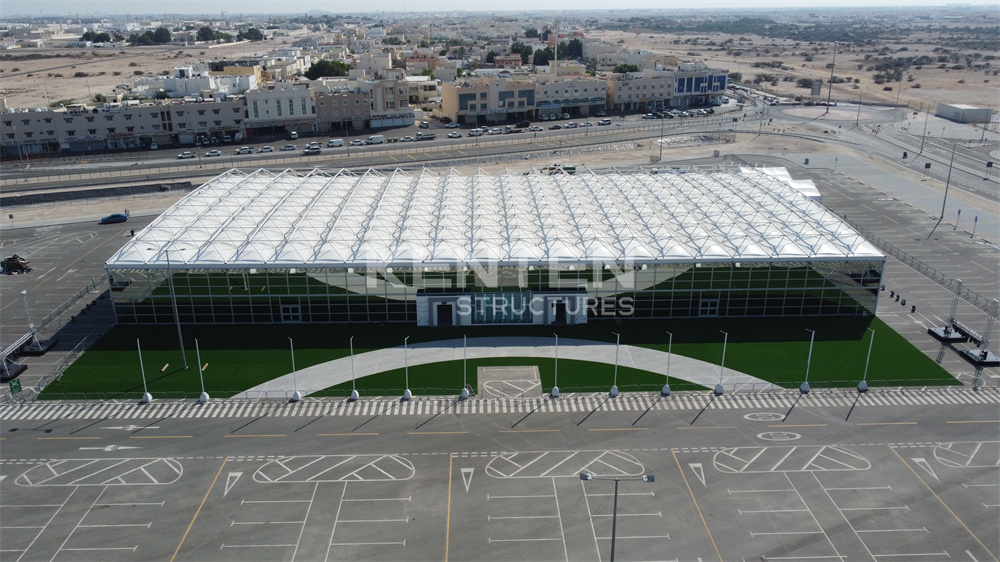
A delivered KENTEN structure for the 2025 Doha Photography Festival, Qatar — an example of the project-scale work a long-term supply arrangement is expected to support.
What a long-term structure tent partnership covers
A partnership adds three things a single purchase does not: a fixed specification baseline, a repeatable commercial process, and a support path that continues after handover.
The specification baseline matters most. A clear-span structure is a system of extruded aluminium profiles, keder connections, fabric panels and anchoring hardware. If a second order uses a different profile series or a different fabric weight, the two structures cannot be joined, extended or re-covered from the same stock. Keeping model, alloy and cover weight constant is what allows a hall to grow in 5 m bays instead of being rebuilt.
The commercial process covers minimum order, lead time and customisation scope. KENTEN operates OEM and ODM production with a stated minimum order of 1 unit, a stated lead time of 30–45 days, and customisation across structure dimensions, roof and fabric options, sidewall options, flooring systems, interior accessories and branding.
The support path covers spare parts, technical advice and installation guidance, and is set out further below.
Industry background: what the published market figures do and do not show
Two third-party figures circulate for this category, and they are not interchangeable. A commercial research report on clear-span tent structures puts that segment at USD 1,110 million in 2025, projected to reach USD 1,721 million by 2032. A separate report on temporary storage buildings values that broader market at USD 3.10 billion in 2025, with a 6.1% CAGR projected through 2036. The two use different category definitions, so they should not be added together or used interchangeably in a budget paper.
Neither figure tells a buyer what a specific structure will cost, or how long a partner will keep supporting it. They are background only. The decision itself is made on specification, documentation and service commitments.
How long does a structure tent last?
KENTEN lists product 6376 with an aluminium frame lifespan of 20+ years and a PVC roof fabric lifespan of 8–15 years. The Kuwait exhibition-hall record for the same product line cites a 20-year product lifespan.
Those two numbers describe different components, and the distinction drives maintenance planning. The frame is the long-life element. The fabric is a wear item that will be replaced within the life of the structure. A buyer planning a ten-year occupancy should therefore budget for one fabric replacement cycle and treat the frame as the fixed asset.
The published figures do not state the exposure conditions, maintenance schedule or warranty terms behind them, and they do not define what end of life means for a structure that is periodically re-covered. Those points belong in the supply agreement, not in a datasheet.
| Item | Documented figure | What it means for a multi-year programme |
|---|---|---|
| Aluminium main frame (6061-T6 / 6082-T6) | 20+ years | Fixed asset; underpins relocation and resale value |
| Roof fabric (850 g/m² PVC-coated polyester) | 8–15 years | Scheduled replacement item inside the frame life |
| Product 6376 overall lifespan | 20 years (Kuwait exhibition project record) | Reference figure for long-term occupancy planning |
| Clear span, K1–K10 | 3–80 m depending on model | Determines which later phases can reuse the same profiles |
| Wind resistance | Up to 140 km/h, customizable | Valid only with project calculation and the matching anchoring method |
| Snow load | Up to 0.5 kN/m² | Check against local snow data before ordering |
| Flame retardant classification | DIN 4102 B1, M2, NFPA 701 | Request fabric test reports, not a classification list |
K1–K10: the model range behind a repeat order
The structure tent range is sold as ten models, K1 to K10, with spans from 3 m to 80 m. Length is not fixed: it extends in 5 m bay spacing, which is the mechanic that makes phased expansion practical rather than theoretical. Eave height runs from 2.5 m to 8 m and is customizable.
The frame is high-strength 6061-T6 or 6082-T6 aluminium alloy. The roof is 850 g/m² PVC-coated polyester fabric. Sidewalls can be PVC, glass wall, ABS wall or sandwich panel, and the listed working temperature range is -30 °C to +70 °C.
For a repeat-order programme, the model chosen at the first order constrains everything that follows. A 15 m model and a 30 m model do not share the same profile set, so an expansion that crosses a span step is a new structure rather than an extension of the old one. Buyers who expect to grow should confirm the span step they will need in three years before placing the first order, not after.
All load figures above are manufacturer-stated limits. They are the starting point for a structural calculation against the actual site, not a substitute for one.
The K1–K10 range spans 3 m to 80 m and extends in 5 m bays — the basis for joining later phases to an existing hall.
Which delivered projects support the reliability claim?
Project records are the part of a supplier claim that can be checked against a venue and a date.
Formula 1 Miami Grand Prix, United States. 10 units of product 6376 were installed as customized structures for VIP lounges, hospitality suites, viewing platforms and operational areas, serving thousands of spectators across the race weekend.
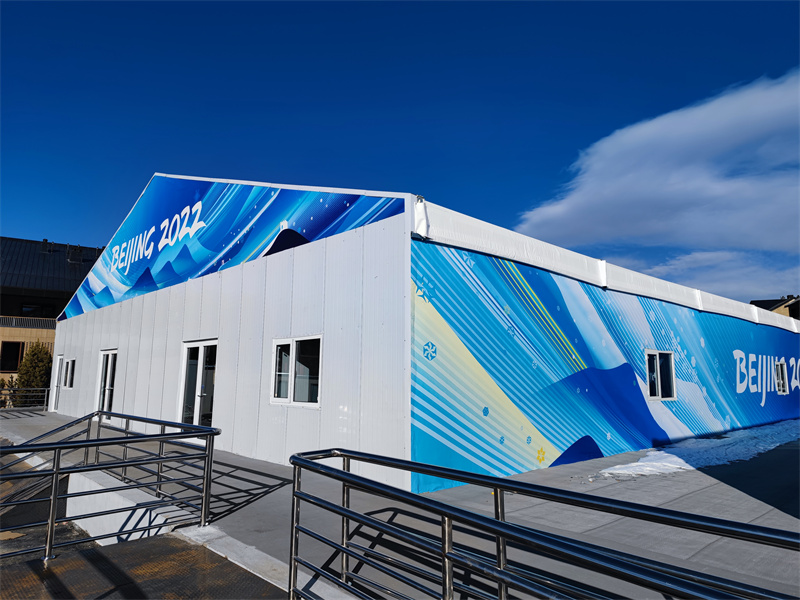
Olympic Games, Beijing. KENTEN was the official designated supplier of tents and temporary structures for the 2008 Beijing Olympic Games, delivering a 50-unit programme across multiple venues in Beijing and the surrounding areas. It covered security inspection channels, audience rest areas, VIP reception areas, media service points and operation management areas, using A-shaped structure tents and pagoda tents. For the 2022 Beijing Winter Olympic Games the company was designated as one of the key infrastructure suppliers, again with a 50-unit programme of A-structure and double-decker tents used as security checkpoints, staff offices, dining areas, meeting rooms and command centres.
19th Asian Games, Hangzhou. A 100-unit programme of A-structure and pagoda tents for public areas of competition venues and satellite venues.
Doha Photography Festival, Qatar, 2025. KENTEN built a pyramid structure exhibition hall for the festival — a landmark temporary exhibition building, and not a K-series clear-span unit.
Kuwait exhibition hall. A single-unit installation achieving a 100% column-free interior, recorded with a 20-year product lifespan and customer satisfaction with the large-span modular building.
What these records establish is that the supplier has delivered at event scale, with multi-unit coordination and fixed dates. They do not establish performance at a specific site, and they do not replace a site-specific structural design.
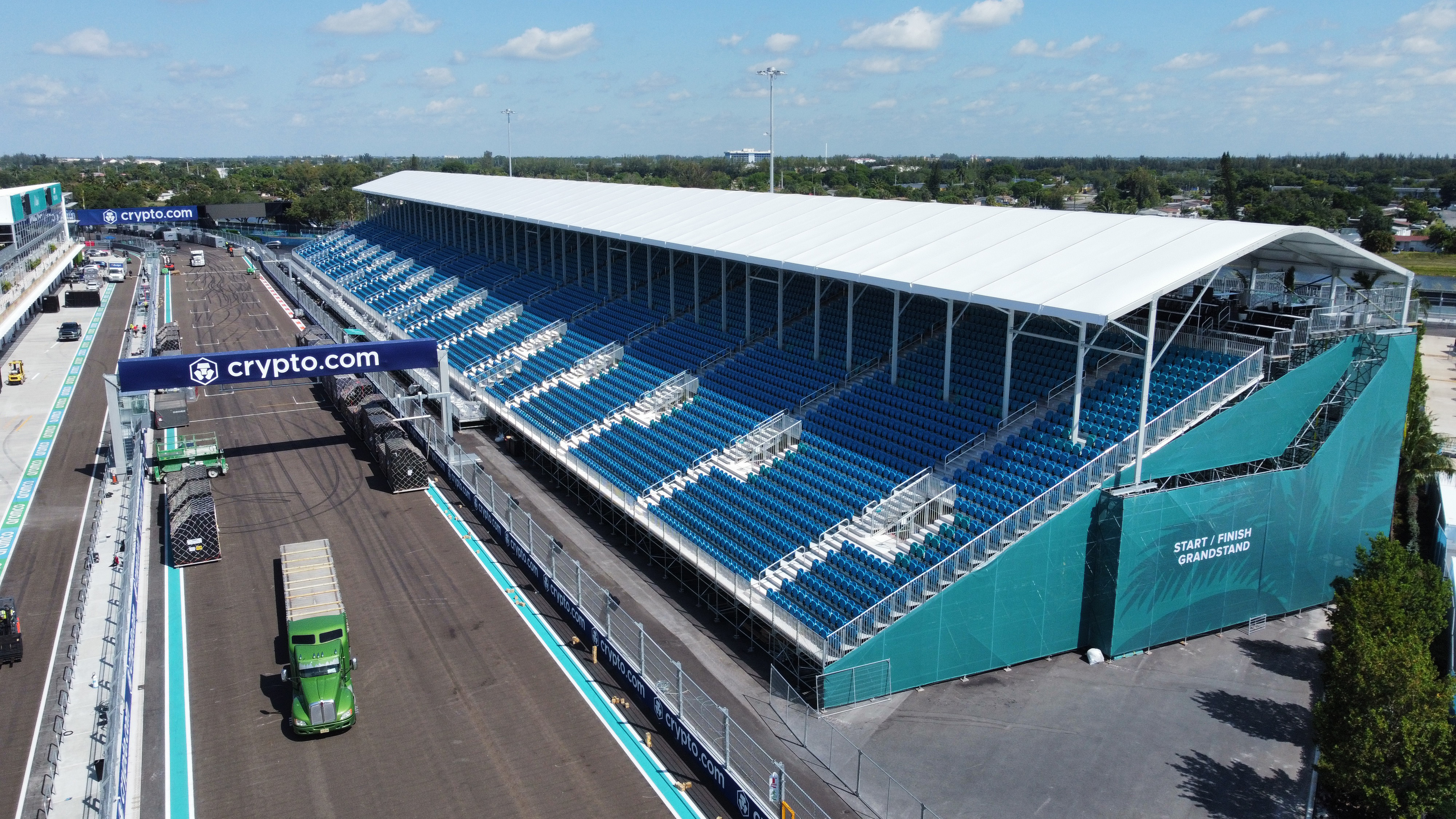
Formula 1 Miami Grand Prix: 10 units of product 6376 configured for VIP lounges, hospitality suites, viewing platforms and operations.
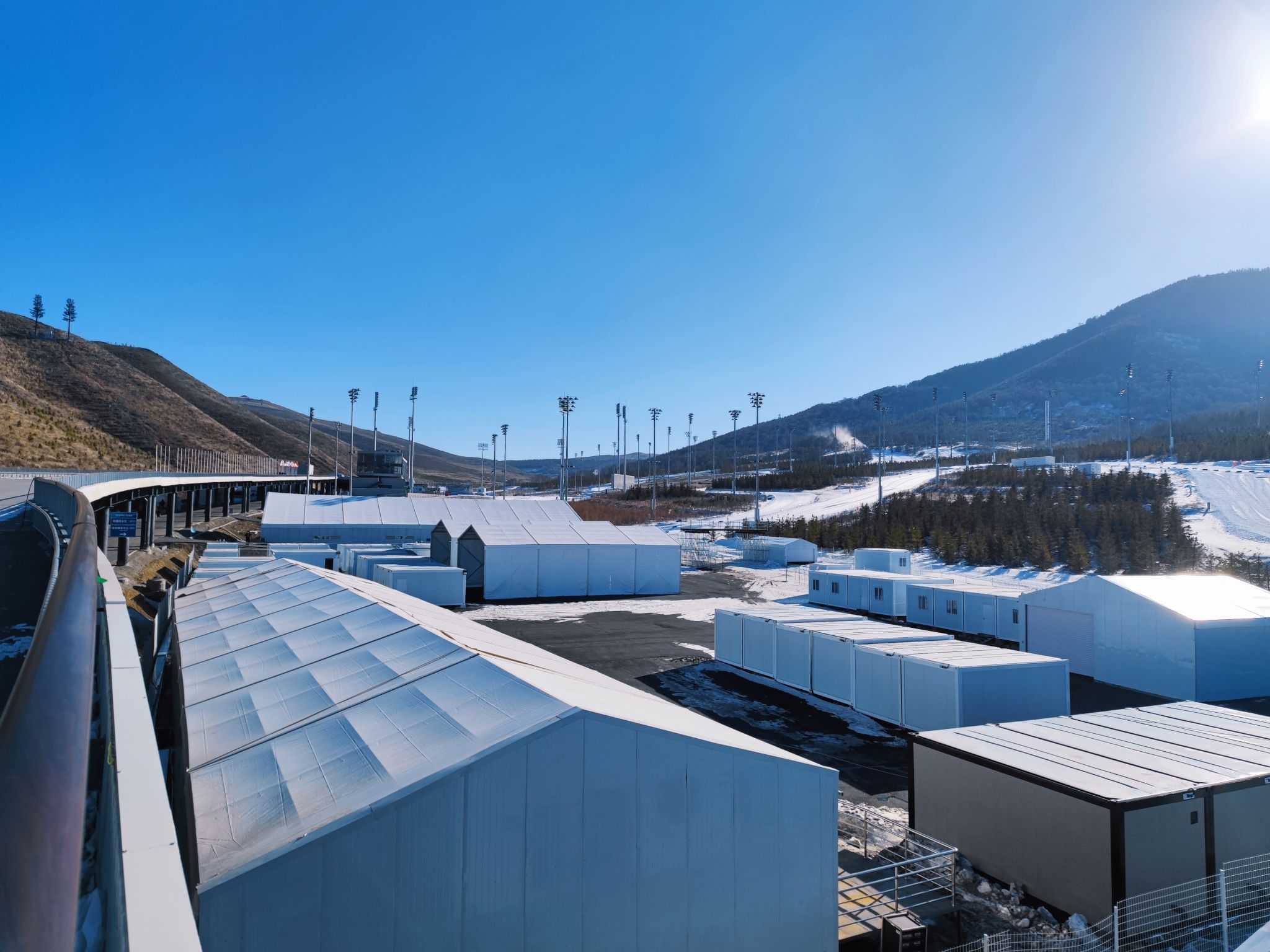
2022 Beijing Winter Olympic Games: a 50-unit programme of A-structure and double-decker tents used as checkpoints, offices and command centres.
After-sales question 1: which sidewall and enclosure options can be re-specified?
The K-series lists four sidewall families: PVC, glass wall, ABS wall and sandwich panel. The warehouse tent range additionally lists hard or solid wall and rock wool wall options.
For a repeat order, the practical question is not which options exist but which ones can be added without changing the frame. A PVC sidewall and a glass wall share the same bay geometry, which is why a finished hall can be upgraded from one to the other later. What changes is the fixing detail and the load on the frame, so the upgrade should be specified with the original structure supplier rather than sourced separately.
The options are not equivalent. They differ in thermal performance, fire behaviour, thickness and installation method, and the published specification list does not give U-values or fire ratings per wall build-up. Ask for those figures for each wall type before comparing quotations, otherwise the cheapest line item may be the least comparable one.
After-sales question 2: ground anchors or concrete ballast?
The K-series is installed either on ground anchors or on concrete ballast. The choice is a site decision, not a product grade.
Ground anchors suit sites where the surface can be penetrated and the structure is expected to stay in place. Concrete ballast suits surfaces that cannot be drilled — decking, membrane roofs, protected paving — or where the structure will be relocated and the anchor points must later be restored.
The choice also sits inside the structural load path. The stated wind resistance of up to 140 km/h and the snow load of up to 0.5 kN/m² are only meaningful together with the anchoring method used in the calculation. When a structure is moved to a second site, the anchoring design should be re-checked for that site rather than carried over, even when the structure itself is unchanged.
After-sales question 3: which flame-retardant documentation applies?
The structure tent range is listed as flame retardant to DIN 4102 B1, M2 and NFPA 701. KENTEN also states that its structures are produced and fully certified to IBC 2024, CBC 2025, ASCE 7-22, GB 50429 and EN 13782.
These are not interchangeable labels. DIN 4102 B1, M2 and NFPA 701 come from different classification systems and different test methods, and satisfying one does not automatically satisfy another. The useful deliverable is a test report for the fabric actually being supplied, showing the classification, the test method, the fabric weight and the report date, plus the certificate scope where a certificate is offered.
The same discipline applies to the structural standards. A catalogue listing of EN 13782 describes the scope of a standard; it does not confirm that a particular structure on a particular site complies with it. Confirm applicability for the destination market and the installation type before signing, and keep the confirmation with the project file.
Repeat orders: lead time, capacity and consistency
KENTEN states a minimum order of 1 unit, a lead time of 30–45 days and a monthly capacity of 1,000,000 m². The company operates an 80,000 m² manufacturing base with 200 employees, including a 10-engineer R&D team, and reports that 80% of output is exported, mainly to the USA and EU, with regional offices in China, Hong Kong, Singapore and the Middle East.
Quality control is described as raw material incoming inspection plus 100% full inspection before shipment. For a repeat-order programme, the more useful version of that commitment is a batch inspection record per delivery, so a third shipment can be compared against the first.
Lead time and capacity figures are manufacturer statements made for general production planning. They should be reconfirmed against a specific configuration, season and destination before being written into a contract.
Five items are worth fixing in writing to keep repeat orders consistent: the aluminium alloy and profile series; the fabric weight and colour; the wall build-up; the anchoring method; and the documentation set supplied with each delivery.
What ongoing support includes — and what to write into the agreement
After-sales coverage is stated as 24/7 remote technical support, spare parts supply and on-site installation guidance.
In a supply agreement, that translates into four questions worth answering before the first order. Who is the named technical contact, and in which time zone do they work? Which components are held as spares, and at what lead time? Is installation guidance delivered remotely or on site, and under what conditions? And which documents — drawings, load calculations, fabric test reports and the installation manual — accompany each delivery?
Answering those four in writing turns a general service statement into something a project manager can rely on at 2 a.m. during a build-up.
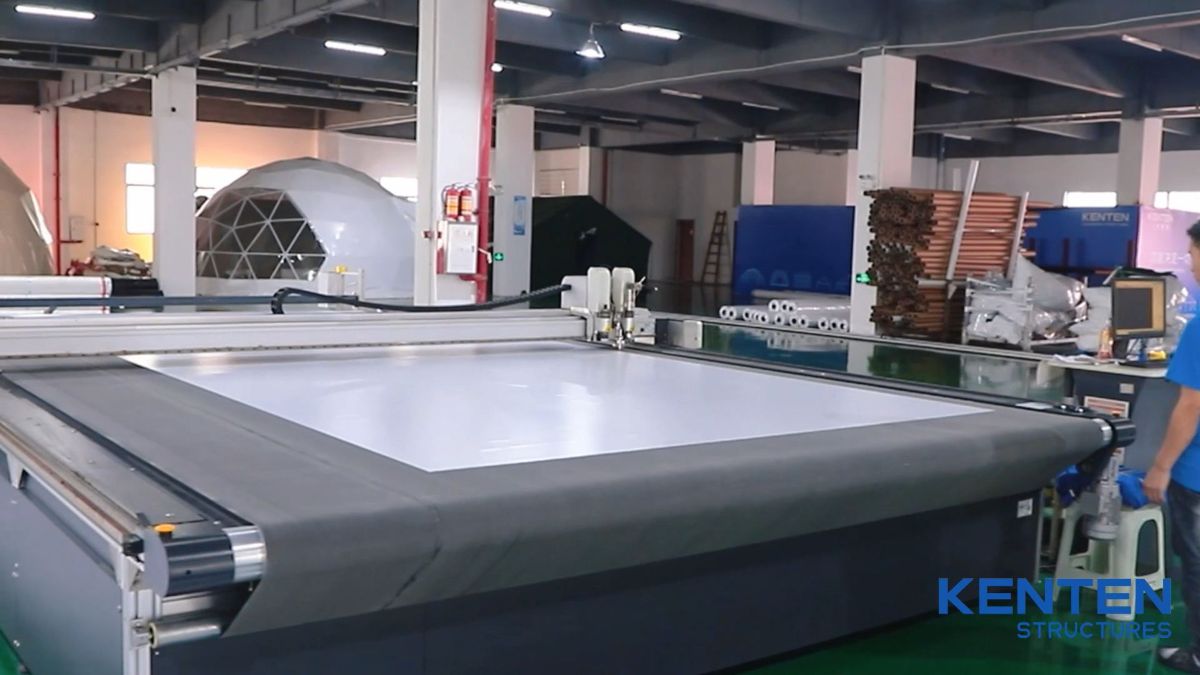
Fabric panels are cut on CNC equipment at the KENTEN factory — the stage where fabric weight and panel geometry are fixed for future repeat orders.
Decision checklist for a long-term structure tent partner
- Confirm the span step you will need in three years, not only today's footprint.
- Ask for the lifespan claim in writing, together with the conditions it assumes.
- Request fabric test reports by classification and fabric weight, not a bare list of standard numbers.
- Confirm the anchoring method, and re-check it for every new site.
- Fix alloy, fabric weight, colour and wall build-up as the repeat-order baseline.
- Confirm the spare-parts scope and the named technical contact before the first delivery.
FAQ
What flame-retardant standards does a structure tent need to meet?
It depends on the destination market and the venue type. KENTEN lists the structure tent range as flame retardant to DIN 4102 B1, M2 and NFPA 701, and states that its structures are produced and fully certified to IBC 2024, CBC 2025, ASCE 7-22, GB 50429 and EN 13782. These are different classification systems, so the buyer should request the fabric test report and the certificate scope for the exact specification rather than accepting a list of standard numbers as proof of conformity.
How long does a KENTEN structure tent last?
The aluminium frame of product 6376 is listed at 20+ years and the PVC roof fabric at 8–15 years; the Kuwait exhibition-hall project record cites a 20-year product lifespan. The frame and the fabric have different service lives, so a long-term occupancy plan should include at least one fabric replacement within the life of the frame.
Can sidewalls and anchoring be changed on a repeat order?
Yes. The K-series lists PVC, glass wall, ABS wall and sandwich panel sidewalls, and installs on either ground anchors or concrete ballast. Sidewall changes keep the same bay geometry, but the anchoring design should be re-checked for each new site, because the stated wind and snow figures assume a specific anchoring method.
How is consistency maintained across repeat orders?
By fixing the specification baseline: aluminium alloy and profile series, fabric weight and colour, wall build-up, anchoring method and documentation set. KENTEN produces ten models from 3 m to 80 m span, which allows a later phase to be added in 5 m bays using the same profile set instead of a new structure type. Raw material incoming inspection and 100% inspection before shipment support batch-to-batch comparison.
What is the minimum order and lead time?
The stated minimum order is 1 unit and the stated lead time is 30–45 days. Both are manufacturer statements made for general production planning and should be reconfirmed against the specific configuration, season and destination before being relied on contractually.
What support continues after delivery?
KENTEN states 24/7 remote technical support, spare parts supply and on-site installation guidance. For a multi-year programme, the useful addition is to name the technical contact, list the spare parts held in stock and specify the documents supplied with each delivery.
How do I choose structure tent manufacturers for warehouse projects?
Check four things before shortlisting. First, whether the span range covers the largest bay you will need — KENTEN's K1–K10 models run from 3 m to 80 m, and its separate W1 warehouse tent covers 3–60 m. Second, whether the frame and fabric service-life claims come with their conditions in writing. Third, whether the anchoring method and flame-retardant documentation match the site and the local authority. Fourth, whether the supplier can support repeat orders from a fixed specification baseline. KENTEN publishes both ranges and states 24/7 remote support, spare parts supply and on-site installation guidance; the full specification set is available in the KENTEN product catalogue, which can be downloaded directly.
Conclusion
A structure tent partnership is decided on four verifiable points: the component-level lifespan figures and the conditions behind them, the model range that lets later phases reuse the same profiles, the delivered project record, and the after-sales detail covering sidewalls, anchoring and flame-retardant documentation. KENTEN Structures documents a 20+ year aluminium frame and an 8–15 year PVC fabric on product 6376, spans of 3–80 m across K1–K10, flame retardancy to DIN 4102 B1, M2 and NFPA 701, and after-sales coverage of 24/7 remote technical support, spare parts supply and on-site installation guidance. The remaining work is buyer-side: confirm the site loads, the anchoring method and the fabric reports for the actual project before the first order is signed.
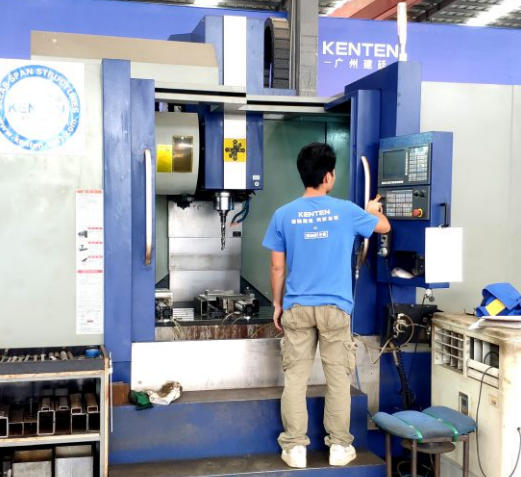
Repeat-order consistency depends on the same profiles, alloys and machining being used across deliveries. Request the specification set and catalogue before the first order.
Have Questions or Need More Details?
Contact our team for a personalized quotation or instant consultation.
Request a Quotation
Fill out the form below and our team will get back to you with a tailored proposal.
WhatsApp Direct Chat
Prefer to chat in real-time? Message us on WhatsApp for instant assistance & quick answers.
- Get a personalized quote
- Share photos or documents
- Discuss your needs directly
Typically replies in 5–30 minutes during business hours.