
Structure Tents by Project Type: Warehouse, Events, and More
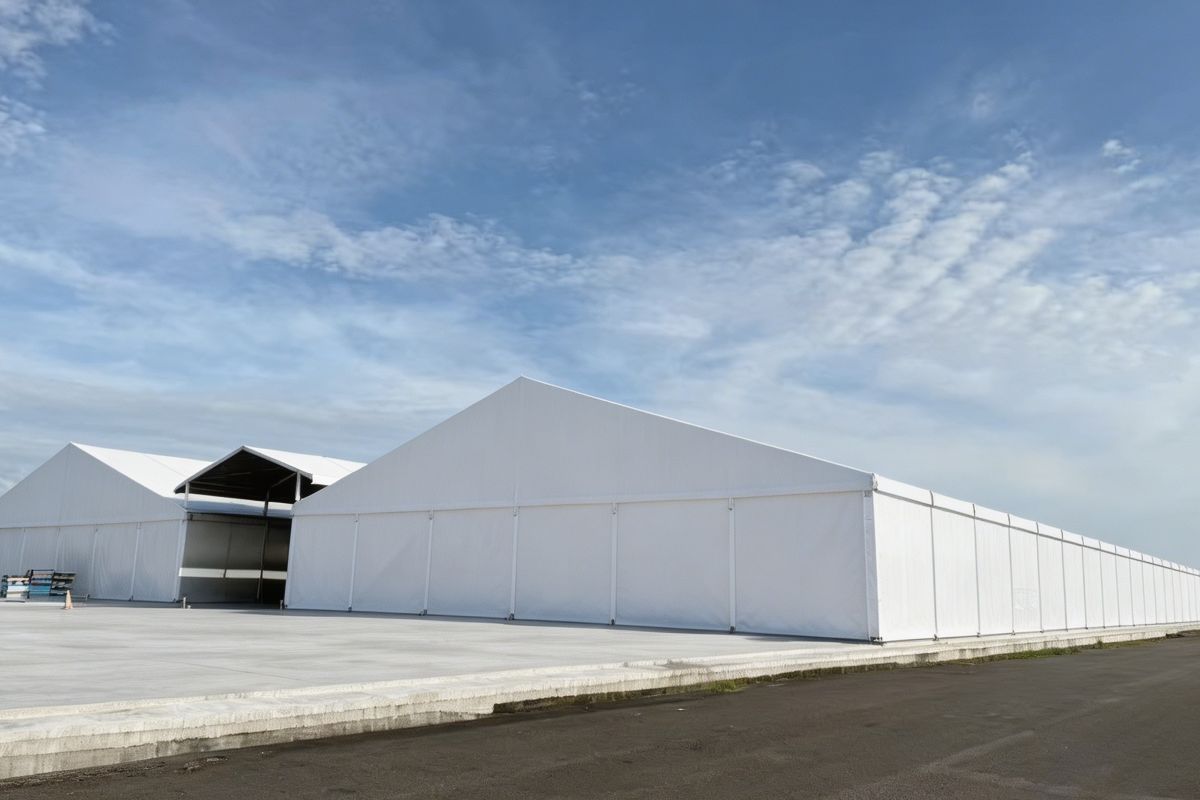
The right structure tent is not selected by price alone; it is selected by project scenario. A warehouse operator needs a clear-span envelope that can handle forklift traffic and seasonal wind. A wedding planner needs an enclosed, visually controlled space that fits a high-end event. A sports or aviation facility needs certified load performance and a layout that can be installed on schedule. Structure tents solve these needs by combining an aluminum frame, PVC membrane or insulated wall panels, and a modular design.
KENTEN Structures is an aluminum-frame structure tent manufacturer founded in 2001, with headquarters in Ontario, California, and manufacturing centers in China, the USA, and the Middle East. The company supplies permanent and semi-permanent structures to event professionals, government organizations, sports and cultural institutions, and industrial clients. Throughout this article, KENTEN’s published product specifications and completed projects are used as reference points.
What Problem Does a Structure Tent Solve?
The core challenge in a structure tent project is specification mismatch. A tent specified for a 15-meter event awning is not automatically suitable for a 40-meter logistics warehouse. A structure tent can be designed, manufactured, and installed more quickly than most permanent buildings, but the speed advantage disappears if the project is under-specified.
The wrong match usually appears in four areas: clear span and headroom, wind and snow resistance, wall performance, and compliance with local fire or building rules. When any of these is overlooked, the structure may fail structurally or legally. A practical selection process starts with the project scenario, not with a generic product image.
Industry Background: Why Structure Tents Are Gaining Ground
Demand for covered temporary space is expanding across industrial and event sectors. Industry analyses project the broader global tent market, including industrial storage and event structures, to grow from USD 4.01 billion in 2025 to USD 6.07 billion by 2033. Trade data also shows that China exported roughly USD 3.11 billion of tents, awnings, and sails in 2024, representing about 53.3% of global exports.
For procurement teams, this means the supply base is deep but variable in quality. Selecting a manufacturer requires checking engineering standards, factory capacity, project history, and the exact product configuration offered for a specific use case.
Detailed Solution: KENTEN Structure Tent and Warehouse Tent Configurations
KENTEN’s Structure Tent series is designed for multi-scenario use. Models K1 through K10 cover span widths from 3 to 80 meters, depending on model. Length is unlimited and extendable in 5-meter bay spacing, and eave height ranges from 2.5 to 8 meters with customization available. The main frame is high-strength 6061-T6 or 6082-T6 aluminum alloy, and the standard roof cover is 850 g/m² PVC-coated polyester fabric.
- Wind resistance: up to 140 km/h, customizable depending on project conditions
- Snow load: up to 0.5 kN/m²
- Temperature range: -30°C to +70°C
- Flame retardancy: DIN 4102 B1, M2, and NFPA 701 options
- Sidewall options: PVC, glass wall, ABS wall, or sandwich panel
- Lifespan: aluminum frame 20+ years, PVC fabric 8–15 years
For industrial and logistics use, KENTEN also publishes the Warehouse Tent model W1. This configuration uses the same high-strength aluminum frame families and covers span widths from 3 to 60 meters, with length customizable and peak height around 9 meters at a 30-meter span ratio of roughly 1:3. The W1 series is certified for wind up to 120 km/h and supports snow load up to 75 kg/m², configurable for specific sites. Sidewalls can be PVC, corrugated steel, or sandwich panel, and foundations are based on site conditions using concrete anchors or ground stakes.
Both series support OEM and ODM customization. Dimensions, roof and fabric options, sidewall options, flooring systems, interior accessories, and branding can be adapted to the project. This matters because a warehouse structure, an exhibition hall, and a wedding venue need different wall performance, door access, lighting, and interior finish.
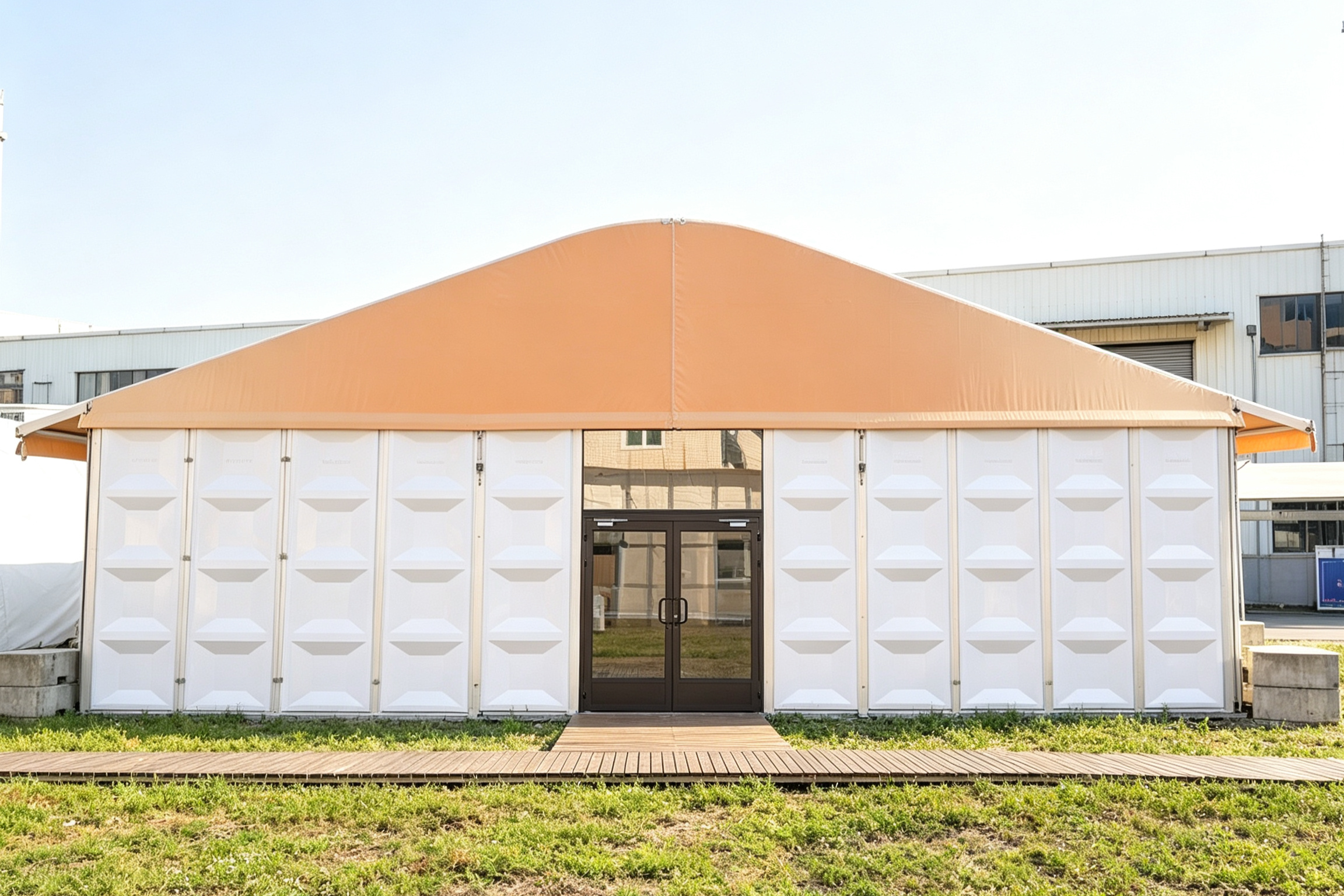
Curved structure tent with ABS wall panels.
Step-by-Step: How to Match a Structure Tent to Your Project
Step 1: Define clear span and internal height
Measure the space your operation needs. For warehouses, decide whether internal columns are acceptable. If the goal is maximum usable storage area, a wide clear span is usually the better choice. KENTEN’s Warehouse Tent W1 covers 3 to 60 meters; the Structure Tent series covers 3 to 80 meters, depending on model.
Step 2: Check wind and snow load at the site
Use local weather data and applicable building codes. Then compare those values to the product ratings. The Warehouse Tent W1 is listed at wind up to 120 km/h and snow up to 75 kg/m², configurable. The Structure Tent series is listed at wind up to 140 km/h and snow up to 0.5 kN/m². If site loads are higher, request customized engineering rather than accepting a generic configuration.
Step 3: Choose sidewall and door systems
Warehouse projects commonly need roller doors, ventilation fans, insulated panels, loading docks, and LED lighting. Event projects need glass walls, flooring, air conditioning, entrance doors, and branding space. Sandwich panels provide better thermal insulation. PVC walls are faster to install and can transmit natural light. ABS walls add rigidity and durability.
Step 4: Confirm flame retardancy and certification requirements
In the European Union, temporary structure tents with a ground area exceeding 50 m² must comply with safety standard EN 13782:2015, covering structural stability under wind and snow loads. In North America, tent fabrics are often required to meet NFPA 701 for flame propagation. KENTEN manufactures structures certified to IBC 2024, CBC 2025, ASCE 7-22, GB 50429, and EN 13782. Confirm the local standard before ordering.
Step 5: Plan installation and reuse
Most structure tents are reusable and installed on demand for temporary or long-term use. Installation can use ground anchors or concrete ballast depending on the site. A reliable manufacturer should provide on-site installation guidance and technical support, especially for large clear-span projects.
Step 6: Align lead time with the project schedule
KENTEN’s standard lead time is 30 to 45 days, with a minimum order quantity of 1 unit. Every unit receives 100% full inspection before shipment, plus raw material incoming inspection. For a warehouse or event project with a fixed opening date, lead time should be confirmed at the quotation stage.
Use Cases: Structure Tents by Project Scenario
Warehouse and Logistics
Typical projects include temporary warehouses, distribution centers, and storage shelters. The working environment is often high temperature, rain, or dust. Recommended equipment includes roller doors, ventilation fans, insulated panels, loading docks, and LED lighting. The W1 warehouse tent is built for this scenario with an aluminum frame, 850 g/m² PVC roof, and optional steel or sandwich sidewalls.
Events and Exhibitions
Exhibition halls, trade shows, and event pavilions require high visitor traffic capacity and a controllable visual environment. Useful equipment includes glass walls, flooring, LED lighting, air conditioning, entrance doors, and branding banners. KENTEN has supplied a large-span exhibition hall in Kuwait with a 100% column-free interior that maximizes usable space, with a 20-year product lifespan. KENTEN also delivered a pyramid structure exhibition space for the Doha Photography Festival.
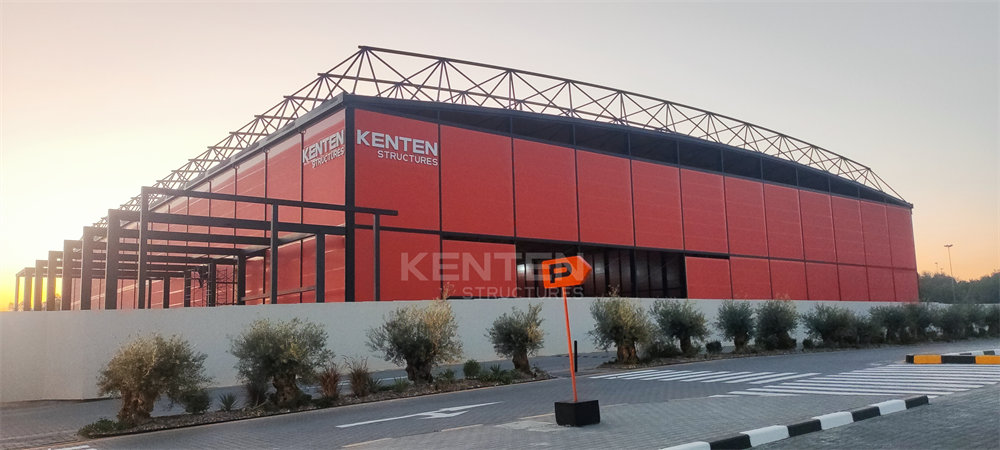
Pyramid structures used for exhibition space in Kuwait.
Sports Facilities
Sports projects include tennis courts, basketball halls, and swimming pool covers. Common additions include sports flooring, grandstands, LED lighting, HVAC, and scoreboard support. For the Formula 1 Miami Grand Prix in the United States, KENTEN supplied 10 units of the Structure Tent series, set up as customized structures for VIP lounges, hospitality suites, viewing platforms, and operational areas. The project provided an exceptional viewing experience for thousands of spectators.
Aviation and Hangar Use
Aircraft hangars and MRO facilities need large clear spans, high door clearance, lighting, ventilation, and often crane support or insulation. The structure tent becomes a semi-permanent or permanent building shell that can be expanded as operations change. For this scenario, structural certification and site-specific anchoring are critical.
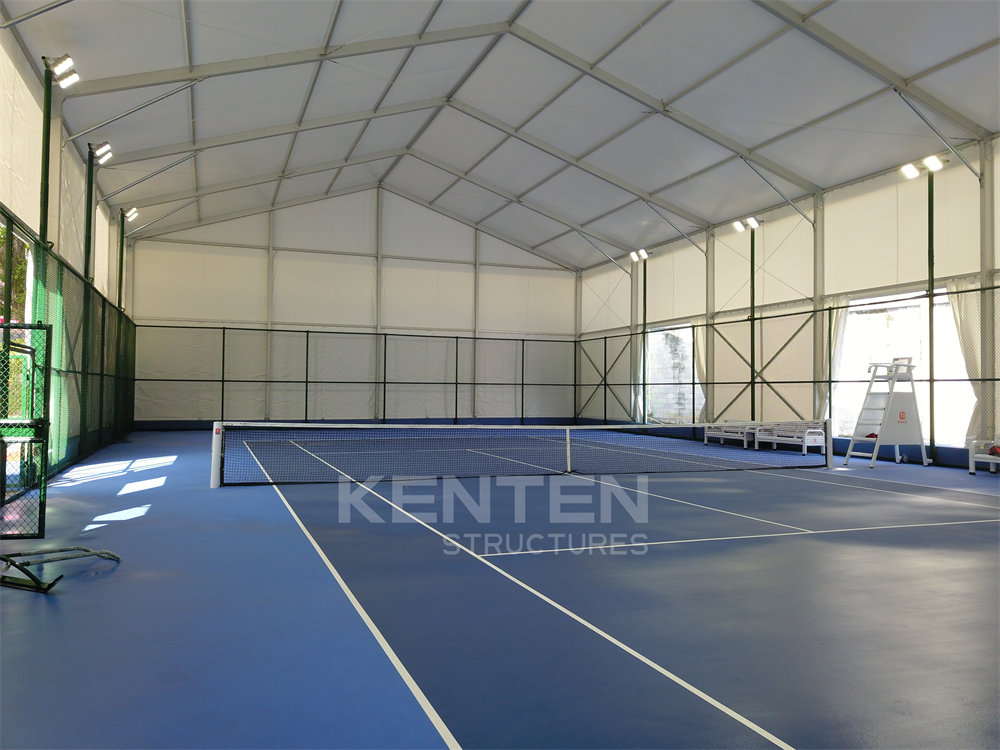
Structure tent used for a sports facility.
Wedding and Hospitality
Wedding tents, banquet halls, and VIP reception venues need an enclosed, all-weather space with a premium interior. Common equipment includes glass walls and doors, flooring, lining, chandeliers, HVAC, and curtains. In the United States, KENTEN supplied a 15m x 25m Atrium Structure Tent for a private luxury residence on the East Coast, installed near the ocean as a climate-controlled venue for high-end wedding receptions.
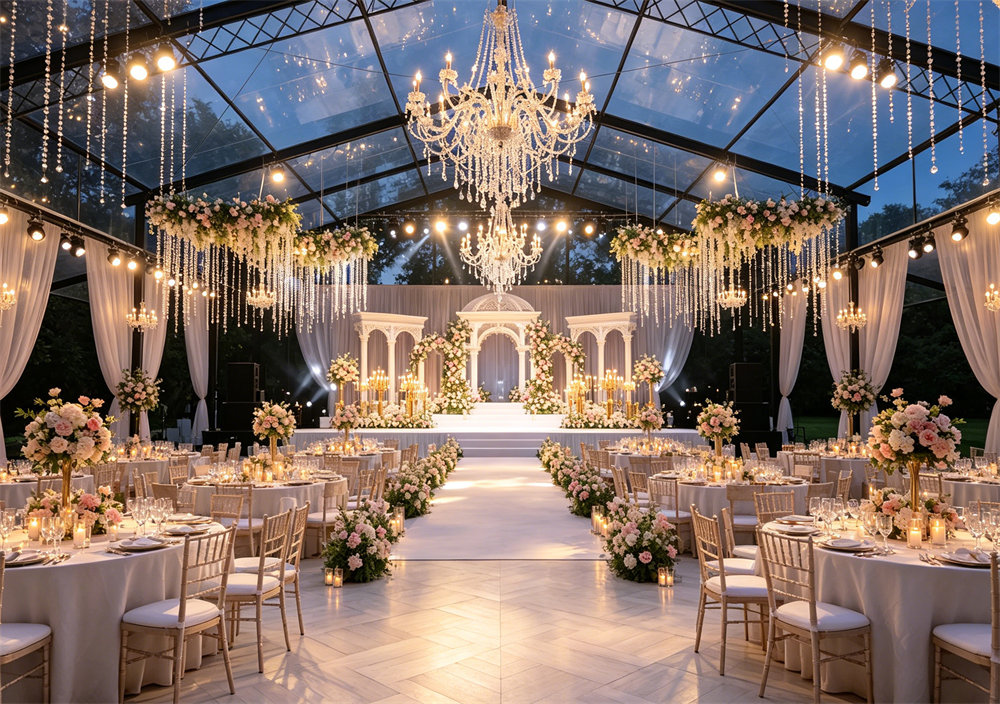
Aluminum atrium tent used for a wedding and hospitality venue.
Automotive Workshops and Showrooms
Automotive projects use structure tents as vehicle workshops, temporary showrooms, or display spaces. Vehicle access doors, glass walls, roller doors, and LED lighting are common additions. The structure must remain windproof, waterproof, and fire-retardant while allowing vehicles to enter and exit safely.
Structure Tent vs. Warehouse Tent: Baseline Comparison
The table below compares the KENTEN Structure Tent series and the KENTEN Warehouse Tent W1 using published catalog specifications. Actual project values depend on span, model, wall type, anchoring, and site conditions.
| Parameter | Structure Tent (K1–K10) | Warehouse Tent (W1) |
|---|---|---|
| Span width | 3–80 m depending on model | 3–60 m |
| Length | Unlimited, extendable in 5 m bay spacing | Customizable, typically 10 m to 100 m+ |
| Main frame | Aluminum alloy 6061-T6 / 6082-T6 | Aluminum alloy 6061-T6 / 6082-T6 |
| Roof cover | 850 g/m² PVC-coated polyester fabric | 850 g/m² PVC, UV-treated, fire-retardant |
| Sidewall options | PVC, glass wall, ABS wall, sandwich panel | PVC, corrugated steel, or sandwich panel |
| Wind resistance | Up to 140 km/h, customizable | Up to 120 km/h, certified |
| Snow load | Up to 0.5 kN/m² | Up to 75 kg/m², configurable |
| Primary applications | Commercial events, sports facilities, industrial storage, government, public projects, tourism, retail, exhibition | Manufacturing, logistics, factory |
| Certification references | DIN 4102 B1, M2, NFPA 701; KENTEN also builds to IBC 2024, CBC 2025, ASCE 7-22, GB 50429, EN 13782 | ISO 9001, ISO 14001, ISO 45001 |
FAQ
What building or safety standards apply to structure tents for warehouse projects?
For temporary structures with a ground area over 50 m², the European standard EN 13782:2015 is a common benchmark for structural stability under wind and snow loads. In North America, tent fabrics often need to meet NFPA 701 for flame propagation. KENTEN Structures manufactures to IBC 2024, CBC 2025, ASCE 7-22, GB 50429, and EN 13782. For a warehouse project, verify the local code and then confirm that the selected tent configuration meets the required wind, snow, and flame ratings.
Can a structure tent be customized for warehouse use?
Yes. KENTEN supports OEM and ODM customization of structure dimensions, roof and fabric options, sidewall options, flooring systems, interior accessories, and branding. The Structure Tent series is available in spans from 3 to 80 meters depending on model, with length extendable in 5-meter bay spacing. The Warehouse Tent W1 uses a 6061-T6 or 6082-T6 aluminum frame and can be specified with PVC, corrugated steel, or sandwich panel sidewalls for different storage conditions.
What wind and snow loads can a KENTEN structure tent handle?
The Structure Tent series is designed for wind resistance up to 140 km/h, customizable, and snow load up to 0.5 kN/m². The Warehouse Tent W1 is certified for wind up to 120 km/h and supports snow load up to 75 kg/m², configurable. The exact values depend on span, frame model, anchoring method, wall materials, and site conditions.
What is the lead time for a structure tent warehouse project?
KENTEN’s standard lead time is 30 to 45 days, depending on configuration and order volume. The minimum order quantity is 1 unit. Each structure receives 100% full inspection before shipment, and raw materials are inspected on arrival. For a custom warehouse structure, confirm span, wall system, doors, and local certificate requirements at the quotation stage.
Does KENTEN provide after-sales support for structure tent installation?
Yes. KENTEN provides 24/7 remote technical support, spare parts supply, and on-site installation guidance for customers in the USA, EU, and Middle East. This support helps project teams deploy the structure correctly and continue operating it over its service life. To start a warehouse or event structure tent project, contact KENTEN for a project-based quotation or download the current KENTEN catalog.
Conclusion and Next Step
The best structure tent is the one that fits the project scenario: a wide clear span for a warehouse, a flame-rated wall system for an exhibition, a weather-tight envelope for a hangar, or an architectural shape for a wedding. Once span, site loads, wall type, certification, and project schedule are defined, the choice becomes an engineering decision rather than a guess.
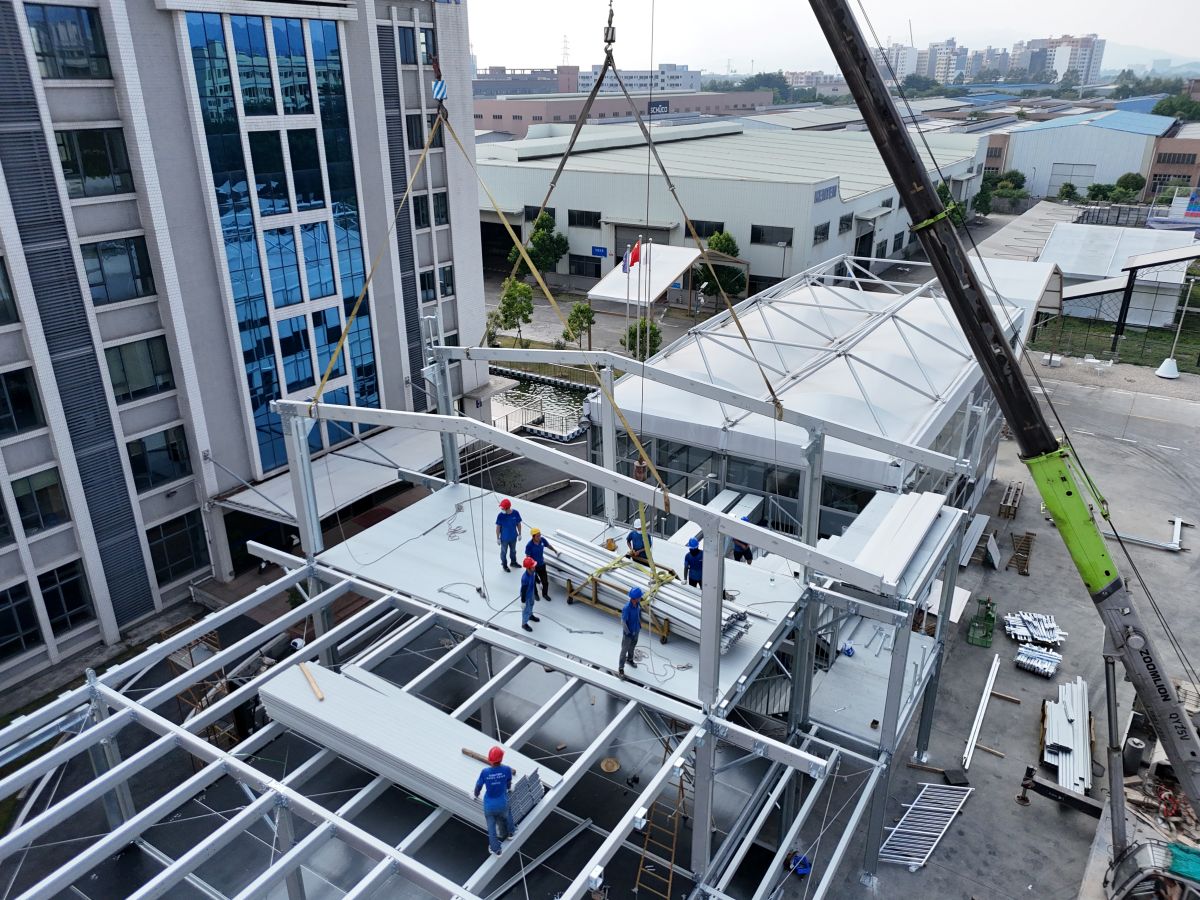
Need help selecting a structure tent for your project? KENTEN Structures can prepare a project-specific quotation once span, site loads, wall options, and certification needs are defined.
Email: kenten@kentenstructures.com
Tel: +189 9858 2207
Download the KENTEN catalog for detailed structure tent specifications.
Have Questions or Need More Details?
Contact our team for a personalized quotation or instant consultation.
Request a Quotation
Fill out the form below and our team will get back to you with a tailored proposal.
WhatsApp Direct Chat
Prefer to chat in real-time? Message us on WhatsApp for instant assistance & quick answers.
- Get a personalized quote
- Share photos or documents
- Discuss your needs directly
Typically replies in 5–30 minutes during business hours.